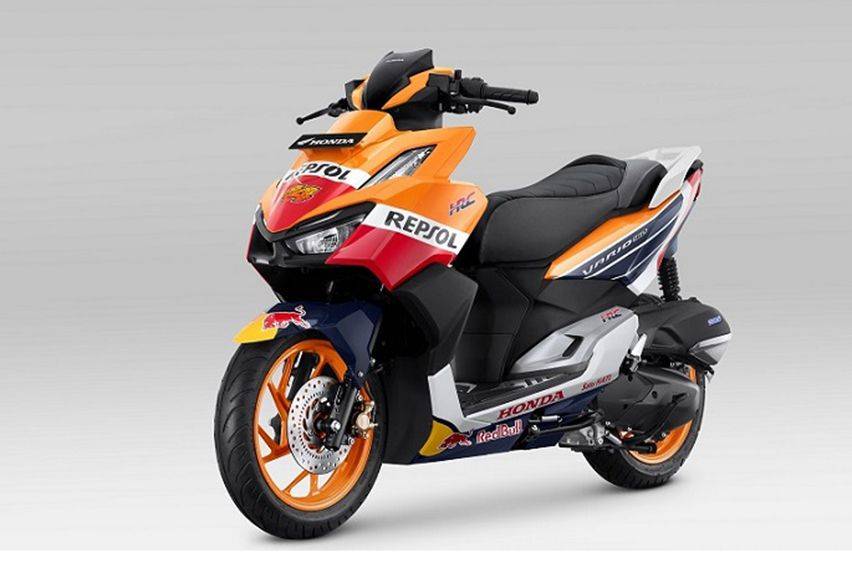
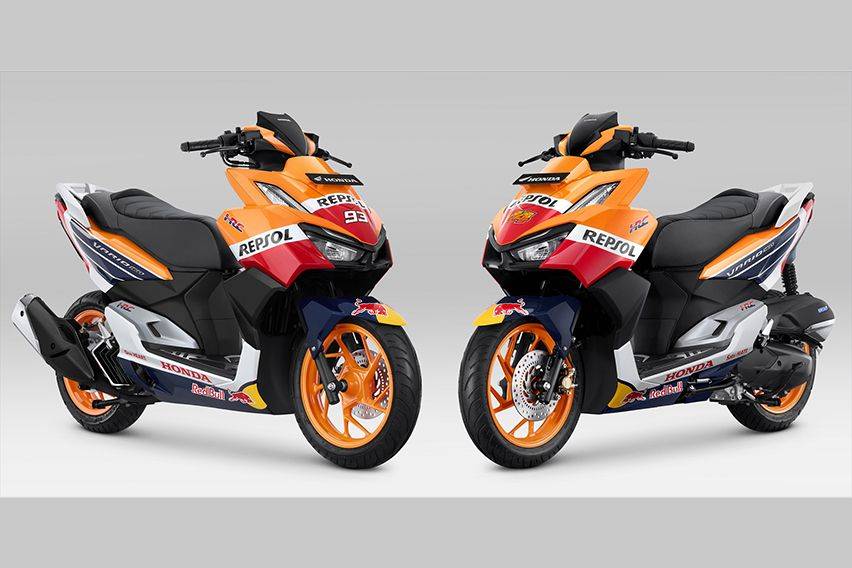
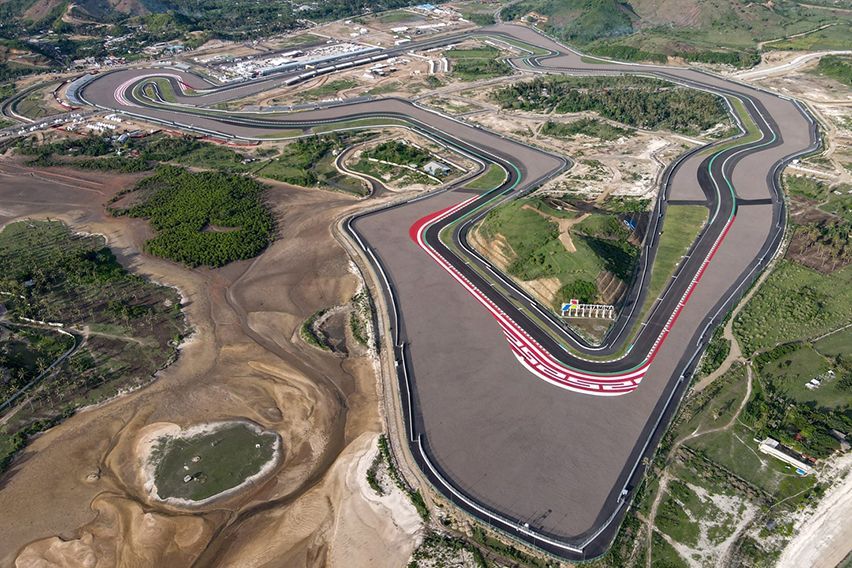
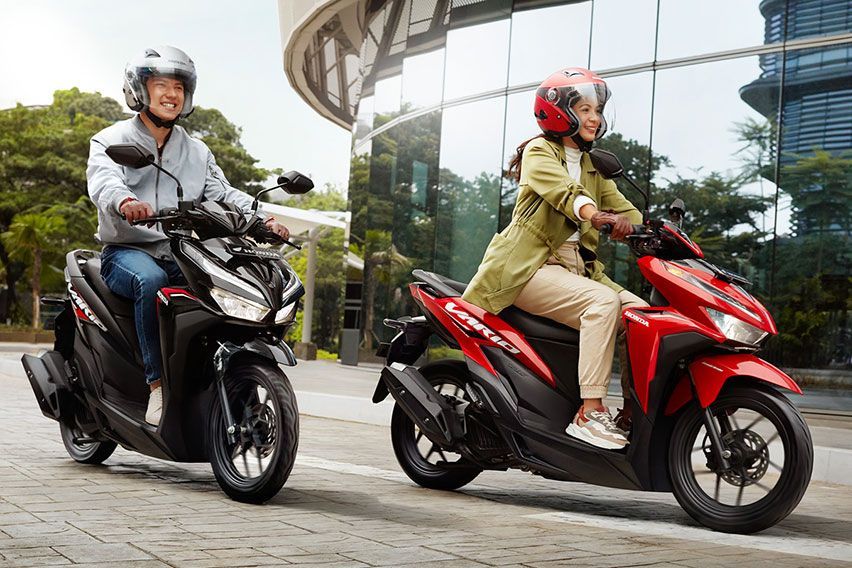
The new model scooter was lined up as an RHT paddock vehicle in the Mandalika MotoGP series. With a special appearance, the Vario 160 will later be able to support the activities of Marc Marquez and Pol Espargaro, as well as the team from RHT while at the pride of Indonesia, Pertamina Mandalika International Street Circuit.
All New Honda Vario 160
A total of 4 units were provided, including number 93 for the 8-time world champion Marc Marquez and 44 for his teammate Pol Espargaro. The other two units are used by the paddock crew for mobilization while in the circuit area. The four scooters were used by the RHT team during pre-season tests (11-13/2) and the Mandalika MotoGP round (19-20/3).
Marketing Director AHM Thomas Wijaya said, the All New Honda Vario 160 was specially designed to support the Repsol Honda Team during the MotoGP race in Indonesia. The premium sporty high-performance scooter produced by the nation's children is expected to support team mobility in competing and scoring historic achievements in the Mandalika MotoGP series.
"We chose the premium sporty scooter All New Honda Vario 160 with the "Bigger, Greater, Prouder" concept with a special RHT design. This is a form of enthusiasm that displays optimal performance of Honda racers, giving pride and inspiration to all of us, especially Honda Vario lovers. Together with Indonesian racing lovers, we want to give support to Marc Marquez and Pol Espargaro who are ready for the first MotoGP race in our country," said Thomas.
In addition to the All New Vario 160 with a special design of the Repsol Honda Team livery for the RHT team, AHM also presents the ADV150 as an official scooter for all operational activities for the MotoGP and Idemitsu Asia Talent Cup (IATC) races at the Pertamina Mandalika International Circuit on 19-20 March 2022. A total of The 72 units produced by AHM are ready to be used for the mobilization of all international racers, teams, and racing event organizers at this proud Indonesian circuit.
"The presence of the highest MotoGP racing event at the Mandalika circuit certainly makes the Indonesian people proud. We want to strengthen this sense of pride by presenting motorcycles made by the nation's children, the All New Honda Vario 160 and Honda ADV150 to support racing activities that have been eagerly awaited by racing lovers around the world," concluded Thomas.
All New Honda Vario 160
For information, the All New Honda Vario 160 was officially launched on February 2. Its presence gives new energy and style in a revolution in design, technology and advanced features. This 160cc 4 valve eSP+ scooter is more sophisticated with a variety of features, and is prouder with a new look and sensation like a big automatic. All New Honda Vario 160 highest variant has been equipped with safety features such as Antilock-Braking System (ABS) and rear position brake device equipped with rear disc brake. Supported by tubeless tire sizes front 100/80-14 and rear 120/70-14 plus a combination of burnt titanium alloy wheels on the ABS type, providing ease and comfort in driving with an increasingly classy appearance.
More complete with advanced safety and security features such as the Honda Smart Key System which is equipped with an alarm and answer back system to provide a sense of security for the rider. Through the application of eSAF (enhanced Smart Architecture Frame) frame technology, this scooter is more agile and easy to drive.
The MotoGP event in Indonesia is just one step away from being present in Indonesia.
The race, which will take place in March 2022, begins with a pre-season test that will take place at the Mandalika international circuit, Lombok on 11-13 February.
In addition, Pertamina as the main sponsor of the Mandalika MotoGP race event announced officially the mention of the Mandalika MotoGP series as "Pertamina Grand Prix of Indonesia". This complements the previous support that has been given by Pertamina for the circuit which has the official designation of Pertamina Mandlika International Street Circuit.
Legitimate! MotoGP in Mandalika has the official name Pertamina Grand Prix of Indonesia
The inauguration of the use of this name was carried out by signing a cooperation agreement between Pertamina and Dorna Sport. The signing was carried out directly by the President Director of Pertamina, Nicke Widyawati and the Managing Director of Dorna Sport, S.L, Carloz Ezpelata who were present via teleconference and witnessed directly by the Minister of SOEs, Erick Thohir in Jakarta, Wednesday (9/2/2022).
"Of course the highest appreciation to Pertamina, which we are now pushing as a global company. We have a target for Pertamina to have a very large valuation of up to 100 billion dollars. This step is also in line with President Joko Widodo's desire from the start to encourage international events in Indonesia such as the Asian Games and World Superbike which have been successfully held," said Erick Thohir in his statement, Wednesday (9/2/2022).
Nicke revealed that Pertamina's full support as the main sponsor of the Pertamina Mandalika International Street Circuit and the Pertamina Grand Prix of Indonesia is expected to help the national economic recovery, increase tourism potential, and advance the motorsports ecosystem in Indonesia.
"Hopefully the presence of this SOE synergy will provide a multiplier effect and become part of the national economic recovery, as well as an opportunity for broad global market penetration for Pertamina, SOE products and MSMEs located in Mandalika and in other areas," said Nicke.
MotoGP class races were present in Indonesia about 25 years ago. The presence of MotoGP in Mandalika has become a moment of pride for the Indonesian nation and the spirit to rise from the pandemic. Nicke also hopes that holding MotoGP in Mandalika will strengthen Indonesia's nation branding as a resilient country in the midst of the global pandemic crisis.
Carlos Ezpeleta expressed his joy at the steps taken by Pertamina as the main supporter of the Grand Prix of Indonesia. This collaboration further strengthens the presence of Pertamina and Indonesia in this motor racing sport. Previously, Pertamina was also a sponsor for the SAG Pertamina Mandalika team that competed in the Moto2 World Championship class.
"Dorna Sport is proud to announce a cooperation agreement for the Pertamina Grand Prix of Indonesia. And will ensure that Pertamina, Indonesia and Lombok Island are at the forefront and become the center of attention on the international stage," said Carlos.
Abdulbar M. Mansoer, UTama Director of PT Indonesia Tourism Development (Persero) Indonesia Tourism Development Corporation (ITDC) as the SOE managing the Mandalika Special Economic Zone (KEK) and the Mandalika Circuit which holds the license for holding MotoGP in Indonesia, expressed his readiness to host the MotoGP race in Mandalika . Abdulbar said he was very happy with the collaboration between Dorna Sport and Pertamina as a form of strong collaboration between SOEs in Indonesia in the success of organizing the MotoGP race at the Mandalika Circuit.
To present the excitement of the Pertamina Grand Prix of Indonesia, Pertamina presents the Mandalika GP Hub that can be felt by the people of Jakarta, which is located in the oval atrium of Epicentrum Walk, Kuningan, Jakarta. Mandalika GP Hub will be present from February 10 to March 30, 2022 with exciting services and content such as ticket sales, merchandise, games and exciting games to Lombok culture exhibitions.
Ticket sales for the Pertamina Grand Prix of Indonesia can also be accessed by the public through the MyPertamina application. For more information, please visit www.mypertamina.id, social media @mypertamina and @ptpertaminapatraniaga
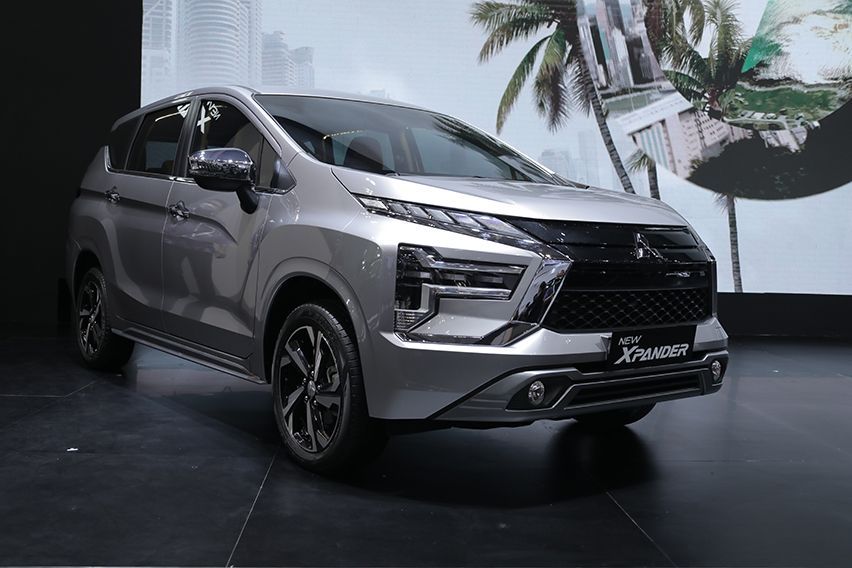
The Mitsubishi Xpander has just received a significant change in the kitchen sector. More precisely on the transmission component or automatic gearbox.
Devices that are useful for distributing power from the engine to the wheels are now using the Continuous Variable Transmission (CVT) type. Not only superior in driving comfort, Mitsubishi claims that the CVT in the Xpander does not need to be changed to do an oil change.
Mitsubishi Xpander CVT Transmission
Before going any further, it's a good idea to get to know the CVT transmission model in question. The type of CVT automatic transmission has a different way of working compared to the previous Xpander, namely the conventional automatic (AT). CVT processes power to be transferred to the engine to the wheels via a steel belt that connects the unique pulleys.
Both of these pulleys (driven pulley and drive pulley) can be enlarged and reduced thereby changing the ratio between the pulleys continuously. This change in ratio finally allows power from the engine to be distributed gradually as speed increases. Because the change in ratio does not go through changing gears, there is no jerk when the ratio changes as in conventional automatic transmissions. As a result, changes in acceleration also occur very smooth and comfortable.
Mitsubishi explained in a press release, adjustments to the pulleys are made possible by the fluid pump system. Of course here the fluid in question is oil or a special CVT lubricant. Yes, in a CVT transmission, oil does not serve as a lubricant or coolant just like in an engine, but is part of the working system of these components.
Because it has an important task, Mitsubishi mixes its CVT with oil with a very long service life, it doesn't even need to be replaced. "Mitsubishi cars have seamless transmissions and long-life maintenance. So there is no special maintenance and no oil changes," said Boediarto as General Manager After Sales of PT Mitsubishi Motors Krama Yudha Sales Indonesia (MMKSI).
According to Mitsubishi in a statement, this is possible because the CVT transmission in their vehicle is made with a long service life. Even the CVT device can last up to 3 years or 100 thousand km of use without any problems.
Although it is claimed to have a long life, and there is no special maintenance, users of this CVT transmission car still have to carry out routine checks at every kilometer that has been determined as a routine service to monitor the condition of the CVT transmission.
"Regular checks are carried out every 20 thousand km at the official Mitsubishi workshop to see the condition, both in terms of quantity and quality of the CVT transmission," added Boediarto via text message some time ago.
CVT oil as an important part of this sophisticated transmission is also one that is checked for quantity and quality. During routine service, the amount will be measured carefully. Not only that, the mechanical team at the official workshop will also check if there is seepage coming out of this gearbox.
"Checking for CVT oil leaks and checking the quantity of CVT oil with special methods depending on the type of vehicle. Mitsubishi mechanics have been trained to carry out these inspections," added Boediarto.
Well, according to Mitsubishi, transmissions whose oil does not need to be changed are those whose cars are used under normal conditions. However, if the car is used very often or is classified as heavy, for example as an operational vehicle, it is recommended that Xpander be obliged to change the CVT oil every multiple of 40 thousand km.
The presence of the CVT transmission in the Mitsubishi Xpander proves that now technological progress has been successfully accepted by the community. In fact, the twin duo of Toyota Avanza and Daihatsu Xenia are now entrusting the task of automatic transmission to the CVT as well
Seeing the rising SUV market, PT Maxindo Renault Indonesia (MRI) will add to its product line in Indonesia by presenting the Renault Arkana.
This is based on official information from the Renault which was received by the coil recently.
"Renault Kiger which will be the latest variant that will soon be widely paved in Indonesia. Various new variants - just note, Renault Arkana is also allegedly going to be presented by Maxindo Renault Indonesia at the end of the year," said Renault's official statement.
specifications of the Renault Arkana
Exterior view
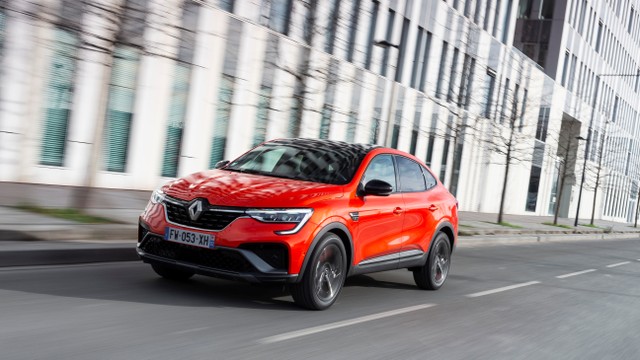
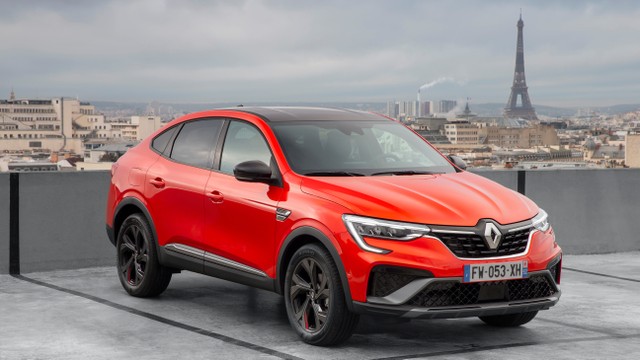
Targeting the SUV segment, the Renault Arkana has a quite attractive appearance, combining the tough impression of an SUV and an elegant sporty style like a coupe.
Renault Arkana
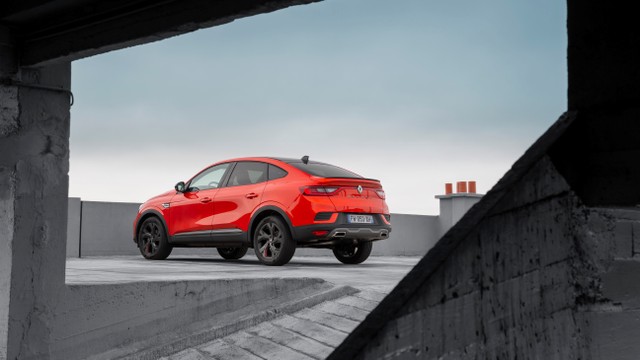
The front is able to show its tough yet sporty impression with the use of fang-like DRL lights and narrow headlights. Meanwhile, the rear is seen using a connecting brake light which is slightly separated by the Renault symbol in the middle.
Overall, if you look at the Renault Arkana line, you can see a combination of an SUV and a coupe, where the roofline looks sloping at the rear.
Interiors
Moving on to the inside, the Renault Arkana has been treated to comfort features that are guaranteed to make the driving experience more comfortable and smooth.
Renault Arkana
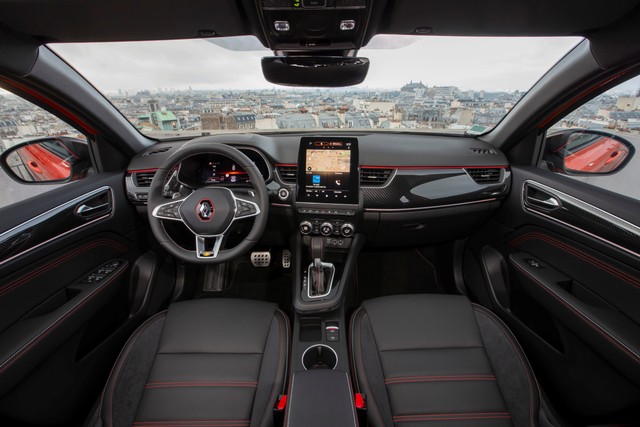
On the dashboard, there is a 9.3-inch touch screen head unit complete with satellite navigation. Then the instrument panel already uses a 7-inch display. To give the impression of luxury, Renault also embeds ambient lighting.
Other comfort features, such as a sunroof, ventilated front seats, wireless phone charging on the front, and audio settings on the steering wheel.
Safety features
Referring to the official Renault Europe website, the Renault Arkana is equipped with a variety of active safety features, such as Lane Departure Warning with Lane Keeping Assist, Emergency Brake Assist, Over-Speed Prevention, Blind Spot Warning, Adaptive Cruise Control with Stop & Go, and Rear Cross Traffic Alert.
In addition to these features, Arkana is also equipped with other standard safety features, such as airbags, ISOFIX, front and rear parking sensors, and a camera on the back of the car.
Specifications of Renault Arkana
Regarding the specifications, the Renault Arkana is built on the same platform as the Nissan Note, namely the CMF-B. Arkana itself is offered in 2 variants, hybrid and mild hybrid.
Renault Arkana
For the hybrid engine, it uses the E-Tech 145 engine with a capacity of 1,598 cc, for the gasoline engine it is capable of spewing out 94 hp and 148 Nm of torque. When combined with an electric motor, the car is capable of producing 142 hp and 250 Nm of torque. The engine is then mated to a 6-speed automatic transmission.
While the mild hybrid engine option has a capacity of 1,333 cc with the ability to spit out 140 hp and a maximum torque of 260 Nm. The engine is mated to a 7-speed automatic transmission.
The problem is the price, Renault is marketed starting from 25,690 Pounds Sterling to 30,290 Pounds Sterling or if it is converted into around Rp. 497 million to Rp. 586 million.
Yamaha Indonesia officially sells a sophisticated retro-style scooter. Yes, he is a Yamaha Fazzio Blue Core Hybrid Connected which is offered with prices starting at IDR 21.7 million and the most expensive being IDR 22 million OTR Jakarta.
This model was specially developed to present a new driving style trend and can meet the character and lifestyle of consumers.
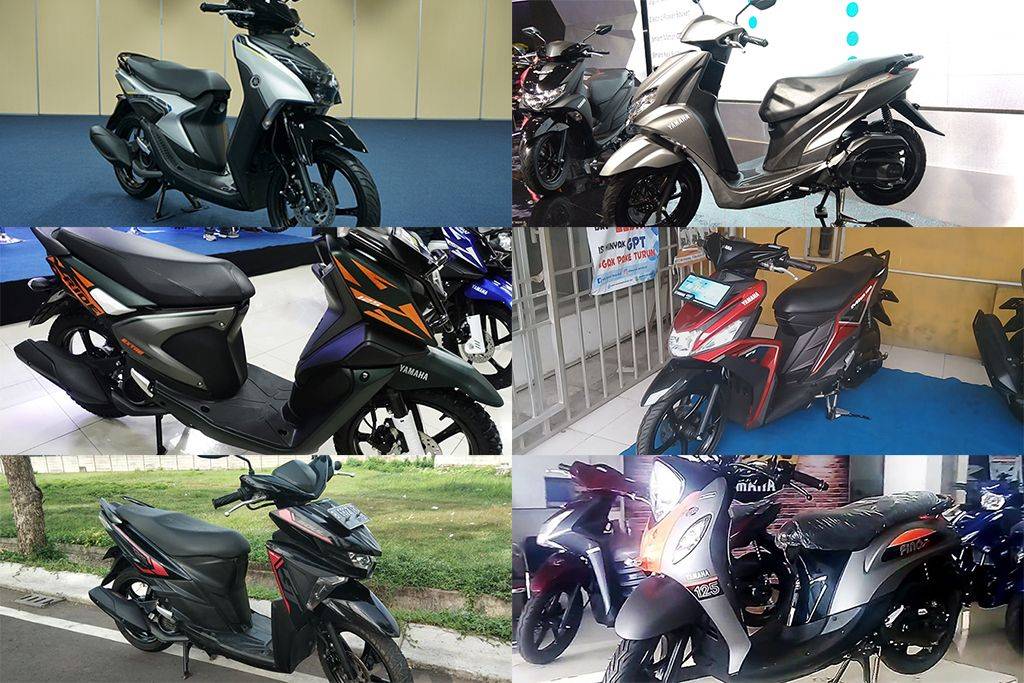
Although he is a new segment and a pioneer in its class, other Yamaha scooter lines are still interesting to own. They are also worthy of being selected to be used as daily vehicles. Especially for those who belong to the entry level class. The model also varies. Here's an alternative scooter that has a price below Fazzio.
Cheaper than the Fazzio Hybrid-Connected, this is an alternative to Yamaha scooters for daily use
Yamaha Gear 125
The first choice is the Yamaha Gear 125. It has two types, namely the S Version and the Standard Version. Both have a much cheaper price than the Fazzio Hybrid-Connected. Sold for IDR 17,950 million for the S Version and IDR 17.2 million for the standard version.
It offers a variety of features that are very useful for daily use. Mainly a spacious flat deck and storage space under the chairs, can be used to put jackets, gloves or other small objects. Then it has a double hook, making it easier to carry more items and can be folded when not in use.
There is also an additional shelf on the left side which is quite large and deep, and can even store a medium-sized water bottle. There is a gadget charging socket available, but consumers have to buy a connector. Honey, the place is open. If you want a neat cover, Yamaha offers a cover accessory. So it is safer when putting things.
Especially for the highest variant or S, the Stop & Start System (SSS) feature is embedded. If the condition is active (on position), then the machine will automatically turn off when the motor is idle for 3-5 seconds. The ignition device is located on the right handlebar. Quite helpful in terms of fuel efficiency. Then a remote Answer Back System is given, helping to find the motorbike in the parking lot.
The mechanical heart of the Gear 125 is 124.96 cc, SOHC, single cylinder, 4 stroke with air cooling and Blue Core Fuel Injection technology. The power and torque produced are 9.38 hp at 8,000 rpm and 9.5 Nm at 5,500 rpm, respectively. The power is quite qualified to be used by anyone for daily activities.
For the safety of users who sometimes forget to raise the side standard, a stand side switch is provided. So, the engine does not start when it is still in the down position. Then there is a Smart lock that can maintain the motor's position when on an incline. All Mio variants are actually already equipped with this device, and have become a standard feature that must be present in entry-level scooters.
Yamaha FreeGo
The next alternative is Yamaha FreeGo. It has three variants, namely the standard type, S Version and S-ABS Version. But there are only two versions that have a price below Fazzio, namely the standard and the S Version. Both are priced at Rp. 19,750 million, and Rp. 21,290 million OTR DKI Jakarta.
For the S version, there is a smart key feature. Riders no longer need to take out/insert keys. Made compact by only pocketing the remote. The tool is already loaded with the immobilizer module and the Answer back system.
Another feature that is no less interesting is the digital instrument panel. Adopting a sophisticated screen and small in shape, only 6 x 4 cm. Blue background and equipped with “Multi Information Display” (MID). Also equipped with spacious luggage. Its capacity reaches 25 liters, the same as that of the old NMax. Riders can store their belongings such as full face helmets or bags, jackets, shoes and basketballs.
Then FreeGo uses LED Headlight. Riders also don't have to worry about losing power, because they are equipped with an electric power socket. It is located above the key house. However, there is no compartment to put a smartphone
Then there is the Smart Front Refuel. Refueling is quite practical because the filling tank hole is in the front position. The gas tank has a capacity of 4.2 liters, and is protected by a steel plate. For SSS technology (Stop & Start System) only available in type S and S ABS. As for the features attached to all versions, there are SMG, smart lock, and side stand switch.
The engine used is 125 cc Blue Core air-cooled with 52.4 mm piston and 57.4 mm stroke, compression ratio of 9.5:1. It claims a maximum power of 9.3 hp at 8,000 rpm and 9.5 Nm of torque at 5,500 rpm.
Yamaha X-Ride
The manufacturer also gives an option with an adventurous-looking scooter, namely the X-Ride. He is priced at Rp. 19.190 million on the road (OTR) in Jakarta. This urban scooter is also supported by features that can accommodate daily use. There is an Answer back system, hazard lights, sub tank suspension, stand side switches, and Forged & Diasil.
The engine uses Bluecore technology with a volume of 125 cc. Maximum power is 9.3 hp at 8,000 rpm and 9.6 Nm of torque at 5,500 rpm. For the price, it is currently priced at Rp. 18,690 million on the road in DKI Jakarta.
In addition, this adventure-style scooter is also equipped with sub tank suspension, tubeless tires and wide handlebars. The headlights are LED with daytime running light (DRL).
Yamaha Mio Series
Yamaha Mio Series consists of M3 125 AKS SSS (Rp 17,270 million), M3 125 standard (Rp 16,950 million), S-Smart (Rp 16,915 million) and Mio Z (Rp 15.8 million) OTR DKI Jakarta. The tuning fork manufacturer's legendary scooter family is distinguished by its design and features.
All Mio variants are easy to drive by anyone and are suitable for everyday use. Have dimensions not too big. The design specifications are also able to provide steady stability when maneuvering on winding roads.
For the M3 Series type, the difference is only in the features. The highest is the Advance Key System (AKS) which is integrated with the Answer Back System. That's to make it easier for owners to find the location of the motorbike while in the parking lot. Plus the Stop & Start System (SSS) which is useful for turning off the engine automatically when it stops for more than 5 seconds. To restart the engine, simply turn the gas lever.
While other Mio get a multifunctional key house. One access for three functions: ignition key to start the motor, lock the motor and open the trunk. Of course with a magnetic hole cover to make it safer from the crime of theft.
The Mio M3 Series fuel tank capacity is 4.2 liters and the trunk is quite spacious and spacious for an entry level scooter. It can be used to put a jacket, gloves or other small things, but it doesn't fit a helmet. While for Mio S the volume of space under the seat reaches 10.2 liters, so it is very functional to accommodate luggage. All of them feature an Eco Indicator, smart stand side switch, rear brake lever lock (Smart Lock) that can hold the motorbike when it stops on an incline or descent.
Mio series adopts a 125 cc engine with Blue Core technology. The pacemaker is capable of spewing out a maximum power of 9 hp at 8,000 rpm and a torque of 9.6 Nm at 5,500 rpm. They are known to be responsive and have economical fuel consumption. Even on its official website, Yamaha dares to claim that the Mio M3 is 50 percent more efficient than the 2008 Mio carburetor. So it is suitable as a vehicle to accompany daily activities.
Yamaha Fino Series
Next from the Yamaha retro scooter family, namely the Fino Series. It is offered with three different types, consisting of; Sporty, Premium and the most expensive is Grande. The prices offered are different, Sporty and Premium Rp 19,340 million, while the highest variant, Rp 20,500 million OTR Jakarta. This 125 cc injection engine motorcycle targets female and male consumers who like modern retro designs.
All Fino variants have the same body, slim and easy to ride. Using the design concept of "S-Shape" with a touch of elegant style. All three are only distinguished from the graphic design and features.
According to the specification data, all the same. Equipped with a single-cylinder 125 cc SOHC engine equipped with Blue Core technology. Capable of blowing 9.5 hp of power at 8,000 rpm and 9.6 Nm of torque at 5,500 rpm. Formulated with a bore configuration of 52.4 mm x stroke 57.4 mm. The responsive engine is optimized with an air cooling system (Air Cooled). Embedded with Forged & Diasil Cylinder, so the motor cooling is better, reduces noise, is durable and not easy to wear. To start the engine, there are two choices of starters, there are electric & kick starters.
For its features there are Smart Stand Side Switch, Smart Lock System, and Advance Key System (AKS). Under the seat there is a 4.2 liter fuel reservoir and 8.7 liter trunk. Using 14 inch wheels wrapped in wide tread tubeless tires. The size is 80/80 front, 100/70 rear.
While the Grande type is given LED Headlight and Stop & Start System (SSS). The LED technology definitely makes the lighting brighter. While SSS, allows the engine to turn off automatically when the motor stops for more than 5 seconds. And it comes back on just by turning the gas lever. That way fuel consumption becomes better.
Yamaha Soul GT Series
Then there is the All New Soul GT Series. It has two different types, namely AKS SSS and AKS. Advance Key System (AKS) functions to increase security to minimize theft. It has answer back technology, making it easier for owners to find their vehicle in the parking lot. While the function of SSS is to make the engine turn off automatically when it stops, and turn it back on just by turning the gas lever.
For the lower type, it is priced at Rp. 17.3 million and 17.8 million OTR DKI Jakarta for the expensive version. Although there are differences in features, both carry the same engine. With a capacity of 125 cc SOHC cooled liquid with a fuel injection combustion system and using Bluecore technology. His single-cylinder engine is capable of producing a peak torque of 9.6 Nm at 5,500 rpm and a maximum power of 9.5 hp at 8,000 rpm.
Other features include a 14 liter trunk, LED headlight, eco indicator, smart lock, side stand switch and forged & diasil.
Honda Vario is an automatic transmission motorcycle produced by Astra Honda Motor in Indonesia. It was first launched in 2006.
Its presence was intended to anticipate the scooter market which was then controlled by Yamaha with its Mio.
Since its birth, its work has been very popular with its efficient fuel consumption, masculine and modern models. Honda Varioat that time still had a 110cc engine capacity. Along with the development of motorcycles, scooters from Honda had undergone several engine changes. From 110cc, 125cc, 150cc to the latest using a mechanical heart with a capacity of 160cc. The evolution of the technology also underwent an overhaul, from the carburetor to the injection. The following is the journey of the Honda Vario in Indonesia.
The history of the Honda Vario in Indonesia, from 110 cc to 160 cc engines
Honda Vario First Generation (2006)
This generation is a form of anticipation from Astra Honda Motor (AHM) for the growing popularity of scooters in Indonesia. The Honda Vario was immediately in demand by the people of the country because it was the first scooter to be circulated with a liquid-cooled carrying.
He comes with a design that is more attractive than his opponent. The model is quite futuristic, by adapting the dual lights located on the front body shield. Body lines are a little boxy, as well as larger dimensions than Mio. Automatic, giving a masculine impression.
In the early generation, there was only one engine choice. Equipped with a clean 108 cc SOHC pacemaker, with a size (Diameter x Step) 50 x 55mm. Compression is made quite dense at a ratio of 10.7:1. The result of the engine specifications, produces 8.99 PS of power at 8,000 rpm and 8.4 Nm of torque at 6,500 rpm.
He is classified as revolutionary because of the embedding of liquid cooling technology that has not been adapted by his rivals. In terms of features, the Vario is also superior with the parking brake lock and side stand switch, which ensures the engine cannot start if the side standard is forgotten to lift.
Honda Vario Techno (2009)
Three years later, AHM launched the latest generation. Use the name Vario Techno. The manufacturer overhauled its look and it looks much more modern. The dimensions are a little more gambot and the design is more futuristic, especially the separate model headlamps whose lines are more tapered and long upwards. Stoplamp also underwent a revision. The proportions are more pleasing to the eye than the previous version.
Nothing has changed in terms of the engine. The specifications are still exactly the same, relying on the Keihin AVK22 carburetor to supply gasoline. As a result, the resulting power output is also the same. But there are some new technologies that are embedded in the Honda Vario Techno. Namely the Combi Brake System braking system. From here the beginning of the Vario generation using a rate-stopping technology called CBS.
The purpose of the CBS embedding, to maximize braking. This system works by combining the front and rear brakes that act simultaneously. The trick, just pull the brake lever on the right and the system automatically works. According to Honda's claims, this greatly affects the shorter braking distance.
Honda Vario PGM-FI (2013)
In this generation AHM raises the class and changes the segmentation of the Honda Vario. The changes are many, starting from the design that is getting gambot to fit a helmet (helmet-in). Not only the shape, the pacemaker sector is also improved. Without eliminating the 110cc variant, Honda has equipped this motorbike with a larger engine option, 125cc.
The gasoline supply system was also updated, initially changing the fuel atomizer to injection (PGM-FI). The new engine mix has an impact on its performance. Power output is capable of reaching 11.3 PS at 8,500 rpm and 10.7 Nm of torque at 5,000 rpm. Much improved than before. The tank capacity, which was 3.6 liters, has also been enlarged to 5.5 liters.
Added the Idling Stop System feature, in order to improve fuel efficiency. This system shuts down the engine when idle, for more than three seconds. With it, no gas is wasted. When you want to turn it on, you don't need to press the starter switch again, just pull the gas and the motor will automatically turn on.
In addition, the Vario 125 is also equipped with an ACG starter, which makes it silent when the motor is started. This is also AHM's answer to the many inputs about the previous version's harsh Vario starter sound.
Honda Vario 110 eSP (2015)
With the end of the carburetor era, forcing Honda to upgrade the 110cc Vario. On the other hand, the presence of the 125 version which has large dimensions, makes consumers want a Vario with a more compact form. Seeing this opportunity, AHM launched the Vario 110 eSP, whose design is similar to the first-generation Vario.
Unfortunately, the engine originally used a radiator, in this model the engine is actually downgraded to air-cooled. Apparently the machine used was taken from the Honda BEAT. That's why the engine coolant is air, not using liquid anymore. Even so, there are still ISS and CBS features.
The model has not changed much from the first-generation Vario, only the additional features of LED lights. In addition, there is a new feature, namely the Answer Back System so that there is a small remote in the ignition of the Honda Vario 110 ESP.
Unfortunately, the Vario 110 did not sell well in the market and had to be put to death in early 2020. His death is in line with the presence of the latest Honda Beat which has more modern features.
All New Honda Vario 125 & 150 (2015)
Responding to various choices of 150cc automatic scooters from other manufacturers, Honda again "exploited" the Vario by adding a 150 variant. Both were launched simultaneously in 2015. Through the Vario 150, AHM also wants to 'colonize' all classes in automatic motorcycles.
Vario 125 and 150 have identical designs, there are only differences in the stripping and the color of the indicator panel lights. But when compared to the previous model, changes are seen in the body which is much more frightening, with squared accents on each side. The headlamp is also equipped with LEDs in each variant. This time, the 110 cc version is treated with a different form of its own.
Business pacemaker, this latest variant has the most interesting capabilities. With a 150 cc PGM-FI engine cubication, it is capable of spitting out a maximum power of 12.64 PS at 8,400 rpm. and 12.8 Nm of torque at 5,000 rpm. Enhanced Smart Power (eSP) technology has also been embedded in the three variants. The point is to minimize the sound when turning on the starter. To save fuel, the idling stop system must be maintained.
Regarding completeness, the answer back system feature is embedded. Serves to make it easier for motorists to find motorbikes in parking locations. Just press the button on the remote key, then the motor will sound and the light will turn on.
All New Honda Vario (2018)
Leaving his brother with a 110cc engine, the All New Vario is only a 125cc and 150cc variant. This latest model was launched in April 2018. The shape has changed quite a lot. Especially the use of the new multilevel headlamp model, which makes the motorcycle look much more modern. While on the front and rear, already use LED bulbs and have DRLs.
The handlebar area is made lower and bent, and uses a full digital speedometer. The tail looks sporty, thanks to the separate fenders and short exhaust ala Honda CBR150R. This generation also has a keyless system. All the technology that existed before, of course inherited in this latest generation.
Although the pacemaker is similar, the power output is much different. The specifications are still the same, relying on a 150 cc engine, with a size (Diameter x Step) of 57.3 x 57.9 mm. But thanks to several new components, the power jumps to 13.1 PS at 8,500 rpm and 13.4 Nm of torque at 5,000 rpm. Likewise the 125 cc version, which is capable of producing 11.1 PS of power at 8,500 rpm and 10.8 Nm of torque at 5,000 rpm.
The crank device for starting the engine, in both is omitted. But don't worry, because the digital instrument provides battery voltage information. So you can monitor when you need to replace it. Braking matters, still without ABS. Honda retains the CBS system with drum rear brakes. But in front of the disc brake.
All New Honda Vario 160
Astra Honda Motor (AHM) in early 2022 released the All New Vario 160. With the presence of a new model, the 150 version stopped being produced. It gets an update on the design side, the engine as well as the frame that makes it worthy of a glance for reliable daily activities. Vario 160 is said to use the bigger, greater and prouder approach. All New Honda Vario 160 gets the latest generation engine. Now he is carrying a 160 cc engine crammed with four valves, SOHC, liquid cooled and enhanced Smart Power Plus (eSP +) technology. It is capable of producing a maximum power of 15.3 hp at 8,500 rpm with a peak torque of 13.8 Nm at 7,000 rpm. Bore x stroke size is now 60 x 55.5 mm, previously 57.3 x 57.9 mm. The compression ratio has also increased, the old model 10.6:1 is now 12:1.
When compared to the old model, the increase in power is quite significant. Previously 13 hp / 8,500 and torque only increased slightly, namely from 13.4 Nm / 5,000 rpm.
He now uses the same frame technology as the Genio and the All New Scoopy. Namely the application of the eSAF (enhanced Smart Architecture Frame) frame. Makes this sporty premium scooter even more agile and easy to drive. But unlike its smaller sibling, the eSAF frame attached to the Vario 160 didn't have a positive impact on other sectors. The weight actually increased. Previously 112 kg is now 115 kg (CBS) and 117 kg (ABS). The volume of fuel and luggage space under the seat has also remained unchanged, respectively, at 5.5 liters and 18 liters.
The concept is still the same as before, still carrying a sporty style scooter. Has firm design lines. But now he is no longer slim. Some body panels are made to bulge solid. Clearly visible on the front. Made like a multilevel model. The front lighting system still relies on the Dual Keen LED Headlight. Also equipped with a turn signal that no longer squints down. Given a barrier with the pull of the headlamp cover line. Looks aggressive and classy.
Adjusting to the front shield, the center panel looks a little bloated. While the tail applies modern motifs. The rear body is filled with a 3-dimensional (3D) emblem that reads Vario 160 (specifically for the ABS type). The elegant impression becomes even stronger seen from the side.
The back is still supported by a luxurious appearance, because it applies a separate stop lamp and turn signal design. The stop lamp model has changed completely but remains tapered upwards. The special thing is that it is given a muffler cover which is coated with aluminum just like the PCX 160. The sporty impression becomes even more pronounced.
Of all the design changes received, the dimensions are only a slight difference. Previously 1,919 x 679 x 1,062 mm, now it is 1,929 x 679 x 1,088 mm (LxWxH). The seat height was originally 769mm to 778mm. The wheelbase is now shorter at 1,277, the old model 1,280 mm. The lowest distance to the ground increased by 8mm to 140mm.
For the highest variant, the Anti-lock Braking System (ABS) has been embedded. Automatic rear braking equipped with discs. While the CBS type is still like the old model. Then there is a USB charger type A to recharge the cellphone without the need to use an additional adapter.
Make other equipment is still identical to the previous model. Such as front-rear LED lighting and turn signals, Side Stand Switch, Brake Lock System, multifunctional double inner rack, Smart Key System integrated with Answer Back System and Anti-Theft Alarm and full digital instrument panel and use negative display technology. The shape is still the same as the old version, it's just that for the most expensive variant there is an ABS indicator.
The affairs of the legs still rely on telescopic front and rear suspensions using swing arms that are maximized by a single shockbreaker. However, it is believed to be able to dampen vibrations and still feel comfortable to wear even in rough terrain though.
While the wheel diameter is still identical, namely 14 inches. But now use a new model of crossbar. The round skin is also now wide-profile. Previously, I used 80/90 and 100/80, now it is 100/80 (front) and 120/70 (rear). Both tires are tubeless.
Now the All New Vario 160 has two variants that are no longer distinguished by stripes and graphics. Now split into CBS and ABS. For the CBS type, there are Active Black, Grande Matte Black, and Grande Matte Red colors. This unit is sold for IDR 25.8 million OTR DKI Jakarta.
As for the ABS type, there are Active Black, Grande Matte Black, and Grande White colors. This model has a 3D badge on the rear body panel and burnt titanium alloy wheels. The price is IDR 28.5 million OTR DKI Jakarta.
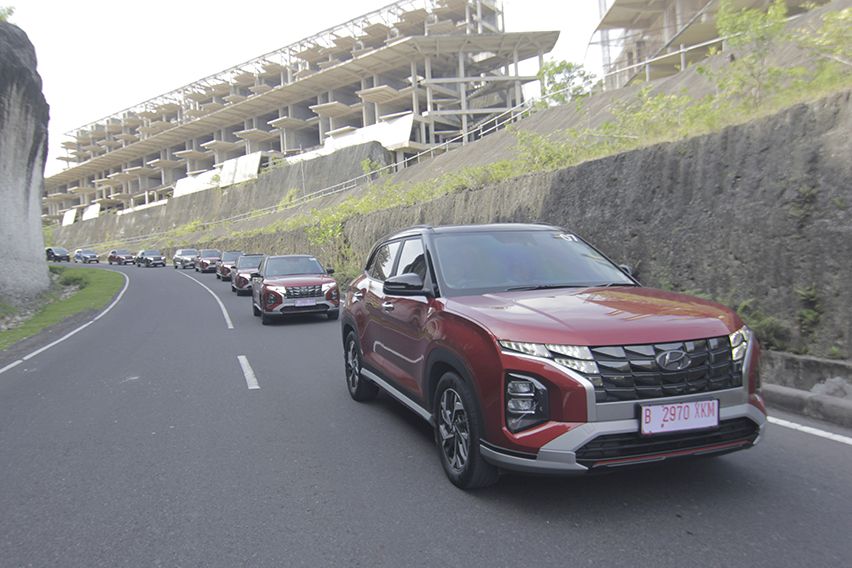
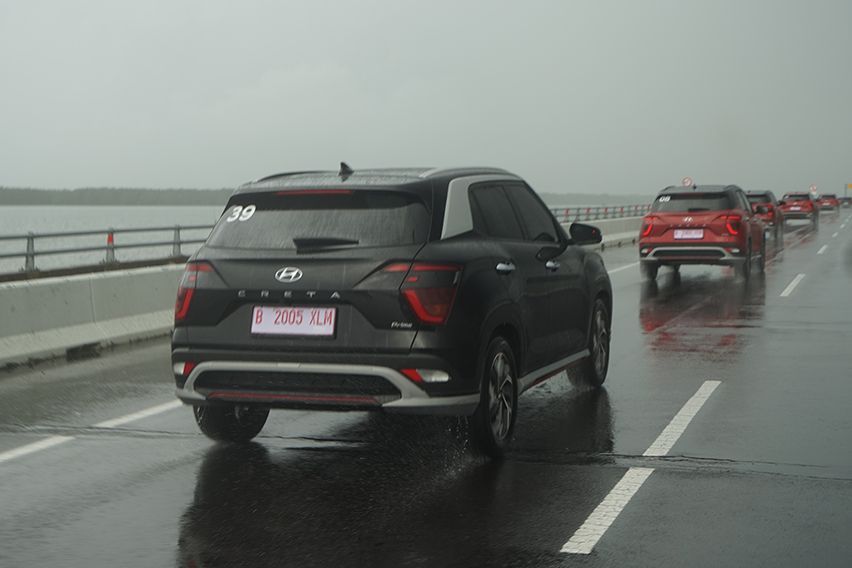
The experience of driving a Hyundai Creta for the first time still leaves an impression on us. Although the opportunity was short on the island of Bali some time ago, we feel that there are still some details of this latest Hyundai product that deserve to be discussed.
The discussion, especially on the three factors that we think is the most interesting, is used as a reason for potential consumers to look at Creta. Anything? Check out the following:
These are the three factors that make you look at the Hyundai Creta
Hyundai SmartStream 1.5 Engine Sensation
Actually, there is no doubt about this 1.5L engine, because this engine has also been used in its sister brand, KIA Sonet, which has a slick impression. Of course there are different tunings given by Hyundai for road conditions in Indonesia and this is answered by bulldozing the streets of the island of Bali which has many winding and up and down road contours.
On paper, the Smarstream 1,497 cc 16 valve 4-cylinder engine is capable of producing a maximum power of 115 ps at 6,300 rpm with a maximum torque of 143.8 Nm at 4,500 rpm. The energy sensation can be translated well thanks to the installation of the Intelligent Variable Transmission (IVT) transmission.
The character of Creta's power is actually slow at the bottom, this is felt when the road conditions are congested or stop and go.
But thanks to a fairly sophisticated transmission, to get power when the gas pedal is stepped on, this SmartStream engine does not disappoint. Moreover, the driver is given the convenience of adjusting the transmission gear from the paddle shift behind the wheel and the transmission lever that includes manual mode by shifting to the right in D mode.
Hyundai Creta still includes a driving mode that can be selected via the dial on the center console with the transmission lever. Simply turning the dial, the driver can select ECO, Smart, Sport and Normal driving modes, which will change the color of the meter cluster according to the selected mode. Experiments while driving on the island of Bali use a lot of Sport and Smart modes which provide the sensation of fast gear shifting with fast charging power because you are driving with an escorted group. Apart from driving modes, Creta still offers a traction mode consisting of Snow, Mud, and Sand for suitable road conditions. This is quite an interesting feature for a front-drive SUV.
Hyundai Creta
The Creta digital meter cluster measuring 10.25 inches TFT also provides information on the average fuel used during driving on the island of Bali. During use, the driving style is carried out as normal as possible and even tends to be extravagant thanks to the use of Sport mode and often stepping on the gas pedal. From the information screen, the first day of use with the Airport - Uluwatu - Nusa Dua route, covered a distance of about 200 kilometers and recorded a fuel consumption figure of 10.8 kilometers per liter. For the second day, with the Nusa Dua - Kintamani - Airport route which has uphill and downhill routes, covering a distance of about 250 kilometers, recording fuel consumption of 8.3 kilometers per liter.
It feels a little lacking if the discussion of engine power is not accompanied by handling. Speaking of handling Creta, the suspension feels quite rigid which makes it feel hard on certain road contours. However, this setting feels right for maneuvering in many turns which makes the symptoms of body roll minimal. The steering wheel also feels precise enough to translate the driver's wishes when turning. This makes driving with Creta on the narrow roads of the island of Bali even more confident.
Advanced Features of Hyundai SmartSense
The opportunity to drive a Creta is also the right time to try the Hyundai SmartSense feature that is present in the top variant of Prime. This is a contemporary safety feature that has recently been present in several rival products that are present in the country.
The first feature that is felt is the cruise control mode which comes with the additional features of lane keeping assist and lane following assist while on the Mandara toll road, Bali. This feature feels helpful because Creta automatically directs the vehicle to stay in the lane through visual and audio information. When trying to change lanes without turning on the turn signal, this feature actively corrects the steering wheel to return to the right lane.
The blind spot collision avoidance assist feature is present to warn the driver in the rearview mirror when a vehicle is present from the left and right rear of the vehicle that is usually not visible. Several times this feature is active considering the traffic on the island of Bali is quite dense with the speed of vehicles going hand in hand. This congested road condition has also made the forward collision avoidance assist feature work several times to provide warnings and activate braking. Conditions that require the driver to continue in a series make this feature work to ensure that there is no collision with the vehicle in front.
Another feature that was felt was the hill start assist control which made it easier for the vehicle to stop and drive on an incline without worrying about moving backwards. The presence of a rear view monitor also helps when you want to park the vehicle. The Driver attention warning feature also had the function of giving a warning to the driver to rest after a long journey. Creta still has features such as safe exit warning, rear cross traffic collision avoidance assist, high beam assist, and manual speed limit assist, which unfortunately has not been felt in this experiment.
The presence of Hyundai BlueLink
This is an Internet of Thing (IoT) feature of Creta that connects the settings of several vehicle features via a mobile phone utilizing an internet connection. Hyundai calls it BlueLink which is a Connected Car Service technology with various functions. On the occasion of some time ago, Hyundai showed the function of this feature directly.
Technically, the Creta head unit has a SIM card attached to connect to the internet. Drivers just need to download the Bluelink application on their mobile phones to connect with various features. This BlueLink feature is also included with every purchase of Creta Trend, Style and Prime variants and has been subscribed for the next three years to experience these features.
Some of the features that come from the mobile phone application include remote engine start stop where the driver can start the Creta engine for two to 10 minutes to be ready for use. There is also a remote climate control feature that regulates the cabin temperature to suit the driver's wishes before entering the vehicle.
There is also a remote horn and light control feature that makes it easy to find a location in the parking lot. This feature will turn on the lights and horn for 30 seconds. In addition, there are remote door lock and unlock features as well as find my car which is connected to a map to show the car's position.
In the center of the Creta glass there is an SOS help button to connect to the emergency service center which operates 7 x 24 hours. Just by pressing the button, the Creta owner will be connected to the operator who will ask for emergency needs such as an ambulance, tow truck or the location of the nearest repair shop.
This BlueLink technology also has an auto collision notification feature where the vehicle sends a signal that an accident has occurred and the driver will be immediately contacted by the operator to inquire about conditions and needs during an emergency. The operator contacted through the mic and speaker in the car to confirm the condition of the driver who then contacted the police and medical services to the accident site.
Regarding security from theft, BlueLink also features stolen vehicle notification, stolen vehicle tracking and stolen vehicle immobilization. This feature detects sudden movements in the car such as breaking the glass and forcibly opening the car to then notify the Creta owner. When a car is stolen, for example, BlueLink provides car tracking by providing its location and route. Then through the call center, vehicle owners can request that the car engine be completely turned off so that it cannot be used by thieves.
Furthermore, the BlueLink feature can also set the vehicle's cruising area through geo-fence alerts. This feature provides a warning if the car is driven through a restricted area. There is also a speed alert feature to provide notification that Creta is brought beyond the specified speed. There is also a time fencing alert that regulates when Creta can and cannot be ridden. Valet mode is here to monitor the vehicle when it is handed over to the valet officer via a smartphone.
Regarding the BlueLink feature, many think this feature will not be used too much. However, seeing the full range of features on offer, the presence of this feature cannot be viewed only as a decoration. For Creta owners, this is the first to experience the connectivity technology that will surely become a feature standard in future products.
To experience the most complete features of Creta, prospective consumers must choose the top variant Prime with a price tag of IDR 397.5 million for single tone and IDR 399 million for two tone roof mode. This top variant is only available in IVT transmission options.