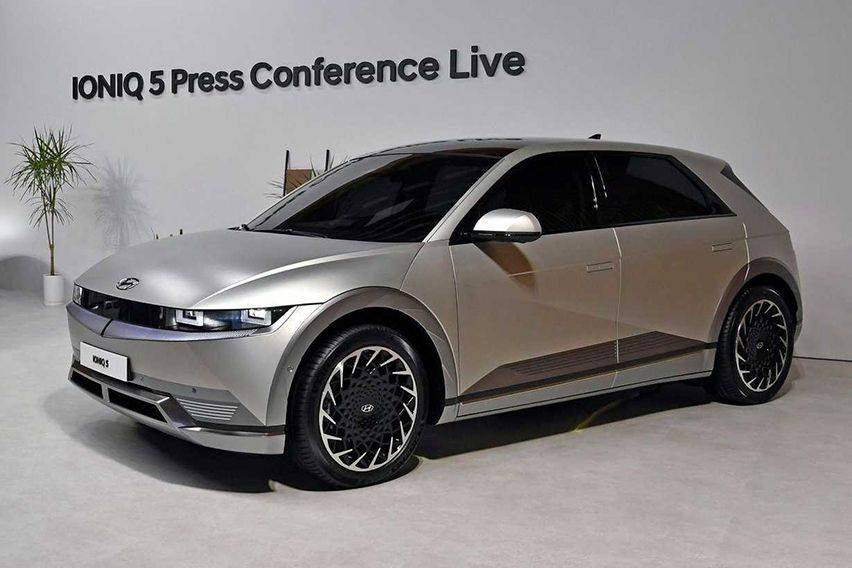
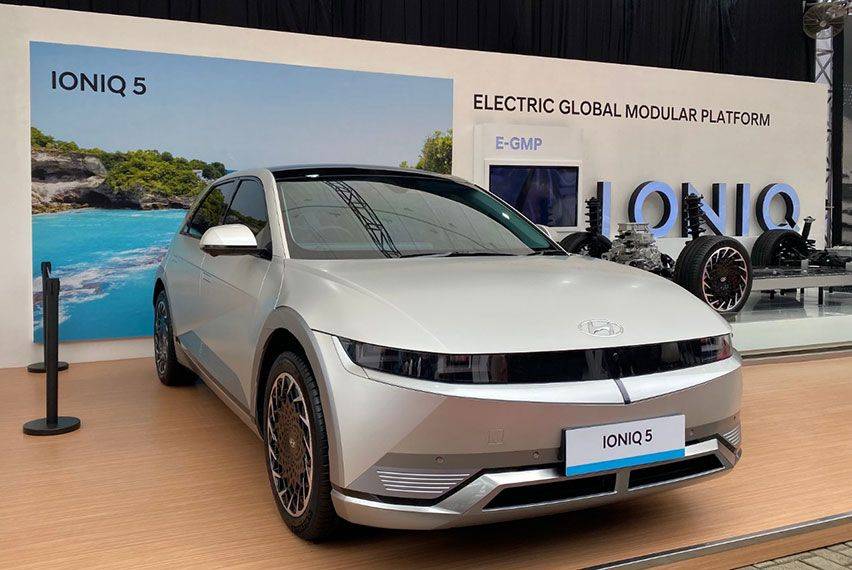
Hyundai plans to bring the Ioniq 5 to Indonesia this year. Estimates of the presence of the latest electric car are increasingly being heard with various information on social media. Previously, the Korean manufacturer planned to bring the Ioniq 5 in the first quarter of 2022. The presence of this advanced electric was also seen during a media visit to the Hyundai factory in Cikarang some time ago.
we tried to find information about the planned presence of the Ioniq 5 at several Hyundai salespeople in Jabodetabek. A number of salespeople have already opened orders for the futuristic car. "The pivot has been opened because many have asked. The booking fee is also quite cheap, only Rp. 5 million," said one Hyundai salesperson, Friday (4/3/2022).
Another Hyundai salesperson revealed the possibility that this electric car will arrive in late March or early April. It is possible that Ioniq 5 will be present at the automotive exhibition which will also be held at a similar time in the month. Other info, the Ioniq 5 is estimated to be priced at around IDR 700 million. This price is close to Hyundai's EV products that have been marketed, namely the Ioniq EV and Kona Electric.
In addition, based on information from the DKI Jakarta BPD website regarding information on the 2022 NJKB, Ioniq 5 has been registered with two variants. The first is the 2WD version which has an NJKB value of Rp.450 million and the AWD with an NJKB amount of Rp.473 million. The amount of the NJKB is still smaller than the Kona 2.0 EV 4x2 AT which is listed at IDR 488 million
For comparison, currently Kona Electric is offered at a price of around Rp. 674.8 million for DKI Jakarta. The Ioniq model is offered in two variants, namely the Prime EV with a tag of Rp. 637 million and the Signature EV variant at Rp. 677 million.
The appearance of the Ioniq 5 has been shown several times on various occasions, such as exhibitions of electric vehicles. The silhouette is futuristic with sharp lines and a bit of a boxy impression to show the sporty side of this electric car. The front view carries the Parametric Pixel design which is its identity with the addition of iconic LED lights. This design continues at the rear with the appearance of a rectangular LED stop lamp. The side view emphasizes the sporty look with a sloping C pillar.
The interior side further emphasizes the futuristic impression with the presence of a panoramic roof which Hyundai calls a vision roof because it uses one glass panel without support on the roof. The dashboard looks simple but still looks like a premium product, Hyundai calls it a magnetic dashboard. Drivers will find a 12.25-inch touch screen head unit and a digital meter cluster of the same size, making the large screen display a concern on the dashboard of this car.
Regarding the power source, Ioniq in Korea is offered with two choices of battery sizes, namely standard and long range batteries. The standard model uses a 58 kWh battery with a voltage of 800 V. This battery can charge from 10 percent to 80 percent in 18 minutes at a 350 kW DC charging station. Charging for 5 minutes will increase the distance traveled by 88 kilometers. If it is charged at a charging station with 50 Kw of power, the charging time from 10 percent to 80 percent becomes about 43 minutes 30 seconds and charging for 5 minutes will increase the distance traveled by 27 kilometers.
The long range battery model uses a 72.6 kWh battery with a voltage of 800 V which is claimed to have a mileage of 481 kilometers. Charging at a 350 kW DC station will take 18 minutes for a battery condition of 10 percent to 80 percent and a 5 minute charge will increase the distance traveled by 111 kilometers. For a charging station with a power of 50 kW DC, it takes one hour for a battery condition of 10 percent to 80 percent.
People seem to be impatient to experience this pure electric vehicle product made in Indonesia. Hyundai realizes an investment worth 1.55 billion US dollars until 2030 by building a factory that produces Creta and Ioniq 5 units. This plant will serve domestic demand as well as for exports.
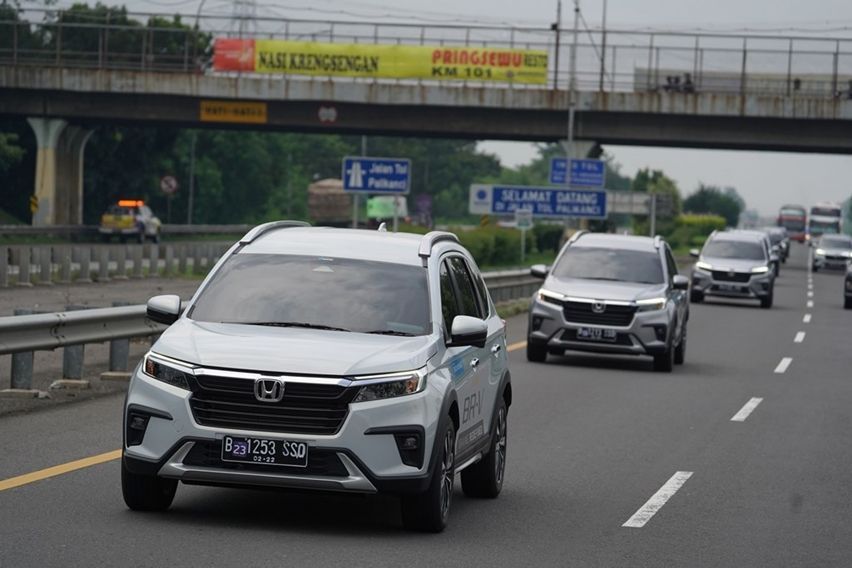
we finally got the opportunity to take part in the media test drive of the All New HondaBR-V. The activity held by Honda Prospect Motor (HPM) will last for two days, 11-12 January 2022. The route is from Jakarta-Semarang-Solo. All unit tests presented by HPM are the BR-V Prestige with Honda Sensing variant.
This test drive agenda with out-of-town travel routes can be used as proof of the new BR-V to experience the performance, comfort, and function aspects of every feature of Honda Sensing. The reason is that the manufacturer claims that this latest LSUV has experienced a series of improvements in terms of technology. Then how the impression, let's find out.
First Drive Honda BR-V Prestige
New Shades of Interior
The first time you enter the cabin, the AllNew Honda BR-V offers many new things. The nuance is much different from the previous model. The cockpit space really spoils the driver and first row passengers. The seat is designed in the style of a semi bucket, feels comfortable. But the seating position for us is relatively low for the size of the LSUV. Unless you have set the seat at maximum height. Even so, the foam is quite thick and is wrapped in dark synthetic leather.
Don't expect more for the seat arrangement, because there is no electric system yet, but it's still a conventional lever. The head room and leg room are quite spacious. Visibility is wide enough, there are no annoying ornaments. For the driver and front passenger, a center console box is provided with a cover that can be an armrest. But unfortunately, for our body size is too low. Even so, it is enough to support tired arms when traveling long distances. While the right side has a backrest in the groove of the door trim, it's also nice to be covered in leather.
Leather wrap also wraps the steering wheel with a color matching the dashboard, giving an elegant effect. For hands that often sweat, this is very helpful, the handle is not easy to slip. Meanwhile, setting the All New Honda BR-V steering wheel only relies on up and down telescopic. But interestingly there is a steering switch for MID, multimedia and telephone, and mainly there is a safety system called Honda Sensing. On the right is full of buttons for MID, Lane Keep Assist System (LKAS) and adaptive cruise control, buttons to adjust how close or far the car is in front of us. Excellent!
Just behind the steering wheel, there is a lever for the wipers and headlights with Auto High-Beam technology. The button for the Honda Lane Watch is at the end of the right lever which incorporates the turn signal and the lamp. Security on the left side of the car is guaranteed, because it can be seen visually on the head unit screen. The speedometer design is similar to that of the Honda City Hatchback RS. It's just that the latest BR-V MID display looks bigger and has lots of information options.
Door trim is still dominated by plastic materials. Likewise with the dashboard. But there is a little sweetener on the left side. There is a soft touch of leather combined with a piano black color. In the middle we can find a digital air conditioner and a 7-inch touch screen head unit. Underneath there is a cup holder and two USB ports and a 12V power outlet. Very useful for charging gadget batteries.
Overall, the All New Honda BR-V has a 7-seater passenger capacity. One of the advantages of this car's middle row seats is the presence of three adjustable headrests. This is not owned by LSUV in the same class as the Xpander Cross and XL7. When sitting on the left side, the buttocks feel something is up. It turned out that there was a seat belt lock that we thought didn't fit inside. But it became forgotten when the handrest was lowered. Apart from this, the middle seat can be adjusted back and forth plus recline settings. So you can adjust the height of the passengers.
For the third row of seats can not be adjusted back and forth. But fortunately, it can still recline even though it doesn't fall too much. Access to the back is relatively easy. Because the middle seat can be folded with just one pull of the lever, its position is on the side of the seat.
For the comfort aspect, there is a double blower AC which is mandatory for a three-row bench car. Passengers in the middle seat get one 12V power outlet, which is located on the center console. Being at the back gets near the window on the right. Luckily we brought an additional connector, during the trip we could charge our smartphone.
Driving Experience
The keyless remote is at hand, it's time to go on a trip. Oh yes, we were given the opportunity to try out the All New BR-V Prestige with Honda Sensing. This variant has a smart entry feature embedded. This means we don't need to interact with the remote, the lock can be opened by touching the door handle. Once ready to go, just press the engine start / stop button.
But in the new BR-V, it's nice to add Walk-Away Auto Lock to the system. As soon as the remote that we carry away from the car, it can lock automatically. In addition, the remote can now start the vehicle remotely via Remote Engine Start. In our opinion, this technology is considered advanced in the LSUV class. It's easy, first press the bottom button for 5 seconds, then press the unlock button. Voila, the car and AC automatically turn on.
The journey starts from Senayan Park, Jakarta to The Wujil Resort & Conventions, Ungaran, Semarang. Most of the routes we took were the Jakarta-Cikampek-Trans Java toll road. During the test drive session with a distance of approximately 475 km, we tested all aspects of the All New Honda BR-V. Of course, the main thing is to try the features of Honda Sensing.
First, in terms of performance, we think the sensation is very different from the previous model. The change from SOHC to DOHC 1.5 liter i-VTEC is very pronounced. The new engine, which is the same as the Honda City, gets a touch on the torque curve. When we accelerate on the Trans Java toll road, the energy is responsive at lower rpm to a speed of 60-80 kph, after that we value the performance as similar to the old version.
But it's a different story if the transmission moves to S (Sport) mode, when you step on the gas pedal, aggressive torque can be channeled properly. The pleasure of driving is felt, the acceleration seems to unite with the sound of the engine. For the record, this L15ZF-coded engine has 121 ps or 119 hp and 145 Nm of torque, the same output as the latest City.
In terms of stability, we can say that the All New Honda BR-V is better than the initial generation. Although it still uses a combination of McPherson struts at the front and Torsion beams at the rear, with geometric adjustments, it feels more balanced in terms of damping ability. Not too soft or hard. For example, on the Batang-Kendal toll road, there are many potholes and asphalt cracks. He is able to provide better damping and comfort. Even when passing long turns, body roll is minimized and doesn't feel so unsteady.
With the new structure and the wheelbase extended by 40mm, when trying to swerve to avoid potholes it still feels pretty steady. Of course, this is also helped by Vehicle Stability Assist (VSA) which is specifically designed to stabilize vehicle maneuvers. Steering is also more obedient with more controlled tail movement. In our opinion, this character is very fun.
Oh yes, because we were traveling in a group, the car was forced to be in a zigzag position. Well, here we can try the Honda LaneWatch feature. When you want to change lanes by activating the left turn signal, the image of the left blind spot area will automatically appear on the center screen. But the eyes can't lie, they still see conventionally from the left rearview mirror. You know, still not used to it.
In terms of comfort in addition to the feel of the new interior, the cabin secrecy feels very different from its predecessor. Wind noise can be minimized properly. Even so, when the gas pedal is fully pressed, the sound of wheel articulation and the rhythmic hum of the engine can still be heard, but not as loud as the old model. The vibration is also quieter, because the side mounted and trans mounting have been optimized.
Regarding fuel consumption, during a trip of approximately 400 kilometers at a relatively high and constant speed, the MID on the BR-V shows a figure of 16.4 km/liter. It's pretty standard for a 7-seater Low SUV class with a 1,500 cc engine.
Honda Sensing Feature Test
This latest model is inserted the ability to monitor external conditions and respond or act actively according to certain parameters. Presented to increase safety while driving while increasing comfort.
During the testing session, trying out the driving assistant features was the most fun part. The features that are often used are the Lane Keeping Assist System (LKAS) and the Road Departure Mitigation System (RDM). In principle, these two features work to keep the car in position so it doesn't go out of line without the driver realizing it. Both also help the vehicle in a safe position.
It is evident that when the car starts to deviate from the lane without operating a turn signal, there is a subtle vibration on the steering wheel and a visual warning appears in the MID section. For those who are not used to it, it may be a bit strange, because there is a steering wheel correction to keep the car from leaving the road markings or dividing line. Oh yes, LKAS is active when the vehicle is moving at a speed of 72 km/hour or more.
The next feature that is quite intense when traveling from Jakarta to Ungaran is Adaptive Cruise Control (ACC). Can work when the car is already at a speed of 30 km / h and so on. Because we go hand in hand, this technology is very helpful. Can keep the car in front in a safe position at a constant speed. Ease again, there are three levels of distance options and automatically adjust the speed with the vehicle in front of us. Crossing the toll road is safer.
Next up is the Lead Car Departure Notification System (LCDN). This feature is often used when in traffic jams and in traffic lights. If another vehicle in front starts moving and we haven't moved, there will be a warning in the form of visual and audio on the MID screen. Thank you for your attention.
Other assistance includes Auto-High Beam, just turn the lever that resides in the lamp setting to the Auto position, then the main lamp lighting can automatically adjust. As we went through the tunnel and as evening approached, the beams of light came on. You can also intuitively adjust between the headlights and night lights, so as not to dazzle other drivers from the opposite direction.
Then the Collision Mitigation Braking System (CMBS). This feature is actually very important but less intense because the route we took was a toll road. But there's nothing wrong with trying the sensitivity of this technology when in line at the toll gate. When the car is too fast to close the distance with the vehicle or other object in front, the system immediately gives a warning. If we don't respond, the system immediately takes over to brake automatically, even until the car stops.
New Design
Regarding the design, when compared to the old model, of course, there are many changes on the front. Now more modern. The new BR-V sports an inverted trapezoid-style grille. The vertical blades are neatly clad in chromium. Connected with LED headlamp and LED DRL on each side. In contrast to the old model, the front is made narrowed in a parallelogram pattern. Then the hood is now more upright as an SUV accent.
Not only the front, the body design also now looks attractive. You could say a combination of MPV and SUV. If previously the SUV design approach was very pronounced, now the design lines are more dynamic with firm lines blending from the front to the back. Even so, the adventure character persisted. Formed from black fenders or wheel brows around the body. The bumper is more prominent following the protector at the bottom.
On the side, the rims that used to be 16 inches have now been changed to 17 inches with an aggressive new design. The back doesn't look much changed, but now it is equipped with a rear combi lamp equipped with an LED light bar.
Conclusion
From this test drive session, we got the impression that the second generation Honda BR-V offers a refined driving refinement compared to its predecessor, even its rivals. A series of updates and upgrades from the platform to the engine gives this 7-seater SUV an edge over its rivals.
Moreover, all the features included in Honda Sensing are presented comprehensively. A series of improvements in terms of safety and security technology is not just a gimmick. Its safety features cannot be underestimated, it is only natural that its level can be higher than its competitors.
During testing, we also felt that the All New BR-V was quieter, had more damping balance, and was more fun in terms of handling. Plus also the engine performance is denser in the lower rounds. Very helpful in stop and go conditions.
It's just that there is a little suggestion from us, namely the manufacturer can provide a defogger for the rear glass. Due to heavy rain along the Trans Java toll road, the view is somewhat obstructed due to condensation or fog. Hopefully in the next version or facelift it can be given.
And another important note from us is that, even though the All New BR-V has been equipped with smart features, all vehicle control remains in the hands of the driver. Honda Sensing technology only helps reduce the risk of an accident if all variables are met.
Indonesia is becoming increasingly important in the automotive world. For example, Hyundai introduced the facelifted version of the Creta for the first time in the world at GIIAS 2021, meaning that its global debut will take place in Indonesia.
This Creta is special to mark the operation of Hyundai's new factory, which will be the production base for several other models in the future. The factory which is handled by PT Hyundai Motor Manufacturing Indonesia (HMMI) is located in Cikarang, West Java, and has been running since the end of 2021.
First Drive Hyundai Creta 2022
The first model that is confirmed to be born from this factory is the second generation Hyundai Creta. This compact SUV will also be the product with the most affordable price in the Hyundai line-up in Indonesia so far.
Creta entered a fairly competitive segment against the Honda HR-V, Toyota C-HR, and its own twin, the Kia Seltos. In the family of Hyundai's own SUV model, its position is below the Kona, which is now only marketed as an electric version. To be able to have it, prepare funds of RP 279 million - Rp 397.5 million (OTR Jakarta).
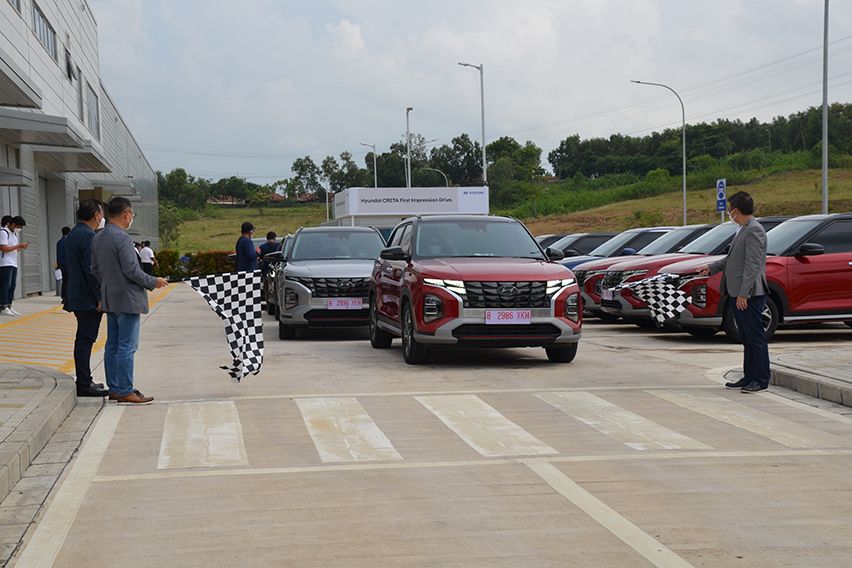
Hyundai is so proud of this new facility that they invited us to visit and have a tour to see the facilities they have at the factory. And on the same occasion, a short test drive session of the Hyundai Creta was also given.
The short test drive session or you could say the first drive was carried out in the proving ground area of the factory, as well as several roads around the factory. At least 5 kilometers we feel the impression of driving from Creta which is claimed to be ready to be sent to consumers soon. It is indeed short and short in distance, but at least it can give an impression of how it feels to drive directly on the road, not just on paper or a closed test track.
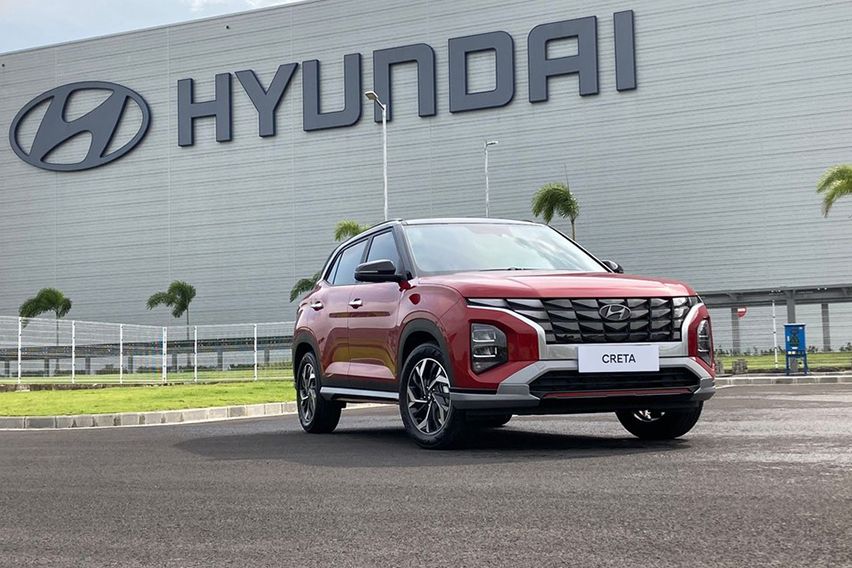
The look of this new version of the Creta immediately attracts attention from afar, especially because of the jewel pattern grille design that dominates the front fascia. The design style that adopts the look of the latest Tucson is at the same time reminiscent of the Hyundai SUV uniform as also used in Santa Fe and Palisade. The play of the design elements is attractive, the body lines are firm giving a dashing impression, and the combination of the taillight pieces is anti-mainstream.
Entering the cabin, a two-tone, black and brown dashboard is presented, which eliminates the impression of monotony. However, because all parts of the dashboard are made of hard plastic, Creta Prime, which is the highest and most complete variant, should be able to get a soft touch panel combination. At least to dampen the nagging of noisy and less appreciative netizens who always argue 'it's better'.
As a reminder, the Creta for the Indonesian market is equipped with a non-turbo 1.5 liter engine variant, which offers a power output of 113 hp and 143.8 Nm of torque. Because what we tried was the most expensive variant, Prime, the unit we tried had an IVT transmission, which is a system with further development of the CVT type. This car already has a keyless entry, so to turn it on, just press the engine start-stop button.
Looks like Hyundai designed the Creta engine to release its torque at low torque. Because when you just drive slowly, you can already feel this car has a solid torque in the early rounds, although usually the CVT transmission takes a bit of time to transmit torque from the engine to the wheels. Moreover, CVT applications generally prioritize comfort and smoothness, not performance. But this Creta transmission can provide a smooth feeling and torque at the same time, in a dose that feels just right.
The proving ground circuit at the Hyundai factory became the first test location, starting with a long straight track for acceleration tests. Immediately we gas in this car gradually to invite a little speeding. Indeed, the torque can be felt immediately at the beginning of acceleration, but as the speed increases the speed still feels smooth. Even until the speedometer needle touches 80 km / h, the engine does not feel breathless.
At the end of a long straight track, an oval bend with a medium radius greets you. The body's response when braking hard enough before entering the corner did not swing much towards the front. Even when asked to turn at a speed of 40 km / h and change direction before returning to a straight track, the suspension is quite stiff to withstand body roll. The steering wheel also feels full, not just light, so it's more communicative to maneuver.
First Drive Hyundai Creta 2022
Devoting the next straight track, we try to switch to Sport mode to feel the maximum performance. Just step on the full gas, the engine immediately screams to the red line. Of course, faster acceleration and more abundant torque are felt. But in this Sport mode, the ECU instructs the transmission to simulate a gearshift at more than 6,000 rpm, almost touching the red line at 7,000 rpm.
Then the next obstacle is an incline with an angle of about 20 degrees, to prove the ability of the engine and front wheel drive on a steep incline. I deliberately stopped Creta for a moment at the beginning of the incline to feel the Hill Start Assist as well. After successfully holding for a few seconds when the brake pedal is released, the Creta can easily climb without being forced. The trick With an IVT transmission, give the gas input gradually to get optimal torque when climbing.
We were invited to leave the factory area to experience Creta on public roads. This gives preference that is more relevant to everyday use. What we go directly to are roads with damaged or bumpy surfaces. We want to know what the damping quality of the suspension is like.
Incidentally, the traffic around the factory was quite quiet, so we were able to take Creta back with a bit of a rush. When we tried to accelerate fast with manual mode in the transmission, the shift of the 'gear' every time the paddle shifter was touched felt smooth, not jerky. The existence of a paddle shifter will accommodate our needs to maximize engine performance or even to make fuel consumption more efficient.
The roads around the Hyundai factory in the Deltamas area are apparently not too damaged even though many heavy vehicles pass by. But at least there are some roads that have a slightly uphill contour. Quite amazed when crossing the bridge that begins with an incline. Drove quite fast, above 60 km / h, Creta turned out to have a suspension character that is arguably better than the price. Soft when swinging, but the damping is not harsh. It can be claimed that it is more mature than the current HR-V's suspension.
If we can compare, we think the Creta suspension damping can be compared to a higher class SUV, maybe in the Rp 500 million class. This is the thing that has stuck with us the most from our brief session with the Hyundai Creta, so far. Sorry, Seltos, but your twin brother is on a level better taste.
There are quite a number of active safety features built into this Creta, and during this session we got to try a few. Most noticeably work are Lane Following Assist (LFA) and Lane Keeping Assist (LKA). These two features often provide warnings and steering corrections as soon as we pass road markings without turning on the turn signal. There are many more safety features in the Smartsense package, as well as Bluelink which is an attractive offer from Creta.
From this short first drive, we see that the Hyundai Creta has a lot of potential that can be explored again. Moreover, it is interesting to see what can be done through Bluelink technology which can provide first aid when an accident or vehicle is stolen. It cannot be underestimated, the first product of Hyundai produced from Indonesia. We are waiting for further action.
Hyundai Creta is Hyundai's newest model for the Indonesian market. The SUV, which is present at the end of 2021, is planned to be produced in early 2022 and is now ready to be shipped to various regions.
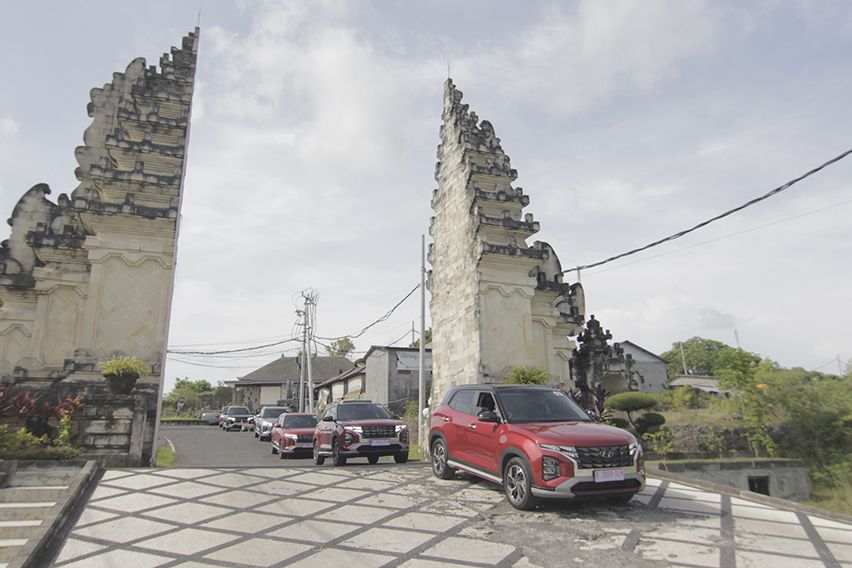
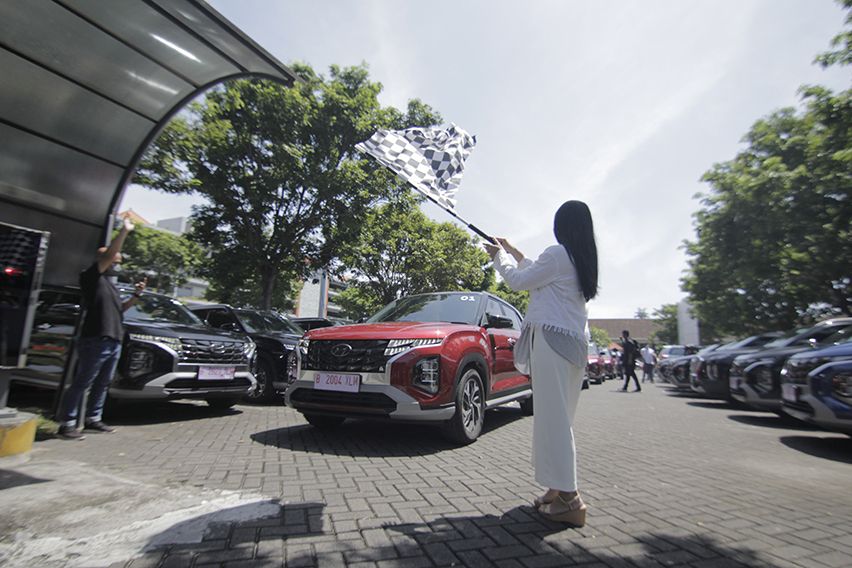
we were one of the lucky ones to try Creta for the first time in the Hyundai factory area in the Cikarang area, Delta Mas, some time ago. Then on January 26-27 2021, the second chance to ride a Creta was here and this time to feel the performance, features and control on the Bali Island highway. A total of 38 units of Creta were tested with several media with a cruising range of more than 200 kilometers.
Hyundai Creta Test Drive
"Hyundai expresses its gratitude to media partners and automotive observers in Indonesia for their participation and support for the 'Creta Driving Day: Joy of Connection' activity on the island of Bali. Hyundai CRETA has received a very positive response from customers, even before they can tested and witnessed the Hyundai CRETA firsthand both at the dealership and on the streets. This enthusiasm is reflected in the more than 1,700 Vehicle Orders (SPK) that Hyundai has registered until the end of January 2022 since it was introduced last November, "said Makmur, Chief Operating Officer, PT Hyundai Motors Indonesia (HMID) in a statement, Saturday (29/1/2022)
On the first day of the Hyundai Creta test drive media activity, participants arrived at I Gusti Ngurah Rai Airport in Bali and immediately got a Creta unit that had been distributed by the committee. This Creta design, which was made specifically for the Indonesian market, comes with a parametric jewel hidden type DRL design, high mounted stop lamp and boomerang shape LED Stop lamp at the back. The impression of a dashing SUV comes from the 17-inch diamond cut alloy rims. This makes the Creta look quite striking in the midst of various other automotive products on the road.
Several comfort features are present in the Creta such as an air purifier that is integrated with the armrest, ventilated seat, and a cooled glove box for convenient storage.
The first route is to a restaurant in Uluwatu with access via the Bali Mandara toll road. This opportunity is used to test the ability of the Smartstream 1.5L engine with the Intelligent Variable Transmission (IVT) system that produces a maximum power of up to 115 ps/6,300 rpm with a maximum torque of up to 143.8 Nm/4,500 rpm. Creta is also equipped with ECO, Comfort, Smart and Sport driving modes for various driving character desires.
Hyundai SmartSense
This toll area is an opportunity to try out the Hyundai SmartSense feature which consists of Lane Keeping & Lane Following Assist (LKA & LFA). These two features will help the car stay within the road markings through visual and audio information, as well as help return the car to its ideal position when it gets off the mark.
Hyundai Creta Test Drive
In the midst of a speeding car, Hyundai also equipped the Creta with a safety system called Forward Collision-Avoidance Assist (FCA), where this system automatically warns of the potential risk of a collision from the front.
On this occasion, Hyundai again shows Connected Car Service technology through the Hyundai Bluelink feature. Suprayetno, Head of Service Planning and Strategy at PT Hyundai Motors Indonesia. In this session, each participant was given a smartphone equipped with Connected Car Service technology, Hyundai Bluelink showed how to use this advanced technology.
Through this feature, participants can find Creta units that are paired according to the system connected to the smartphone and turn on/off the lights or car horn. Creta owners can also directly adjust the cabin temperature as desired and then start the vehicle. All these processes can be done only through the touch of the smartphone screen in the hand.
This technology will also provide security and convenience, because through Hyundai Bluelink, customers can gain access to various advanced features, such as Stolen Vehicle Notification & Stolen Vehicle Tracking which will operate when a vehicle theft attempt is occurring by sending notifications to the customer's smartphone and allowing users Hyundai Bluelink to identify the current position of their car.
These features are then also supported by Stolen Vehicle Immobilization, which is a service available at Hyundai Bluelink so that users can contact the Call Center and ask the stolen car to be temporarily suspended. In addition, there are also ACN (Auto Collision Notification), SOS/Emergency Assistance, and Roadside Assistance (RSA) buttons that can be used by car owners in other emergency situations, such as when they need medical assistance or when the car is damaged.
Feature Rich
The first day closed with a visit to the Pandawa Beach and Melasti Beach areas to enjoy the sunset. Uphill and downhill roads are interesting places to experience the benefits of the hill start assist control feature.
The second day of the trip started with heavy rain which made the road conditions slippery and challenging to get to the next destination, namely Kintamani. To get to the area, the participants had to pass a route of at least more than 70 kilometers with dynamic road characteristics, such as uneven, twisting, and bumpy roads. Here, participants feel the ability of the Creta engine and transmission is better with some additional features.
Even though it was only given a short time with a busy event that made the participants tired from participating in the activities, the experience of these two days was enough to feel the sensation of driving with Creta. It is better to do a more complete test when a loan unit from Hyundai is available, including to see fuel consumption and explore other Creta features.
Hyundai provides several advantages for every purchase of Creta such as a basic warranty of 3+1 years or 100,000 kilometers, free maintenance services for five years or 75,000 kilometers, free 24 hours roadside assistance, availability of Hyundai Genuine Accessories and the option to extend the warranty when buying a Creta through the platform. click to buy.
Hyundai also provides a special ownership program called the Hyundai Owner Assurance Program which consists of a Resale Value Guarantee, as well as a new Creta Replacement guarantee.
The New Xpander is Mitsubishi's newest product in the MPV class in Indonesia. Present for the first time in November 2021, the New Xpander offers several updates from several sides such as exterior, interior and safety features.
Bearing the New status makes potential consumers wonder what kind of updates are provided, especially in terms of comfort and performance. Mitsubishi revealed that this update improves the driving experience with the Xpander, which is known as one of the most popular MPV products in Indonesia.
Oto.com tried New Xpander Ultimate, the top variant of the latest Xpander for a few days to find out what the sensation of this MPV is like and whether it is worth ogling in the midst of the many MPV products that are flooding the market. Check out the full results below.
Mitsubishi New Xpander
Exterior
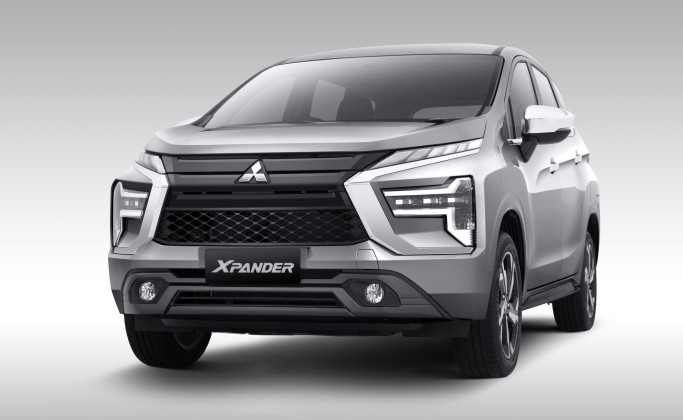
The first discussion certainly cannot be separated from changes in the exterior design of the latest Xpander. The design line is still the same as the old model and Mitsubishi provides the most visible difference in the shape of the headlamp at the front and the stop lamp combination at the rear which now comes with a T shape and uses LED technology. For fans of Mitsubishi's Dynamic Shield design language, don't worry because it's still available on this latest model. The distinctive style of the headlamp at the bottom with LEDs on the top is also still included in this latest model.
Another addition to this latest Xpander comes with a sportier front bumper, side sill garnishes, and also 17-inch two-tone alloy wheels wrapped in 205/55/R17 tires. Although this section is more of a subjective assessment, the Xpander design approach is now closer to the Xpander Cross twin, aka approaching the SUV style.
Regarding dimensions, the New Xpander offers a length of 4,500 mm, a width of 1,800 mm and a height of 1,750 mm. The ground clearance has increased to 220 mm thanks to the use of 17-inch rims, as well as settings on the suspension which result in cruising ability on various roads in Indonesia.
The unit borrowed by Oto.com carries the Blade Silver Metallic color. This is one of the colors offered from a total of five colors on the New Xpander, namely Quartz White Pearl, Jet Black Mica, Graphite Gray Metallic and Sunrise Orange Metallic. Regarding the price, the white color is given an additional cost of Rp. 1.5 million from the price offered by Mitsubishi.
Interiors
Entering the New Xpander, the changes are felt in several parts. The most striking is the dashboard design which now uses the horizontal axis design language with a touch of soft pad in some parts. This makes it look more premium and with the addition of a wood panel in the middle, the impression of exclusivity is quite pronounced. This soft touch can also be felt on the door trim which shows a combination of plastic material and stitches on the soft pad.
The main concern is on the 8-inch head unit screen which has smartphone connectivity, voice recognition, USB player, and iPhone/iPad/iPod connectivity and as a monitor for the rear camera. In appearance, the new Xpander head unit is ordinary but it must be admitted that the sound distribution is quite slick thanks to the presence of tweeters on the A pillar and speakers scattered in the cabin.
Mitsubishi New Xpander
Attention then turns to the now digitalized AC settings with buttons for blowout and temperature. Unfortunately for the temperature the instructions do not show the number of degrees Celsius and still use bar instructions that have different lengths. This was confusing if you want to set a cooler temperature to be directed up or down.
Regarding cabin color, the latest Xpander Ultimate comes in a premium beige color. This color also gives an airy impression with a fairly comfortable seat design. The driver can adjust the comfort with the presence of setting the direction of the seat lying upright, high and low and back and forth manually. Convenience is also obtained with the ability to adjust the tilt and telescopic.
Speaking of the driver's area, the New Xpander steering wheel comes with a new design inspired by the Mitsubishi Evo product. The circle feels comfortable in the hand with a diameter that is not too large and the presence of a touch of anti-slip leather. Convenience is present thanks to the audio steering switch on the left side and the cruise control button on the right side.
The meter cluster also gets an update on the side of the opening animation when the vehicle is started. Besides that, the function is still the same, namely showing various information about the vehicle, starting from the odometer, outdoor temperature, fuel consumption, mileage and so on. Instructions for engine speed and speed still use the conventional needle which is clearer.
Another convenience that is present in the Ultimate variant is the electric parking brake feature with auto hold and a start stop button to start the vehicle engine. The Xpander also offers 19 storage spaces spread throughout the cabin. For the second row, convenience comes with a double blower for air conditioning, armrest on the passenger seat with cup holder, and a USB port for charging on the center console.
The second line problem also does not change with the previous model. The second row still offers ample room for the legs and head of the passenger. There is no difficulty for passengers with a height of 169 - 170 cm in the second row. The second row seats can also be adjusted back and forth and lie upright to provide comfort for third row passengers.
As an MPV with a capacity of seven passengers, access to the third row is quite easy. Passengers simply press the lever in the second row to fold the seat forward and give passengers access to enter. Comfort in the third row comes from the placement of cup holders on the left and right and a power socket for charging on the right side of the vehicle. Although it comes with a narrow mirror at the back, sitting in the third row still provides a wide perspective towards the front as well as headroom that is not too cramped for a person with a height of 169 cm. As an added convenience, the headrests of all the seats in the second and third rows are separate and can be adjusted for comfort.
Talking about the cabin can not be separated from the size of the luggage. Access to open the rear door has been using the electric button although it is still with a manual spring. When the third row is not folded, there is enough room to put a medium-sized bag and a compartment at the bottom for storing shoes and tools. Folding the third row of seats is also quite easy, just pull the rope at the end of the third row of seats and the bench will fold flat on the floor. As a result, larger luggage space is obtained with easy access for loading and unloading large items.
Machine
Regarding the engine, the New Xpander still uses a 1.5L Mive DOHC 1,499 cc engine that produces 105 ps of power at 6,000 rpm and 141 Nm of torque at 4,000 rpm. The update is present in the transmission which is now offered with a five-speed manual option and the latest CVT. In terms of energy, it is no different from the previous model, but about the sensation of driving with a CVT transmission, the New Xpander is claimed to be more efficient.
The sensation of using a CVT is different when it is still a conventional transmission. Although now the Xpander only offers P, R, N, D and L transmission modes, this transmission comes with an 8-speed simulation that makes the sense of shifting gears quite pronounced. Unfortunately there is no manual mode in this transmission as well as the paddle shift behind the wheel.
If the driver wants to get a burst of power to pass other vehicles, just press the S button on the transmission lever which will bring up the S (sport) mode. This allows the computer to shift gears at high rpm with the greatest force that can be felt. During the use of the New Xpander, the S button is the most widely used because it makes it easier when you want to accelerate quickly.
During use for a period of one week with a distance of about 400 kilometers, the New Xpander shows consistent fuel consumption figures at 12-15 km per liter. This is due to use in the city, freeways with various conditions, namely traffic jams, stop and go and smooth.
This consumption calculation is also helped thanks to the presence of the auto start stop feature. This feature will turn off the engine when in a temporary stop condition such as at a red light with the foot fully pressing the brake pedal. The engine will restart when the brake pedal is released.
Convenience during the use of the New Xpander comes from the new electric parking brake feature which comes with auto hold. This feature makes it easier to stop by activating auto hold, no need to press the brake pedal continuously. Attention is needed on pressing the acceleration pedal because it takes adaptation to get the car moving again
Driving sensation
The discussion about the sensation of driving is preceded from the driver's point of view. The New Xpander provides a wide viewing distance thanks to the angle of the windshield that protrudes forward. This also affects the position of the A pillar which is not difficult in terms of blind spots when turning. The Xpander dashboard gives a spacious impression, especially on the front which has a wide distance. As mentioned above, the driver can easily adjust the driving comfort in this model thanks to the telescopic tilt setting of the steering wheel as well as thanks to the settings on the seat even though it is still manual using the lever.
The control is quite precise, coupled with the new steering wheel design, making the New Xpander driving sensation quite different from the previous model. Steering with electric power steering is able to translate the desire of the driver to maneuver quite quickly.
Seeing the dimensions of the Xpander which is quite long, which is about 4.5 meters, there are no difficulties when in traffic jams or want to park. The ability to maneuver when parking is assisted by the rear camera while the confidence to maneuver on narrow roads or traffic jams comes from a higher and wider perspective.
This maneuverability also feels better with the use of Macpherson strut suspension with coil springs at the front and torsion beam at the rear. This suspension is one of the changes from the New Xpander which is now more rigid but does not reduce comfort. The profile does feel tougher and still produces body roll though not too much. This update on the suspension side is even said to use the same technology as the Pajero Sport, especially for the rear suspension which has the same diameter as the Mitsubishi premium SUV.
This convenience side is indeed a concern when using the New Xpander. When bulldozing potholes or bumpy roads, damping works well even though it tends to be hard. The most fun is when this MPV is invited to speed with a little maneuver, the stability is still felt.
The most interesting feature of course cruise control. Its ease of use also helps travel on the expressway. Just press the button on the right of the steering wheel, press the gas pedal up to 60 km per hour, then point the lever down, then this feature is active. The driver just raises and lowers the button to set the desired speed.
About the silence of the cabin, Mitsubishi claims to have increased the ability to reduce sound for comfort while driving. Sound from outside is counted as minimal leaking in the driver's area. But the sound of the engine and tires can still be heard at speeds of 60 to 80 km per hour, which means it comes from the bottom.
Conclusion
It is quite questionable with this many updates, Xpander does not have All New status. The CVT transmission is also capable of translating the driver's wishes quickly for those who like to drive aggressively. Updates to the suspension also managed to make the driving feeling different from the previous model.
It is unfortunate, the difference with the naked eye with the previous model is not too visible. Relying solely on the shape of the lamp and LED technology alone, makes the difference from the outside with the old model insignificant.
In addition, seeing the updates from their tough rivals, namely the Avanza Xenia duo, the latest Xpander must move quickly. This includes responding to the trend of active safety features which are now more popular, which is under Rp. 300 million. Currently Xpander comes with safety features such as ABS EBD and BA, Dual SRS Airbags, ASC, and Hill Start Assist.
The New Xpander Ultimate which comes with the most changes is now offered at a price of IDR 299.77 million on the Jabodetabek road. This price makes the latest Xpander not included in the PPnBM 2022 scheme, which until now has no technical guidelines. But even so, with this price tag and with the changes offered by Xpander, this low MPV is still the answer for potential consumers who want a low MPV with seven comfortable passengers and a sturdy appearance like an SUV.
The All New Yamaha R15, the latest generation, was officially launched on December 2, 2021. Its presence has made the competition for entry-level full pharyngeal motorbikes even more heated.
How not, he gets a number of changes, and the addition of new technology that makes his opponents 'insecure'.
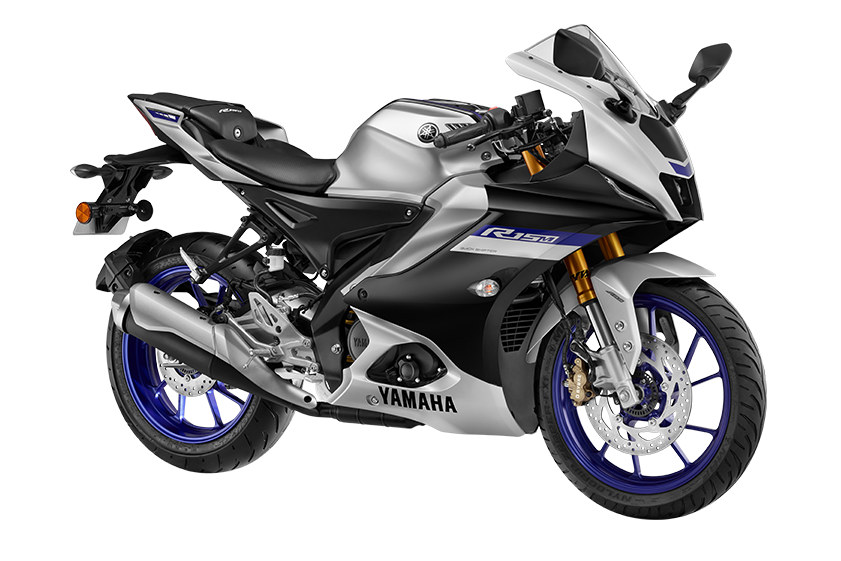
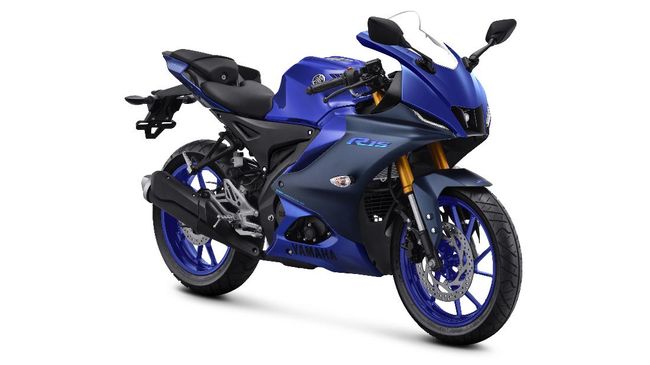
As we all know, the new Yamaha R15 concoction is inspired by the R Series motorcycle. Racing DNA was passed down to him and packaged in the form of "The True Supersport 155cc Engine". The fascia is similar to the YZF-R7 and the fairing construction is identical to the YZF-R1 and M1. As a result, the body is denser and is claimed to be more aerodynamic.
Yamaha R15M
It is offered in two types, the standard R15 Connected and the R15M Connected-ABS. This time we were given the opportunity to test the highest variant of the R15. Unlike the lower trim, the most expensive type we use is equipped with Traction Control System technology, Dual ABS, Quick Shifter (up), and Assist & Slipper Clutch. On the other hand, many are curious, are these features very useful when used for daily activities? For more details, here are the test ride results we got from the R15M from various aspects.
Riding Position Still the Same, But More 'Racy'
The first time sitting on it, the riding position is still the same as the previous model. The seat height is still 815mm. It's a little tiptoe, but not too much. Naturally, the height of the rider is only 173cm. When reaching for the handlebar type under york, the body is made slightly bent. Even so, the range is still tolerable.
At first it was a bit clumsy because I was looking for the location of the footstep. It turns out that the knee bends quite backwards. Understandably, riders usually carry scooters every day. The footpeg and handlebar positions are more or less similar, so the ergonomics triangle is no different from the previous generation R15. But specifically for the R15M type, there are nuances that make it more 'racy'. Because he uses the upper triangle whose shape is inspired by the YZR-M1. The center is holed horizontally and is given a blue front shock cover and a 3D emblem at the end of the tank.
When driving, don't expect much about the comfort sector. However, the role of the seat helps a little to support the buttocks. Interestingly, this variant has been wrapped in leather with a carbon look pattern. In addition, the large tank cover that pops up is able to accommodate the stomach and chest when carried at high speed.
Visibility is also still quite good. Especially the front cowl, able to protect the rider from the wind in front. And this of course has an effect on performance, especially the top speed scores that can be achieved.
Yamaha R15M
Thanks to the use of slip-on type handlebars, the cockpit feels spacious. Although the front is quite wide, the turning radius is quite a lot. When you want to turn back, you don't need more effort. Easy to control and lightweight.
And another interesting one. The yamaha R15M's speedometer is specially designed to look like the R1's. The digital screen has a larger dimension than before. In fact, it has 2 display options / modes, namely Street and Track. Mainly there is a new shift light which 5-point LED model lined up. Very motor racing style!
However, when used daily it is not very used because the eyes remain focused on the road. But it's different when used in circuits. You don't need to be afraid of getting into gear late, just the bright lyrics or the many points of the shift light are lit.
Stability Makes Confidence
Actually, there is no need to explain in detail about the stability of this R15M. Because the body structure is still the same as the previous model, still use the Deltabox frame. As we all know, the frame technology adopted is rigid and able to increase driving stability. And it was proven during the tests we did. Stability is maintained at both low and high speeds.
The use of an upside down suspension from KYB with a sport character is able to provide stability at high speeds. Moreover, it has been offset by monoshock rear shock absorbers with a sturdy and lightweight banana aluminum swing arm. Naturally, if he was ready to go down the track. For daily use is also not a problem. Devouring a variety of bends to be more steady. It's just that when passing a speed bump or on a bumpy road, the shock on the handlebars is quite pronounced, but still tolerable.
When taken for a leisurely stroll, this bike is quite stable and fun. Whereas for the 150cc class, the R15M has a weight of 140 kg. Because it is quite heavy, the effect at high speed does not feel floating. Besides, does this affect the succinctness of the maneuver? During the test, there were no problems when in the middle of a traffic jam. He still straightforwardly penetrates the narrow cavity between cars, motorbikes, and buses. It's just that you have to be able to predict when you are in the middle of a bigger vehicle. Because the mirrors used are quite wide. His agility is not much different from other Yamaha sport bikes. But because of the slightly bent riding position earlier, the rider gets tired quickly.
Good handling is also supported by the use of wide profile rims. 2.75-inch front with 17-inch rims wrapped in 110/80-17 tires. Rear 4 inches with the same diameter, wrapped in tires 140/70-17. Only if you want to feel good again, replace the tires that are a little wider. Yes, go up one step. Guaranteed, when taken cornering or when maneuvering, make the rider remain confident.
Genuine Motor Sport Performance
There is no doubt about the performance, although it is still the same as the previous model. According to Yamaha's 150 cc SOHC character, it excels in lower revs and acceleration. On paper, the pacemaker is capable of spitting out 19 hp at 10,000 rpm and 14.7 Nm of torque at 8,500 rpm. The compression ratio is 11.6:1, and the bore x stroke is 58 x 58.7 mm.
Testing impressions while on the road, in general there is no difference with the previous engine. When running at low engine speed, the graphics increase in power feels quite slow. This is useful for maintaining efficiency when driving in urban areas with stop and go conditions.
Breath each movement is also quite long. The power from the gas opening in each gear is responsive and can be felt at every engine speed. All that thanks to the variable valve cylinder head construction. As soon as you need maximum power, just twist the gas casing to 6,000 rpm, the original performance of the sport bike comes out right away. The valve adjusts immediately and is indicated by the appearance of the letter VVA above the tachometer. Power also throws more and acceleration feels faster.
While on a fairly quiet road, we tried to test speed. Yes, this motorbike is able to go up to a speed of 120 kph. Actually there's still some throttle opening left, but since this is a public road it's not good to go any further. This is just to conquer curiosity only. Overall the latest Yamaha R15 has a calm character but is ready to go wild if the rider wants it.
Guaranteed Safety Features
When we tried it, the embedded superior features were very useful. The first technology that we constantly feel is the presence of the assist and slipper clutch features. Very helpful when used for daily. It doesn't take more effort when operating the clutch lever, because it's light. Also useful when driving in traffic jams. While the slipper clutch is efficacious so that the rear wheels do not lock, even though lowering the gear when the engine is in high rotation.
Then Quick Shifter (up), making gearshifts smoother for city use. If in the circuit, of course, it can cut time during the process of shifting gears because there is no need to pull the clutch lever. But there is a little note for the manufacturer, at low speeds, the quick shifter which is already active at 2500 rpm still feels rough shifting gears. But if you have entered in high rotation, the work of this advanced feature is smoother.
Then it features a dual channel anti-lock brake system (ABS). In this test, we accidentally met a driver who immediately cut the lane. Immediately the rider makes a hard braking decision while at the same time balanced with an engine break, as a result, he can avoid danger. The motor lane can be controlled and the rear body does not move wildly. Oh yes, the R15M uses front calipers from Bybre (By Brembo). The response of the brake lever is softer with the bite force remaining calm but not surprising.
Not to forget the Traction Control System (TCS) which also contributes to a sense of security. It was proven when we passed the wet road after it rained. TCS performance is felt when there is a puddle of water around the corner. When you open the gas it turns out that the rear wheel almost slipped, that's where the feature works. Automatically reducing power, the engine immediately shuts down, so the rear tires can maintain traction. Almost!
Oh yes, besides there are features to ensure security and safety, there is one technology that we can't just forget. Yes, Y-Connect is also installed in this iron horse. Actually the contents of this system are similar to the Yamaha Maxi family (NMax and Aerox). Keep providing information about the condition of the motor. When connected, we can see news about recommendations for oil and battery maintenance, fuel consumption, the last parking location when connected to the application, malfunction notifications, phone and message notifications, dashboard revs to entertaining rank features. The difference is only at the beginning when opening the application. The silhouette of the R15 is displayed there. The rest are all the same.
During the test, we rarely monitored this technology, which is classified as a means of entertainment. Rider is too fun to be pampered with the superior features above. Only once in a while, and even then only see records of fuel consumption when arriving at their destination. The reason is because the placement of the instrument panel is at the end of the cockpit and behind the front fairing hood. It's a little hard to see when you're driving. However, the innovation provided by the manufacturer to the latest R15 deserves appreciation. Make it easy for all matters to care for your favorite motorbike. Cool!
Design
As we all know that the Yamaha R15M brings major changes in terms of design. Where the appearance of this 155cc sport bike is inspired by the MOGE R series.
The new look is most striking from the M-Shaped Intake Duct, which is an M-shaped air duct adopted from the YZR-M1 style. In that section there is one main lamp with an LED projector and there is also an addition with Twin Eyes DRL (Daytime Running Light) inspired by the YZF-R7.
The body panel design adopts two layers, supporting a sporty driving position typical of racing. Even the manufacturer claims this change makes the coefficient of aerodynamic analysis reduced from 0.307 to 0.293. Gives the advantage to reach top speed faster.
The other side of the exterior also presents the aura of a big bike look. One of them is a full digital speedometer with a smart cockpit design concept inspired by the YZF-R1. In this highest type, the driver can set to change the display to Street and Track mode, as well as the presence of a time recorder or lap timer.
In addition, the use of seats with carbon motif covers makes the rider feel even more special. Other interesting things can also be seen from the presence of a 3D emblem symbol located at the end of the tank and blue fork caps bearing the R15M logo.
Problem color on the suspension is also fairly special. Given a yellow gold color for the front suspension tube and given a KYB sticker and yellow paint on the rear shock. The silver swing arm and exhaust cover also support a sporty look. While the tail is still the same as the previous model.
Conclusion
For daily use, of course, very qualified. Especially with a myriad of advanced features that have been pinned to it. All are very useful, in terms of entertainment, Y-connect is available, from the driving comfort side there is an assist & slipper clutch and quickshifter, to security and safety with two-channel ABS and TCS.
The four excellent features of course make opponents in their class 'insecure'. In the 150-155cc full fairing sport motorbike segment, only he has been equipped with technology equivalent to MOGE. All the embedded technologies at the same time answer the curiosity when the R15M is used daily. Safety is also guaranteed.
Meanwhile, for fuel efficiency, we have carried out a full-to-full test. He who has traveled a distance of 177 km spends 6,790 liters of fuel. That means 1 liter can cover a distance of about 26 km. This test is carried out only in cities with combined traffic. Stop and go when in traffic jams and drive several times at high speed when the road is empty. This figure of course can be different, depending on how to drive.
The Yamaha Fazzio has become a model that has been widely discussed in recent weeks.
Yep, understand that, because it's the latest model that Yamaha has presented in Indonesia. What makes it interesting, especially if it's not a mild hybrid title machine. Either to follow the electrification trend or indeed Yamaha is ready to enter this market. At least the thumbs deserve to be given to Yamaha.
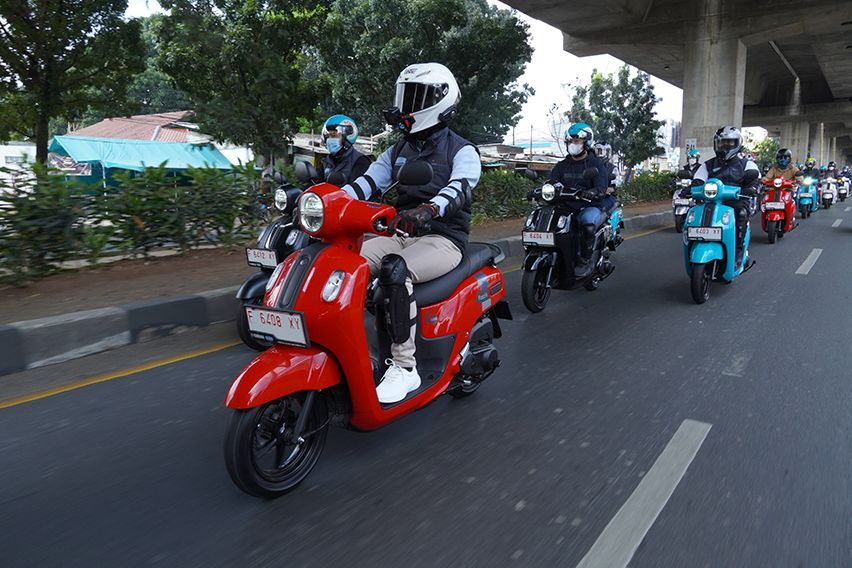
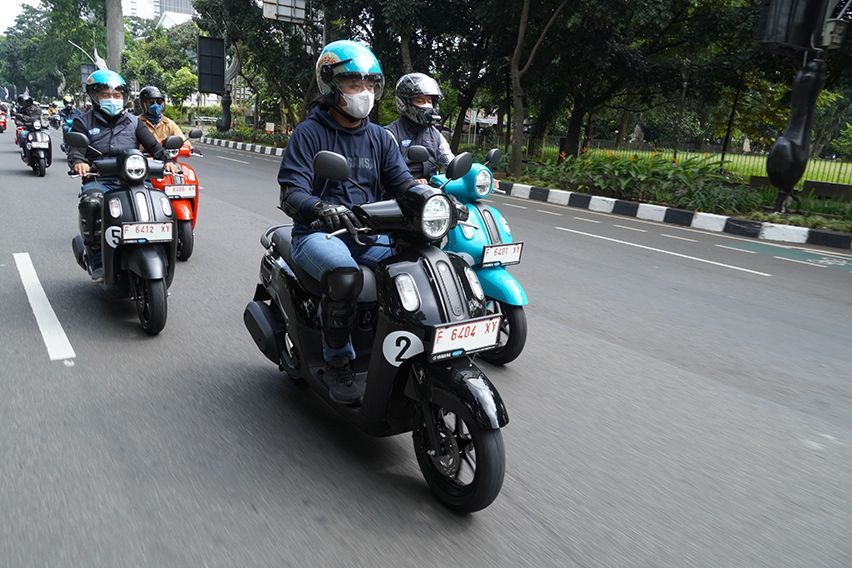
Yamaha Fazzio Hybrid
Entering a different category (Yamaha Classy), Fazzio was deliberately prepared to capture the market for the younger generation who likes urban scooters. Zigwheels had the opportunity to try the automatic scooter around the city of Bogor for 19.8 km. Of course, the way to feel driving and the point of view remains in the value for money corridor at this level. To note, it was sold for IDR 21.7 million for the Neo model up to IDR 22 million for the Lux type. Prices listed are on the road Jakarta.
Design
Before we talk about driving performance, it's good to start with the design. Because consumers often look at the design of a motorcycle first, then think about performance and completeness of features. Now, because Fazzio is prepared for young consumers, it has become the right path when Yamaha offers a beautiful color game. From the examiner's point of view, the neo cyan or turquoise green body color is the most eye-catching choice, aka attracting attention. So it's very linear when invited to style, hang out in cafes or daily mobility
Fazzio has a very classic look as well as simple, so it is easy for consumers to "digest" it. Starting from the shape of the top shell to form an oval plus a light with LED technology. Bright yet energy efficient. Then the vertical patterned turn signal is directly below it. The shape of the front wing also looks cute plus a touch of black paint in the middle for the Neo variant. While the Lux type has a layer of chromium on the chest plus brown synthetic leather on the seats. Other specifications remain the same.
Although Fazzio's style is like a retro scooter, it still seems to imply a sophisticated impression with the LED layout. Likewise, the appearance of the slim body to the design of the stern lamp. When looking at the panel meter is also fully digital. Suitable for urbanites. Regarding dimensions, it measures 1,820 mm in length, 685 mm in width, 1,125 mm in height and has a wheelbase of 1,280 mm. The seat height is 750 mm, just right for Asian people.
The tester has a height of 173 mm. When riding the wide seat Fazzio feels supported just right. Feet can be perfectly tread on the ground as long as the position is slightly forward slightly. Driving is also quite comfortable with the condition of both knees and arms very relaxed. Even better, it has a smart key system, so without holding the key, we can immediately step on the gas. Then the panel meter is fully digital, according to current trends.
Machine capability
OK, on to the technical specs. With an underbone frame, it carries a 125 cc engine. slightly larger than the Honda Scoopy's. The Fazzio engine has a compression ratio of 11:0.4. By a single piston spewing a maximum power of 6.2 kW at 6500 rpm. While the peak torque reached 10.6 Nm since 4500 rpm. They use an injection combustion system, electric starter, following 0.80 liter engine lubrication. This figure is enough to move the tiny scooter Fazzio.
Yamaha Fazzio Hybrid
Talking about hybrid technology, it actually refers more to Electric Power Assist Start. Well, this device helps the initial acceleration to be more powerful and smoother. Especially when we carry passengers, goods and roads uphill. The location of the test was deliberately carried out in the city of Bogor with quite a lot of incline terrain. Sure enough, Fazzio was not too bothered to navigate the road landscape like that. But still, maintaining the upward momentum must also be considered.
The initial pull is arguably responsive for the 125 cc scooter class. CVT does a good job of processing power flow until it is channeled gently to the rear wheels. According to Aji Handoko, Technical & Education Manager at Yamaha Indonesia. Fazio's CVT position was deliberately shortened so that it has agile pull when the accelerator lever is rotated quickly. The result was indeed the case when OTO.com tested it directly. Then the position of the machine is made slightly backwards so that the middle deck can be wider to accommodate legs or light items.
Handling & Y-Connect
Honestly, Fazzio's control is impressive. Initially by looking at the shape of the big head and wide chest, it will make handling a little stiff. But that's not the case. With a tire profile of 110/70 12 inches. When the scooter is invited to maneuver sharply, surf fast, everything is positively fun. Very precise and easy to control. This can be a valuable asset for Yamaha Fazzio, when used by consumers to split urban road congestion.
Apparently, there is one thing that is sacrificed, namely the rear shock absorbers feel hard when ridden alone. Spring rebound is very instant, so it is less able to absorb strong shocks when the Fazzio runs over uneven terrain or road embankments. Maybe the solution, if you really are a comfortable scooter lover, you can replace it with some aftermarket brands that can adjust the level of violence.
But there is still something else that can be relied on, namely the Y-Connect application. Riders can connect to get phone notification updates and messages. Then the parking location, maintenance recommendations (engine oil and battery / battery), monitoring fuel consumption and notification of malfunctions. That's all offered by Yamaha Indonesia in order to captivate the hearts of today's young generation. Then it became the only 125 cc scooter with this technology.