South Korean car manufacturer Kia has announced their aggressive plans for the electric car industry. The plan is that as many as 14 Electric Vehicles (EV) will be launched until 2027.
This strategy is part of the manufacturer's comprehensive plan to increase global sales volume to 4 million units per year by 2030. Starting from the business plan that has been prepared, Kia will launch at least 2 electric cars per year until 2027 later.
KIA Launches 14 Electrified Vehicles by 2027
"This roadmap builds on Kia's successful 'Plan S' strategy first announced in 2020, and reveals more details on how the company will achieve its vision of becoming a sustainable mobility solutions provider," the company said in its announcement. (7/3/2022).
In the 2 years since the company revealed its Plan S, Kia has developed into the most productive global electric vehicle brand and recorded the highest gross revenue and operating profit in 2021. They are committed to continuing this positive momentum to create further value, both qualitatively and quantitatively from 2022 and beyond.
Kia prioritizes the development of environmentally friendly cars based on pure batteries or BEV (Battery Electric Vehicle), plug-in-hybrid (PHEV) cars, and cars with hybrid technology. The target is to achieve total electric car sales of 1.2 million units and 14 different BEV model lines by 2030.
Later, in addition to launching a passenger electric car, Kia also plans to introduce two battery-based electric vehicles with pickup models. The target is a market with developing countries, of course with price adjustments.
"The company will make the sale of these vehicles the focus of business growth going forward. Kia will expand the proportion of environmentally friendly cars by 17 percent of global sales in 2022 to 52 percent in 2030," Kia said.
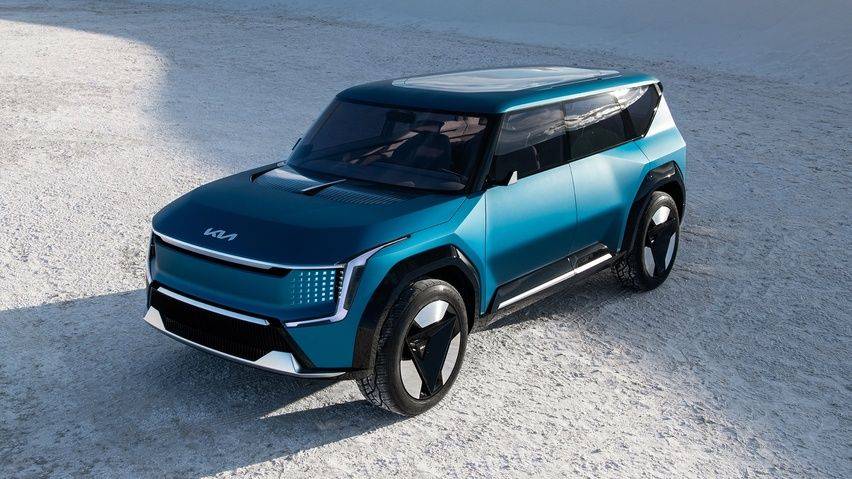
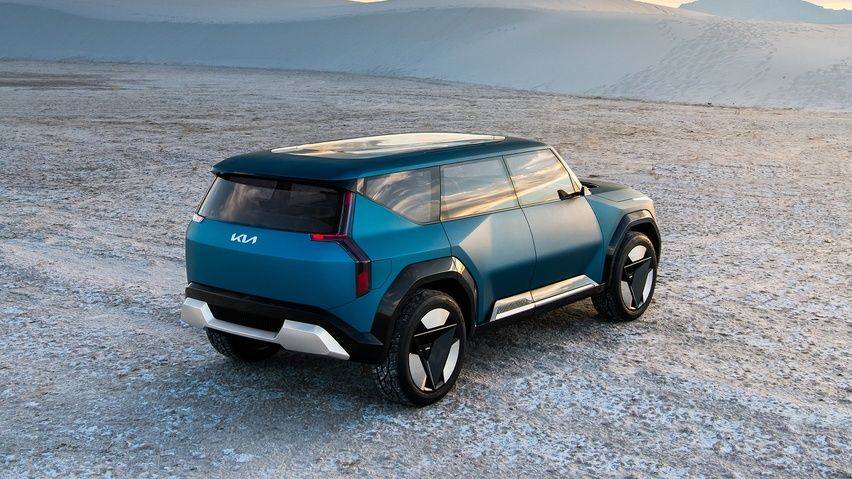
Meanwhile, based on information quoted from Carscoops, the 14 electric car lines include the Kia EV6 and EV9 which, if planned, will be launched in 2023. Then there are also a number of electric car models, ranging from hatchbacks, sedans, to SUVs (Sport Utility Vehicles).
KIA EV9 Concept
Some of Kia's electric cars will be injected with a new autonomous driving technology known as Auto Mode, including Highway Driving Pilot which allows the car to run without driver intervention.
Kia said South Korea will remain a key center for EV research, development, production and supply. They will also produce small and midsize electric cars in Europe from 2025, midsize SUVs and pickups in the United States by 2024, and entry-level and midsize electric cars in India from 2025. The closest is 2023 they will introduce a medium size EV in China.
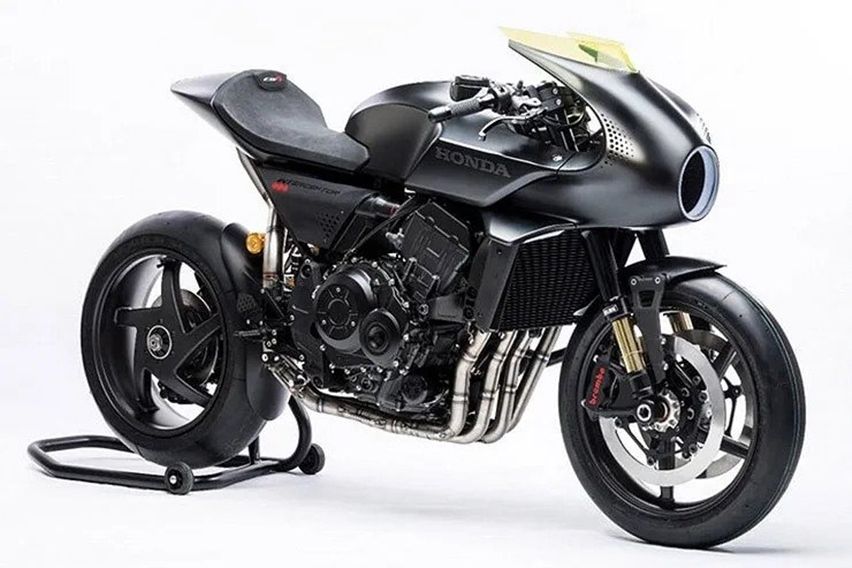
Honda announced that it is ready to release a new roadster called the Hawk 11 on March 19, at the 2022 Osaka Motorcycle Show. The teaser video that has been spread shows a brand-new unit that looks like a cafe racer with a half fairing. The model is allegedly a realization of the Honda CB4 Interceptor concept motorbike that was shown in 2019.
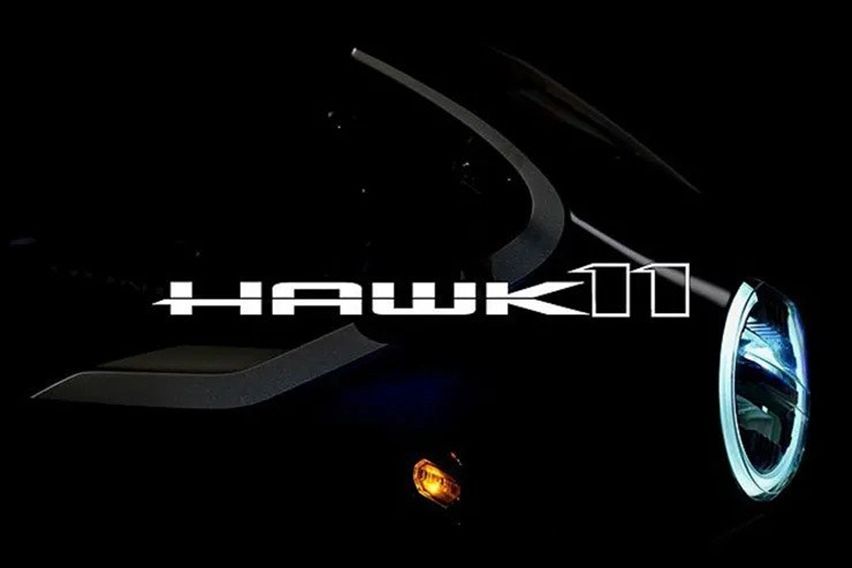
A new teaser video published on the micro-site of the Honda Osaka Show shows a close-up of the nose section of the Hawk 11. It shows the fairing, bottom mirrors and near-perfect circular headlights, similar to the Honda CB4 Interceptor concept. The images are dark and mysterious, usually done to attract consumers. The manufacturer also deliberately kept all the specification information before launch.
If the CB4 style theme is continued further back, we can expect to see a fairing that blends into the fuel tank, blends into the seat unit at the rear, with the mechanical parts all exposed at the bottom. Like the CB1000R and CB650R, this is a look that harks back to the past without degrading any particular model.
According to Honda, the Hawk 11 was developed with the concept of a big motorcycle that provides new value and life that can satisfy customers, especially experienced riders. The body package is designed with minimalism, creating a light ride combined with elegant styling to express the depth of taste as a motorcycle that is not bound by mere specifications.
When the Interceptor first appeared, it used the engine base of the Honda CB1000R. It has a four-cylinder engine that comes from the old Fireblade unit and a single-sided swingarm. But now the Hawk 11 seems to have a similar look but uses a completely different foundation. Seems to borrow from the Africa Twin. If it is realized, the steps are similar to the Rebel 1100 and NT1100.
The engine is expected to be mostly the same. 1,084cc, 4 stroke, SOHC parallel twin-cylinder configuration, liquid-cooled. It claims to produce a maximum power of 101 hp at 7,500 rpm and a peak torque of 105 Nm at 6,000 rpm. But most likely use a lighter engine, but can provide stronger acceleration, with better aerodynamics for an increase in top speed. If the Hawk 11 uses that engine, it is expected to be available with Honda's Dual Clutch Transmission.
An interesting note about the "Hawk 11" (or "Hawk Eleven") name is that it doesn't share the same "1100" nomenclature as other models that use the Africa Twin engine. In addition, the number 11 also has a possible callback to the 1977 Honda CB400T, also known as the Hawk II (Roman numeral for two). While the Hawk II lacks a fairing, it may give an idea of where Honda's designers got their inspiration for some of the styling elements.
The Honda Hawk 11 is also rumored to be filling the void in the 1100 series family following the discontinued CB1100, with the Final Edition model currently being marketed in Japan.
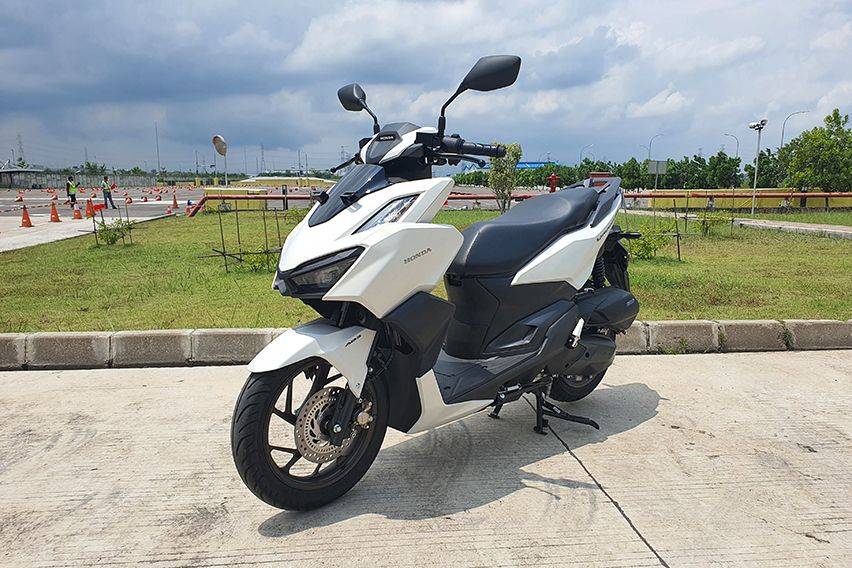
The All New Honda Vario 160 has made its global debut in Indonesia. Precisely he officially launched on February 2, 2022. He got a complete change to the engine, frame, design and features that are increasingly sophisticated. This motorbike produced by the nation's children is present in the country as an answer for lovers of high-performance sporty premium scooters. Here are interesting facts about him.
1. World Premier
The All New Honda Vario 160 officially launched in Indonesia in early February 2022. This launch is also the first in the world, aka World Premiere. Comes with a larger and similar engine to its brother, the All New Honda PCX 160.
The All New Vario 160 is marketed in two types, namely CBS and ABS. For the CBS type, there are Active Black, Grande Matte Black, and Grande Matte Red colors. While the ABS types are Active Black, Grande Matte Black, and Grande White. Each is priced at Rp. 25.800.000 (CBS) and Rp. 28.500.000 (ABS). All prices on the road (OTR) DKI Jakarta.
2. Landing in Vietnam
After sliding first in Indonesia, the All New Honda Vario 160 was exported to other countries, namely Vietnam. The first batch that appeared there was only available in limited quantities. There are only about 20 units with two complete versions, namely ABS and CBS.
Interestingly, this big scooter seems to have quite a striking price difference. Launching Motosaigon, the price of the All New Honda Vario 160 in Vietnam penetrated Rp. 50 million. For the CBS type, the price is 80 million VND or the equivalent of Rp. 50 million. While the ABS type costs up to 85 million VND or the equivalent of Rp. 53 million. So when it is calculated, the price offered has a very large difference from that in Indonesia.
3. Used by MotoGP racers
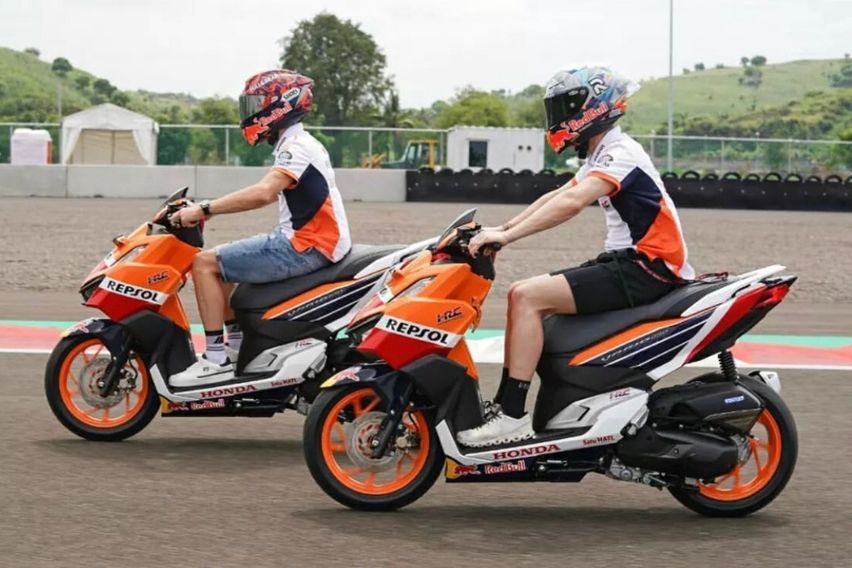
Astra Honda Motor (AHM) presents the All New Honda Vario 160 with the Repsol Honda Team (RHT) livery. The new model scooter was lined up as an RHT paddock vehicle in the Mandalika MotoGP series. With a special appearance, Vario 160 is used to support the activities of Marc Marquez and Pol Espargaro, as well as the team from RHT while at the pride of Indonesia, Pertamina Mandalika International Street Circuit.
A total of 4 units were provided, including number 93 for the 8-time world champion Marc Marquez and 44 for his teammate Pol Espargaro. The other two units are used by the paddock crew for mobilization while in the circuit area.
4. Different Engine Power with All New PCX 160
According to data on paper, even though it uses an identical PCX 160 engine, the power output is different. The All New Honda Vario 160 produces a maximum power of 15.4 PS at 8,500 rpm with a peak torque of 13.8 Nm at 7,000 rpm. The PCX 160 is bigger, which is 16 PS at 8,000 rpm and 14.7 Nm of torque at 6,500 rpm.
The difference in the data in the specification sheet occurs because the test is different from the PCX 160. His party tested the Vario 160 engine using Ron 88 fuel because this is the fuel that is mostly used by Vario 160 users in various regions in Indonesia. While the PCX 160 test uses RON 90 BBM.
5. Use eSAF (enhanced Smart Architecture Frame) technology
The All New Vario 160 gets improvements in the frame, now carrying eSAF technology (enhanced smart architecture frame). The claim can make him more agile and easy to ride.
But the use of this frame model does not have a positive impact on other sectors. Whereas the application of eSAF on its two smaller siblings (Scoopy and Genio) can reduce total weight and is able to provide more storage space. The weight of the All New vario 160 actually increases. Previously 112 kg is now 117 kg (ABS). The volume of fuel and luggage space under the seat is also still the same as the previous model, respectively 5.5 liters and 18 liters.
6. Pulse Ring Sensor Integrates with Disc Disc
Especially for the All New Vario 160 ABS, the front disc has a diameter of 220mm or larger than the CBS model. Because the pulse ring sensor or wheel rotation speed reader is needed by the ABS sensor to be integrated with the disc disc. In addition, the calipers use Nissin alerts, while the lowest variant uses Tokico.
7. Cheapest Installment Starting from IDR 1.039 Million
Honda Vario 160 is offered with 2 different options, the Jakarta OTR price from the salesperson for the CBS type is Rp. 25,962,000 and Rp. 28,662,000 OTR for the ABS variant. When calculated with a credit simulation, the cheapest installments are at Rp. 1.039 million/month. Of course, this amount is obtained if you take the CBS type unit.
The calculation takes the tenor of 11 months, 23 months, and 35 months. Down payment must be deposited at IDR 3,900,000 with installments of IDR 2,606,000 for 11 months, IDR 1,493,000 for 23 months, and IDR 1,163 for a tenor of 35 months.
If it's too heavy, you can pay a DP of IDR 6,400,000 in installments of IDR 2,336,000 for 11 months, IDR 1,325,000 for 23 months, and IDR 1,039,000 for 35 months.
Meanwhile, for the highest type with a price of IDR 28,662,000, you must deposit a minimum down payment of IDR 4,300,000 with installments of IDR 2,861,000 for 11 months, IDR 1,639,000 for 23 months, and IDR 1,276,000 for a tenor of 35 months.
Meanwhile, if you want something lighter, you can deposit a larger down payment of IDR 7 million with installments of IDR 2,569,000 for 11 months, IDR 1,457,000 for 23 months, and IDR 1,143,000 for 35 months.
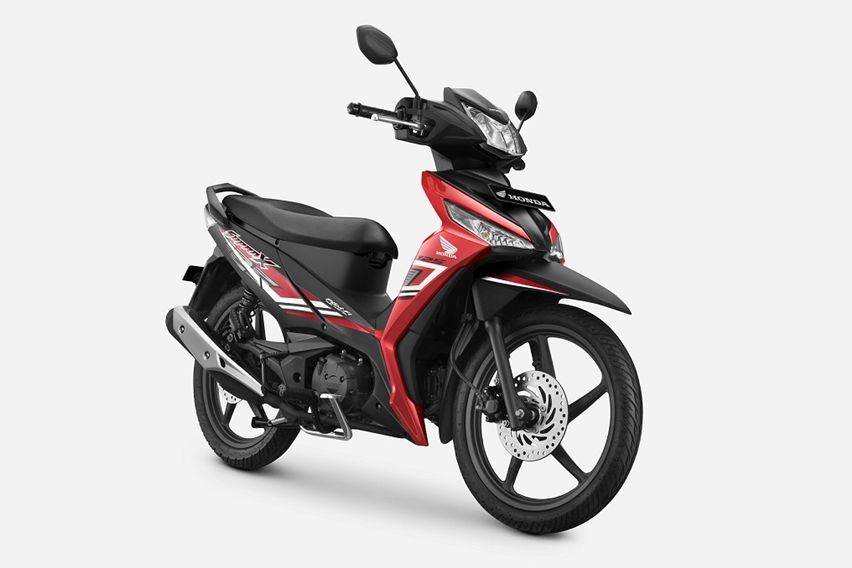
It is undeniable that the motorcycle market has been crushed by the presence of a scooter. Even so, the manufacturer did not completely abandon this legendary market. Motorbike users are still considered quite a lot thanks to the variety of convenience and efficiency offered. The latest, PT Astra Honda Motor (AHM) refreshes the appearance of the Honda Supra X 125. Simple, by offering new colors and stripes. But it still provides fresh air for those who are looking for the Supra X 125.
The refresh is also claimed to be sporty, adjusting to the latest trends for motorbike lovers in Indonesia.
Marketing Director of AHM Thomas Wijaya said that the Honda Supra X 125 has long been the best choice for motorcycle lovers in Indonesia. As an appreciation to its fans, AHM presents the latest refreshment that can increase the pleasure of driving.
"We hope that the latest color and stripe offerings that complement the toughness of the Honda Supra X 125 engine can become a mainstay motorcycle for its users in accompanying daily activities," said Thomas in an official statement, Friday (4/3/2022).
Honda Supra X type cast wheel (CW) or commonly called racing rim now comes with a new color choice of Golden Matte Black. This variant combines a black color wrapped with gold stripes on a slim and sporty body design. Then give the impression of luxury for its users. The color combination is now more complete with the presence of a sporty-style stripe design through the embedding of sharp and minimalist graphics combined with the color of the motorcycle body.
In addition to the Golden Matte Black color, the Honda Supra X 125 CW also comes with a choice of Energetic Red color. The racing rim version is priced at Rp. 19.635 million on the road in DKI Jakarta. While the SW type comes in Quantum Black color. It is marketed at a price of IDR 18,555 million on the road in DKI Jakarta.
The legendary Supra X 125 motorcycle still uses a 125 cc 4 stroke SOHC engine accompanied by PGM-FI technology. This technology is capable of producing more efficient fuel consumption up to 57.2 km per liter based on the company's internal testing claims.
Some other features are the presence of a dual keen winker and a position light equipped with stylish reflector lines, sharp appearance on the taillights with LEDs, speedometer display, odometer, malfunction indicator lamp and a more modern fuel indicator. Supra X 125 comes with prioritizing rider comfort through an ergonomic and easy to control riding position.
The excellent features of this moped include a magnetic ignition key that is used as a seat opener, a functional item hanger with safety, and a socket for charging mobile phones during long trips. The braking system is equipped with discs at the front and rear
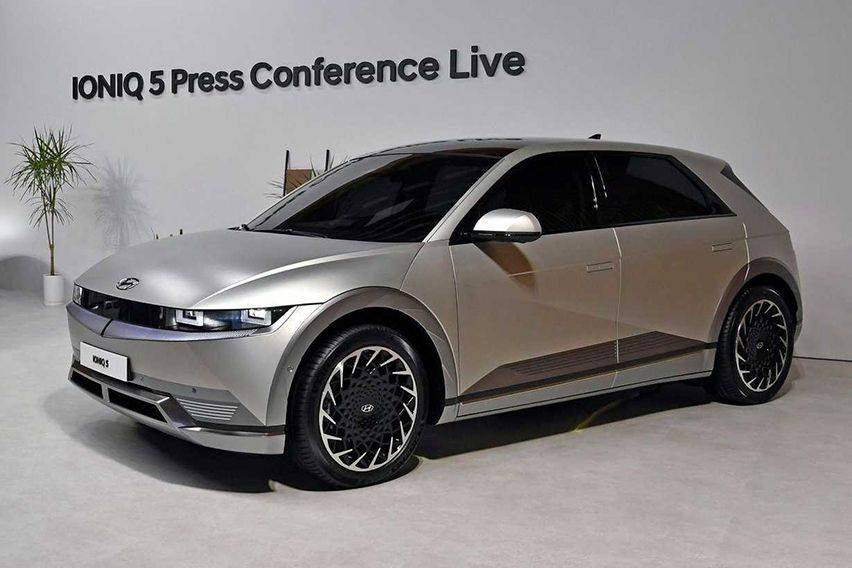
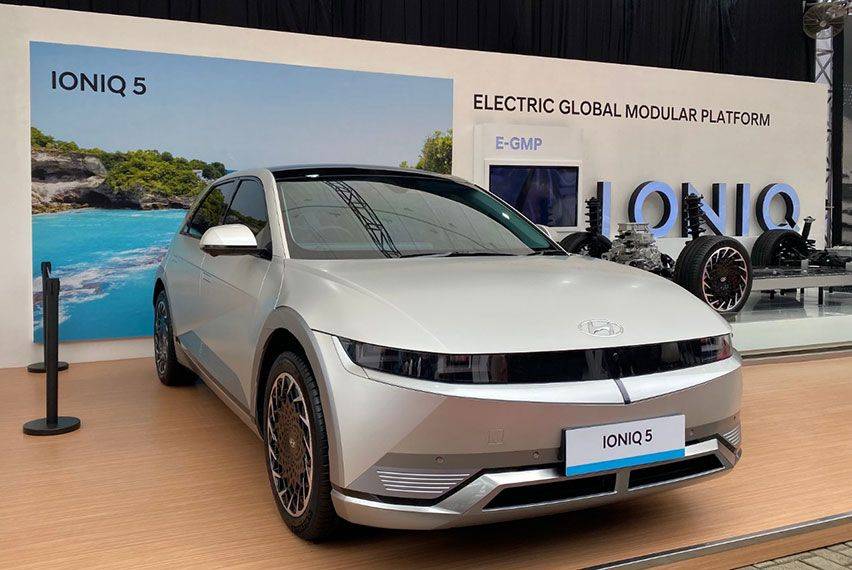
Hyundai plans to bring the Ioniq 5 to Indonesia this year. Estimates of the presence of the latest electric car are increasingly being heard with various information on social media. Previously, the Korean manufacturer planned to bring the Ioniq 5 in the first quarter of 2022. The presence of this advanced electric was also seen during a media visit to the Hyundai factory in Cikarang some time ago.
we tried to find information about the planned presence of the Ioniq 5 at several Hyundai salespeople in Jabodetabek. A number of salespeople have already opened orders for the futuristic car. "The pivot has been opened because many have asked. The booking fee is also quite cheap, only Rp. 5 million," said one Hyundai salesperson, Friday (4/3/2022).
Another Hyundai salesperson revealed the possibility that this electric car will arrive in late March or early April. It is possible that Ioniq 5 will be present at the automotive exhibition which will also be held at a similar time in the month. Other info, the Ioniq 5 is estimated to be priced at around IDR 700 million. This price is close to Hyundai's EV products that have been marketed, namely the Ioniq EV and Kona Electric.
In addition, based on information from the DKI Jakarta BPD website regarding information on the 2022 NJKB, Ioniq 5 has been registered with two variants. The first is the 2WD version which has an NJKB value of Rp.450 million and the AWD with an NJKB amount of Rp.473 million. The amount of the NJKB is still smaller than the Kona 2.0 EV 4x2 AT which is listed at IDR 488 million
For comparison, currently Kona Electric is offered at a price of around Rp. 674.8 million for DKI Jakarta. The Ioniq model is offered in two variants, namely the Prime EV with a tag of Rp. 637 million and the Signature EV variant at Rp. 677 million.
The appearance of the Ioniq 5 has been shown several times on various occasions, such as exhibitions of electric vehicles. The silhouette is futuristic with sharp lines and a bit of a boxy impression to show the sporty side of this electric car. The front view carries the Parametric Pixel design which is its identity with the addition of iconic LED lights. This design continues at the rear with the appearance of a rectangular LED stop lamp. The side view emphasizes the sporty look with a sloping C pillar.
The interior side further emphasizes the futuristic impression with the presence of a panoramic roof which Hyundai calls a vision roof because it uses one glass panel without support on the roof. The dashboard looks simple but still looks like a premium product, Hyundai calls it a magnetic dashboard. Drivers will find a 12.25-inch touch screen head unit and a digital meter cluster of the same size, making the large screen display a concern on the dashboard of this car.
Regarding the power source, Ioniq in Korea is offered with two choices of battery sizes, namely standard and long range batteries. The standard model uses a 58 kWh battery with a voltage of 800 V. This battery can charge from 10 percent to 80 percent in 18 minutes at a 350 kW DC charging station. Charging for 5 minutes will increase the distance traveled by 88 kilometers. If it is charged at a charging station with 50 Kw of power, the charging time from 10 percent to 80 percent becomes about 43 minutes 30 seconds and charging for 5 minutes will increase the distance traveled by 27 kilometers.
The long range battery model uses a 72.6 kWh battery with a voltage of 800 V which is claimed to have a mileage of 481 kilometers. Charging at a 350 kW DC station will take 18 minutes for a battery condition of 10 percent to 80 percent and a 5 minute charge will increase the distance traveled by 111 kilometers. For a charging station with a power of 50 kW DC, it takes one hour for a battery condition of 10 percent to 80 percent.
People seem to be impatient to experience this pure electric vehicle product made in Indonesia. Hyundai realizes an investment worth 1.55 billion US dollars until 2030 by building a factory that produces Creta and Ioniq 5 units. This plant will serve domestic demand as well as for exports.
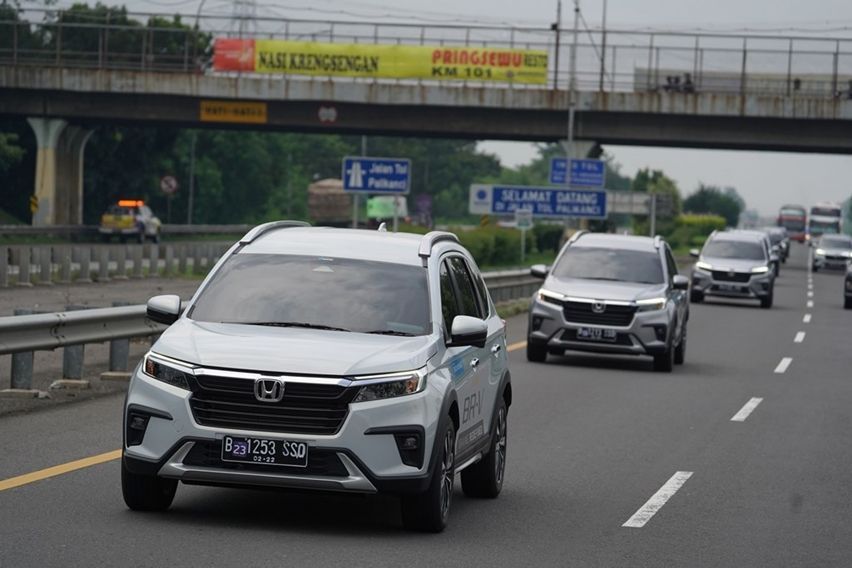
we finally got the opportunity to take part in the media test drive of the All New HondaBR-V. The activity held by Honda Prospect Motor (HPM) will last for two days, 11-12 January 2022. The route is from Jakarta-Semarang-Solo. All unit tests presented by HPM are the BR-V Prestige with Honda Sensing variant.
This test drive agenda with out-of-town travel routes can be used as proof of the new BR-V to experience the performance, comfort, and function aspects of every feature of Honda Sensing. The reason is that the manufacturer claims that this latest LSUV has experienced a series of improvements in terms of technology. Then how the impression, let's find out.
First Drive Honda BR-V Prestige
New Shades of Interior
The first time you enter the cabin, the AllNew Honda BR-V offers many new things. The nuance is much different from the previous model. The cockpit space really spoils the driver and first row passengers. The seat is designed in the style of a semi bucket, feels comfortable. But the seating position for us is relatively low for the size of the LSUV. Unless you have set the seat at maximum height. Even so, the foam is quite thick and is wrapped in dark synthetic leather.
Don't expect more for the seat arrangement, because there is no electric system yet, but it's still a conventional lever. The head room and leg room are quite spacious. Visibility is wide enough, there are no annoying ornaments. For the driver and front passenger, a center console box is provided with a cover that can be an armrest. But unfortunately, for our body size is too low. Even so, it is enough to support tired arms when traveling long distances. While the right side has a backrest in the groove of the door trim, it's also nice to be covered in leather.
Leather wrap also wraps the steering wheel with a color matching the dashboard, giving an elegant effect. For hands that often sweat, this is very helpful, the handle is not easy to slip. Meanwhile, setting the All New Honda BR-V steering wheel only relies on up and down telescopic. But interestingly there is a steering switch for MID, multimedia and telephone, and mainly there is a safety system called Honda Sensing. On the right is full of buttons for MID, Lane Keep Assist System (LKAS) and adaptive cruise control, buttons to adjust how close or far the car is in front of us. Excellent!
Just behind the steering wheel, there is a lever for the wipers and headlights with Auto High-Beam technology. The button for the Honda Lane Watch is at the end of the right lever which incorporates the turn signal and the lamp. Security on the left side of the car is guaranteed, because it can be seen visually on the head unit screen. The speedometer design is similar to that of the Honda City Hatchback RS. It's just that the latest BR-V MID display looks bigger and has lots of information options.
Door trim is still dominated by plastic materials. Likewise with the dashboard. But there is a little sweetener on the left side. There is a soft touch of leather combined with a piano black color. In the middle we can find a digital air conditioner and a 7-inch touch screen head unit. Underneath there is a cup holder and two USB ports and a 12V power outlet. Very useful for charging gadget batteries.
Overall, the All New Honda BR-V has a 7-seater passenger capacity. One of the advantages of this car's middle row seats is the presence of three adjustable headrests. This is not owned by LSUV in the same class as the Xpander Cross and XL7. When sitting on the left side, the buttocks feel something is up. It turned out that there was a seat belt lock that we thought didn't fit inside. But it became forgotten when the handrest was lowered. Apart from this, the middle seat can be adjusted back and forth plus recline settings. So you can adjust the height of the passengers.
For the third row of seats can not be adjusted back and forth. But fortunately, it can still recline even though it doesn't fall too much. Access to the back is relatively easy. Because the middle seat can be folded with just one pull of the lever, its position is on the side of the seat.
For the comfort aspect, there is a double blower AC which is mandatory for a three-row bench car. Passengers in the middle seat get one 12V power outlet, which is located on the center console. Being at the back gets near the window on the right. Luckily we brought an additional connector, during the trip we could charge our smartphone.
Driving Experience
The keyless remote is at hand, it's time to go on a trip. Oh yes, we were given the opportunity to try out the All New BR-V Prestige with Honda Sensing. This variant has a smart entry feature embedded. This means we don't need to interact with the remote, the lock can be opened by touching the door handle. Once ready to go, just press the engine start / stop button.
But in the new BR-V, it's nice to add Walk-Away Auto Lock to the system. As soon as the remote that we carry away from the car, it can lock automatically. In addition, the remote can now start the vehicle remotely via Remote Engine Start. In our opinion, this technology is considered advanced in the LSUV class. It's easy, first press the bottom button for 5 seconds, then press the unlock button. Voila, the car and AC automatically turn on.
The journey starts from Senayan Park, Jakarta to The Wujil Resort & Conventions, Ungaran, Semarang. Most of the routes we took were the Jakarta-Cikampek-Trans Java toll road. During the test drive session with a distance of approximately 475 km, we tested all aspects of the All New Honda BR-V. Of course, the main thing is to try the features of Honda Sensing.
First, in terms of performance, we think the sensation is very different from the previous model. The change from SOHC to DOHC 1.5 liter i-VTEC is very pronounced. The new engine, which is the same as the Honda City, gets a touch on the torque curve. When we accelerate on the Trans Java toll road, the energy is responsive at lower rpm to a speed of 60-80 kph, after that we value the performance as similar to the old version.
But it's a different story if the transmission moves to S (Sport) mode, when you step on the gas pedal, aggressive torque can be channeled properly. The pleasure of driving is felt, the acceleration seems to unite with the sound of the engine. For the record, this L15ZF-coded engine has 121 ps or 119 hp and 145 Nm of torque, the same output as the latest City.
In terms of stability, we can say that the All New Honda BR-V is better than the initial generation. Although it still uses a combination of McPherson struts at the front and Torsion beams at the rear, with geometric adjustments, it feels more balanced in terms of damping ability. Not too soft or hard. For example, on the Batang-Kendal toll road, there are many potholes and asphalt cracks. He is able to provide better damping and comfort. Even when passing long turns, body roll is minimized and doesn't feel so unsteady.
With the new structure and the wheelbase extended by 40mm, when trying to swerve to avoid potholes it still feels pretty steady. Of course, this is also helped by Vehicle Stability Assist (VSA) which is specifically designed to stabilize vehicle maneuvers. Steering is also more obedient with more controlled tail movement. In our opinion, this character is very fun.
Oh yes, because we were traveling in a group, the car was forced to be in a zigzag position. Well, here we can try the Honda LaneWatch feature. When you want to change lanes by activating the left turn signal, the image of the left blind spot area will automatically appear on the center screen. But the eyes can't lie, they still see conventionally from the left rearview mirror. You know, still not used to it.
In terms of comfort in addition to the feel of the new interior, the cabin secrecy feels very different from its predecessor. Wind noise can be minimized properly. Even so, when the gas pedal is fully pressed, the sound of wheel articulation and the rhythmic hum of the engine can still be heard, but not as loud as the old model. The vibration is also quieter, because the side mounted and trans mounting have been optimized.
Regarding fuel consumption, during a trip of approximately 400 kilometers at a relatively high and constant speed, the MID on the BR-V shows a figure of 16.4 km/liter. It's pretty standard for a 7-seater Low SUV class with a 1,500 cc engine.
Honda Sensing Feature Test
This latest model is inserted the ability to monitor external conditions and respond or act actively according to certain parameters. Presented to increase safety while driving while increasing comfort.
During the testing session, trying out the driving assistant features was the most fun part. The features that are often used are the Lane Keeping Assist System (LKAS) and the Road Departure Mitigation System (RDM). In principle, these two features work to keep the car in position so it doesn't go out of line without the driver realizing it. Both also help the vehicle in a safe position.
It is evident that when the car starts to deviate from the lane without operating a turn signal, there is a subtle vibration on the steering wheel and a visual warning appears in the MID section. For those who are not used to it, it may be a bit strange, because there is a steering wheel correction to keep the car from leaving the road markings or dividing line. Oh yes, LKAS is active when the vehicle is moving at a speed of 72 km/hour or more.
The next feature that is quite intense when traveling from Jakarta to Ungaran is Adaptive Cruise Control (ACC). Can work when the car is already at a speed of 30 km / h and so on. Because we go hand in hand, this technology is very helpful. Can keep the car in front in a safe position at a constant speed. Ease again, there are three levels of distance options and automatically adjust the speed with the vehicle in front of us. Crossing the toll road is safer.
Next up is the Lead Car Departure Notification System (LCDN). This feature is often used when in traffic jams and in traffic lights. If another vehicle in front starts moving and we haven't moved, there will be a warning in the form of visual and audio on the MID screen. Thank you for your attention.
Other assistance includes Auto-High Beam, just turn the lever that resides in the lamp setting to the Auto position, then the main lamp lighting can automatically adjust. As we went through the tunnel and as evening approached, the beams of light came on. You can also intuitively adjust between the headlights and night lights, so as not to dazzle other drivers from the opposite direction.
Then the Collision Mitigation Braking System (CMBS). This feature is actually very important but less intense because the route we took was a toll road. But there's nothing wrong with trying the sensitivity of this technology when in line at the toll gate. When the car is too fast to close the distance with the vehicle or other object in front, the system immediately gives a warning. If we don't respond, the system immediately takes over to brake automatically, even until the car stops.
New Design
Regarding the design, when compared to the old model, of course, there are many changes on the front. Now more modern. The new BR-V sports an inverted trapezoid-style grille. The vertical blades are neatly clad in chromium. Connected with LED headlamp and LED DRL on each side. In contrast to the old model, the front is made narrowed in a parallelogram pattern. Then the hood is now more upright as an SUV accent.
Not only the front, the body design also now looks attractive. You could say a combination of MPV and SUV. If previously the SUV design approach was very pronounced, now the design lines are more dynamic with firm lines blending from the front to the back. Even so, the adventure character persisted. Formed from black fenders or wheel brows around the body. The bumper is more prominent following the protector at the bottom.
On the side, the rims that used to be 16 inches have now been changed to 17 inches with an aggressive new design. The back doesn't look much changed, but now it is equipped with a rear combi lamp equipped with an LED light bar.
Conclusion
From this test drive session, we got the impression that the second generation Honda BR-V offers a refined driving refinement compared to its predecessor, even its rivals. A series of updates and upgrades from the platform to the engine gives this 7-seater SUV an edge over its rivals.
Moreover, all the features included in Honda Sensing are presented comprehensively. A series of improvements in terms of safety and security technology is not just a gimmick. Its safety features cannot be underestimated, it is only natural that its level can be higher than its competitors.
During testing, we also felt that the All New BR-V was quieter, had more damping balance, and was more fun in terms of handling. Plus also the engine performance is denser in the lower rounds. Very helpful in stop and go conditions.
It's just that there is a little suggestion from us, namely the manufacturer can provide a defogger for the rear glass. Due to heavy rain along the Trans Java toll road, the view is somewhat obstructed due to condensation or fog. Hopefully in the next version or facelift it can be given.
And another important note from us is that, even though the All New BR-V has been equipped with smart features, all vehicle control remains in the hands of the driver. Honda Sensing technology only helps reduce the risk of an accident if all variables are met.
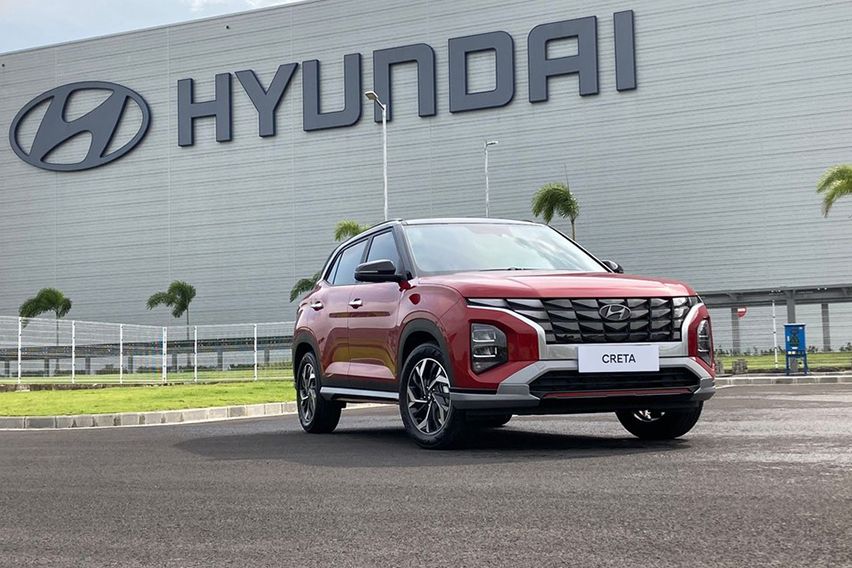
Indonesia is becoming increasingly important in the automotive world. For example, Hyundai introduced the facelifted version of the Creta for the first time in the world at GIIAS 2021, meaning that its global debut will take place in Indonesia.
This Creta is special to mark the operation of Hyundai's new factory, which will be the production base for several other models in the future. The factory which is handled by PT Hyundai Motor Manufacturing Indonesia (HMMI) is located in Cikarang, West Java, and has been running since the end of 2021.
First Drive Hyundai Creta 2022
The first model that is confirmed to be born from this factory is the second generation Hyundai Creta. This compact SUV will also be the product with the most affordable price in the Hyundai line-up in Indonesia so far.
Creta entered a fairly competitive segment against the Honda HR-V, Toyota C-HR, and its own twin, the Kia Seltos. In the family of Hyundai's own SUV model, its position is below the Kona, which is now only marketed as an electric version. To be able to have it, prepare funds of RP 279 million - Rp 397.5 million (OTR Jakarta).
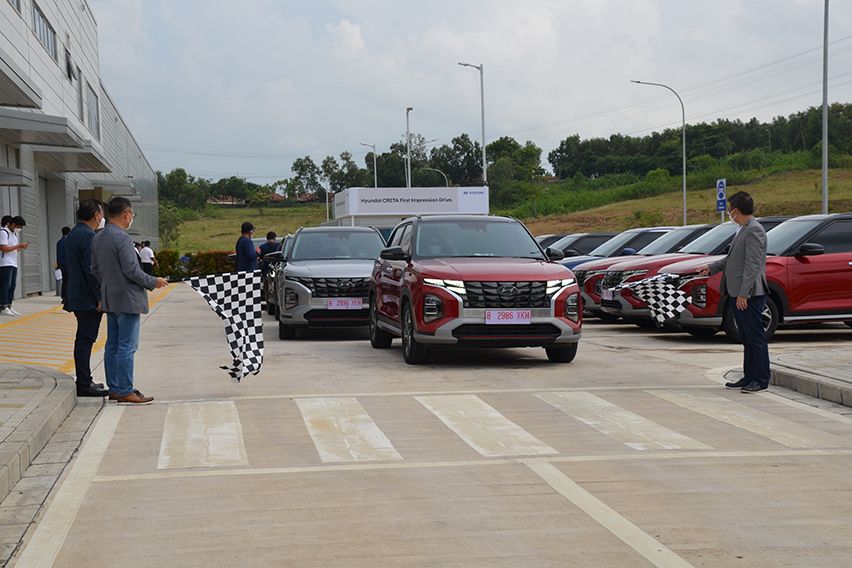
Hyundai is so proud of this new facility that they invited us to visit and have a tour to see the facilities they have at the factory. And on the same occasion, a short test drive session of the Hyundai Creta was also given.
The short test drive session or you could say the first drive was carried out in the proving ground area of the factory, as well as several roads around the factory. At least 5 kilometers we feel the impression of driving from Creta which is claimed to be ready to be sent to consumers soon. It is indeed short and short in distance, but at least it can give an impression of how it feels to drive directly on the road, not just on paper or a closed test track.
The look of this new version of the Creta immediately attracts attention from afar, especially because of the jewel pattern grille design that dominates the front fascia. The design style that adopts the look of the latest Tucson is at the same time reminiscent of the Hyundai SUV uniform as also used in Santa Fe and Palisade. The play of the design elements is attractive, the body lines are firm giving a dashing impression, and the combination of the taillight pieces is anti-mainstream.
Entering the cabin, a two-tone, black and brown dashboard is presented, which eliminates the impression of monotony. However, because all parts of the dashboard are made of hard plastic, Creta Prime, which is the highest and most complete variant, should be able to get a soft touch panel combination. At least to dampen the nagging of noisy and less appreciative netizens who always argue 'it's better'.
As a reminder, the Creta for the Indonesian market is equipped with a non-turbo 1.5 liter engine variant, which offers a power output of 113 hp and 143.8 Nm of torque. Because what we tried was the most expensive variant, Prime, the unit we tried had an IVT transmission, which is a system with further development of the CVT type. This car already has a keyless entry, so to turn it on, just press the engine start-stop button.
Looks like Hyundai designed the Creta engine to release its torque at low torque. Because when you just drive slowly, you can already feel this car has a solid torque in the early rounds, although usually the CVT transmission takes a bit of time to transmit torque from the engine to the wheels. Moreover, CVT applications generally prioritize comfort and smoothness, not performance. But this Creta transmission can provide a smooth feeling and torque at the same time, in a dose that feels just right.
The proving ground circuit at the Hyundai factory became the first test location, starting with a long straight track for acceleration tests. Immediately we gas in this car gradually to invite a little speeding. Indeed, the torque can be felt immediately at the beginning of acceleration, but as the speed increases the speed still feels smooth. Even until the speedometer needle touches 80 km / h, the engine does not feel breathless.
At the end of a long straight track, an oval bend with a medium radius greets you. The body's response when braking hard enough before entering the corner did not swing much towards the front. Even when asked to turn at a speed of 40 km / h and change direction before returning to a straight track, the suspension is quite stiff to withstand body roll. The steering wheel also feels full, not just light, so it's more communicative to maneuver.
First Drive Hyundai Creta 2022
Devoting the next straight track, we try to switch to Sport mode to feel the maximum performance. Just step on the full gas, the engine immediately screams to the red line. Of course, faster acceleration and more abundant torque are felt. But in this Sport mode, the ECU instructs the transmission to simulate a gearshift at more than 6,000 rpm, almost touching the red line at 7,000 rpm.
Then the next obstacle is an incline with an angle of about 20 degrees, to prove the ability of the engine and front wheel drive on a steep incline. I deliberately stopped Creta for a moment at the beginning of the incline to feel the Hill Start Assist as well. After successfully holding for a few seconds when the brake pedal is released, the Creta can easily climb without being forced. The trick With an IVT transmission, give the gas input gradually to get optimal torque when climbing.
We were invited to leave the factory area to experience Creta on public roads. This gives preference that is more relevant to everyday use. What we go directly to are roads with damaged or bumpy surfaces. We want to know what the damping quality of the suspension is like.
Incidentally, the traffic around the factory was quite quiet, so we were able to take Creta back with a bit of a rush. When we tried to accelerate fast with manual mode in the transmission, the shift of the 'gear' every time the paddle shifter was touched felt smooth, not jerky. The existence of a paddle shifter will accommodate our needs to maximize engine performance or even to make fuel consumption more efficient.
The roads around the Hyundai factory in the Deltamas area are apparently not too damaged even though many heavy vehicles pass by. But at least there are some roads that have a slightly uphill contour. Quite amazed when crossing the bridge that begins with an incline. Drove quite fast, above 60 km / h, Creta turned out to have a suspension character that is arguably better than the price. Soft when swinging, but the damping is not harsh. It can be claimed that it is more mature than the current HR-V's suspension.
If we can compare, we think the Creta suspension damping can be compared to a higher class SUV, maybe in the Rp 500 million class. This is the thing that has stuck with us the most from our brief session with the Hyundai Creta, so far. Sorry, Seltos, but your twin brother is on a level better taste.
There are quite a number of active safety features built into this Creta, and during this session we got to try a few. Most noticeably work are Lane Following Assist (LFA) and Lane Keeping Assist (LKA). These two features often provide warnings and steering corrections as soon as we pass road markings without turning on the turn signal. There are many more safety features in the Smartsense package, as well as Bluelink which is an attractive offer from Creta.
From this short first drive, we see that the Hyundai Creta has a lot of potential that can be explored again. Moreover, it is interesting to see what can be done through Bluelink technology which can provide first aid when an accident or vehicle is stolen. It cannot be underestimated, the first product of Hyundai produced from Indonesia. We are waiting for further action.