close
close

Honda Promises to Sell Electric Motorcycles in Indonesia by 2024, What's the Model?

 The arrival of the Yamaha E01 in Indonesia apparently made PT Astra Honda Motor (AHM) a little nervous. They informed the strategic plan that in 2024 they will launch electrical products that can be purchased retail by consumers.

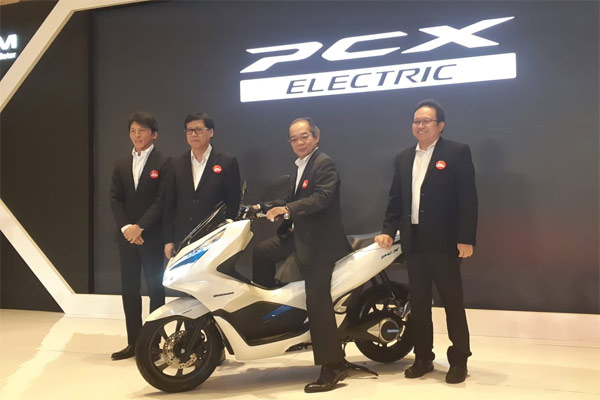
Honda is one of the motorcycle manufacturers that started the era of electrified vehicles in Indonesia. They launched the PCX Electric model in 2019, but unfortunately until now the commercial scheme of the product is still B2B rental.

Honda Promises to Sell Electric Motorcycles in Indonesia by 2024, What's the Model?

The Marketing Director of PT AHM, Thomas Wijaya, explained that the launch of electric motorcycles in 2024 will be adjusted to the infrastructure, security elements, and the needs of consumers. Even so, he is not yet willing to inform what model will be released.

"We hope that in 2024 we will be able to find a model that is suitable for the Indonesian people. Both in terms of use, infrastructure, safety, comfort, including performance. We will continue to see how the conditions are with consumer needs. Including making adjustments to later be able to launch or present the model new ones that are in accordance with the conditions of society," said Thomas in a virtual discussion with the media, recently.

Electric Honda Study Disrupted

Regarding PCX Electric, continued Thomas, so far the company has no plans to sell retail to the public. The reason is related to unfinished studies and research due to being hampered by the COVID-19 pandemic. 

"We are still continuing to do that study (PCX Electric), we hope that we can learn many things from the consumer side to swapping or charging the battery. Including how the behavior is in terms of distance traveled and how to ride, speed and whether to use it for single or tandem riding, " he concluded.

He added that currently Honda continues to study various aspects related to electric vehicles and their development, ranging from performance, safety, and people's habits towards electric motorcycles. Currently, electric PCX is being rented in several areas such as Jakarta, Bandung, and Bali and the results from it will be collected to study the chances of being officially sold.

Because it has not been officially sold, the selling price has not been revealed by AHM either. But as an illustration, a few years ago the price of PCX electric leaked in cyberspace. At that time, the information was published on the official website of the DKI Jakarta Motor Vehicle Check, where the price was Rp. 109 million.

Previously, as explained by PT AHM's Product Division, Bayu Arum C, Honda PCX Electric was rented at a price of Rp. 1.9 million per month and the focus was only on the company. With the rental dowry, consumers will get all-in-package services such as unit delivery, batteries, service, and emergency services for 24 hours.

"It's still being rented out for B2B. Meanwhile, it's a new company, Gojek, Grab, Pos Indonesia and in Bandung and Bali are conducting trials with the Ministry of Transportation.

Talking about specifications, PCX Electric is equipped with Lithium-Ion batteries, each of which has a capacity of 50.4 V 20.8 Ahm. The electric dynamo uses 4.2 kW or the equivalent of 5.6 horsepower which can already be enjoyed at lower engine speed, and a peak torque of 18 nm at 500 rpm.

From empty to full charging takes 4 hours in the off board method, or the battery is removed and placed in the Honda Mobile Power Pack. Meanwhile, if you charge it using the on-board method or plug it directly into your home electrical outlet, it can take up to 6 hours.

MINI Electric Cars Will Be Released Soon, Take a Look at the Specifications

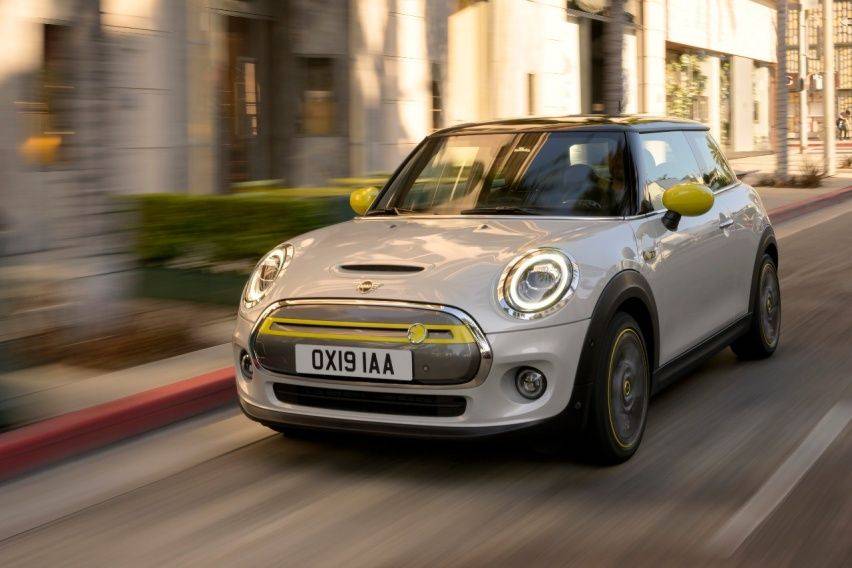
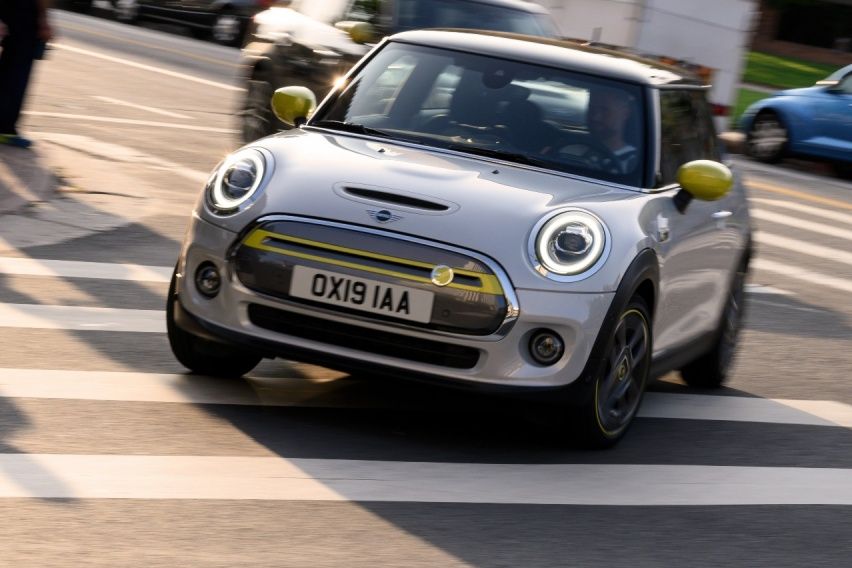
 BMW Group Indonesia informs that the MINI electric car will soon be launched in the country. Although reluctant to specify the release date, the MINI Electric is confirmed to be sold in Indonesia after Lebaran this year.

The information came directly from the BMW Group Indonesia Director of Communications, Jodie O'tania. Now his party is preparing everything related to the launch of the MINI Electric in the domestic market.

MINI Electric Cars Will Be Released Soon, Take a Look at the Specifications

At the end of January 2022, Jodie announced that his party would launch 3 electric cars this year. The details are the BMW i4 and iX, while the other one is the MINI Electric. However, according to the latest information, BMW Group Indonesia will prioritize the MINI first because of the consideration of unit stock which is considered sufficient to meet the demands of consumers in the country.

"For BMW, I can't give any information about when, because this is again related to stock and supply. Because when we want to launch BMW electric vehicles, we should have made sure the stock is sufficient for customers. Because if stock is limited, we feel it's not ideal," he said. .

The stock and supply constraints of prospective electrical products from BMW are caused by the semiconductor chip crisis. Now in a language that is easier to digest, rather than not being able to meet demand, the BMW Group Indonesia chose to postpone the launch and choose the MINI Electric, which is said to be in stock according to consumer demand.

On the same occasion, BMW Group Indonesia's Vice President of Customer Support, Ariefin Makaminan, explained that the MINI Electric stock is able to accommodate consumer demand. In addition, another consideration is that the dealer network is not as big as BMW so that after-sales qualifications can be maintained.

MINI Electric Cars Will Be Released Soon, Take a Look at the Specifications

"It's not just chips, but the network that we are trying to build. MINI may be faster and in stock, and the two MINI dealers are not too many, there are only 2 namely Plaza and Maxindo. As a result, training sales and technicians to handle MINI EVs is easier. If BMW's network is bigger and we want to take care of aftersales, don't let it happen when the unit is not in Jakarta and has a problem, no one can handle it," he concluded.

MINI Electric Specifications

MINI Electric is equipped with an electric motor capable of producing maximum power of up to 181 horsepower and peak torque of up to 270 Nm. The electric motor is set to drive the front wheels of the vehicle.

With its power, this electric MINI can accelerate from 0 to 100 km/h in 6.9 seconds, with a top speed of 150 km/h. For the battery, the MINI Electric will be equipped with a 32.5 kWh battery.

To fully charge the battery, it will take up to 4 hours on a home charge. With a fully charged battery condition, this car is capable of driving up to a distance of 270 km.

As for its features, the pollution-free car is equipped with a 6.5-inch infotainment system that can accommodate Apple Carplay, phone calls, Bluetooth, and a reverse camera. Not only that, the electric MINI is also equipped with rain sensors, heated side mirrors, leather seats with front seats equipped with heaters.

The rest is to ensure the comfort and safety of the driver, the MINI Electric has been injected with Cruise Control, Active Driving Assistance with Forward Collision Warning, to Acoustic Pedestrian Warning.

First Impression Yamaha E01: A Closer Look at the Electric NMax

 We've met, and even tested directly the Honda PCX Electric, a zero-mission version of the manufacturer's medium scooter with the wing symbol on it. Now, we meet the Yamaha E01, the NMax Electric.

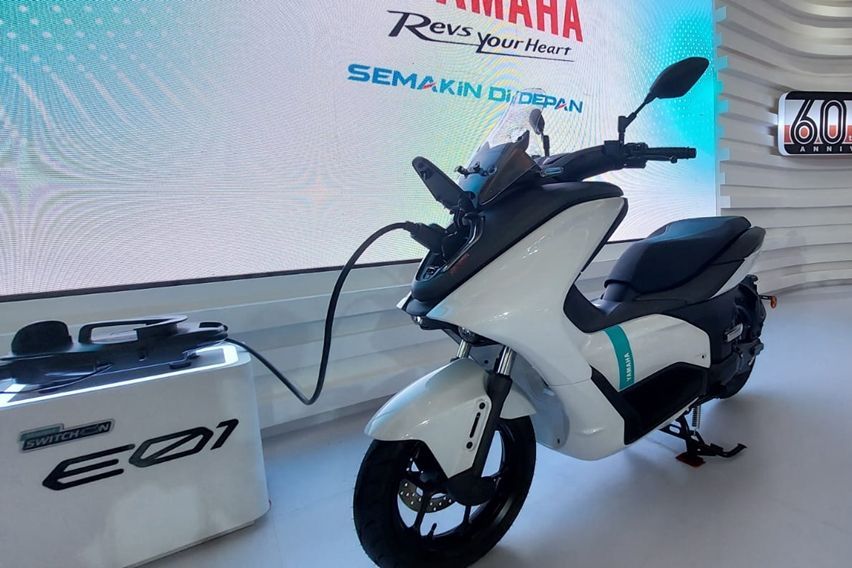
The first thing that struck us was his figure, which was like a ready-to-go mass-produced motorbike. In fact, the Yamaha E01 is a concept model designed for the testing phase only produced by Yamaha Motor Corporation in Japan.

Build Quality Yamaha E01 is very capable. All devices and materials are so solid, not disassembled components assembled from various trial and error devices. The body has a design that is very easy on the eye, but still presents a futuristic element. Just look at the impressive lamp model.

We think that manufacturers in Japan have prepared various kinds of jigs and moldings for the production of various materials that make up the electric NMax. After all, there are 500 units produced for the Proof of Concept (PoC) phase which is claimed to be the main purpose of its initial introduction.

Next is a figure that is so similar to NMax. Luckily, we were one of the first media in Indonesia to ride this motorbike, and it feels relatively similar to the NMax. Ergonomic feel typical of a touring bike with a relaxed, upright riding position, with flexibility of leg room.

Indeed, the design of this motorbike is recognized by Yamaha Motor Corporation (YMC) as cheating on the NMax. The goal is to reflect the capability of this motorbike to swing not only in the city, but also to drive between regions.

Our attention is focused enough on the construction of the rear suspension geometry. It uses two suspensions like the NMax, but its position is slightly protruding into the middle. The shape according to YMC is designed to pursue the unique value of electric vehicles. By moving the rear suspension slightly indented, hopefully, the visuals of the E01 are more attractive. The front suspension is also protected, to make it appear more robust and sleek.

Slightly different is the weight. We have not managed to get a definitive figure that describes the weight of the motorbike that will be used by Indonesian consumers. But when we tried to shift or lift it to a standing position in the middle standard, it felt that there was a much heavier weight than the NMax. (unofficial sources say the weight of the E01 is 158 kg-Red needs to be confirmed)

The most interesting part of meeting and exploring the electric NMax is how the sensation of the distribution of electrical energy is. Unfortunately, when we met him, he could not be run freely. The procession of turning on the motor is not much different from an ordinary motorbike. After the contact is in the On position, the start button with the lightning logo needs to be pressed first, to confirm that we want to move the motor forward.

Above the standard, throttle lever that we turn, the Yamaha E01 can provide a very fierce response. It feels like the rotation of the wheels occurs quickly without a gradual feeling like a motorbike with a CVT transmission.

Naturally, if the wheel spins can happen very quickly. The reason is from the electric motor, the torque of 30.2 Nm can be harvested instantly, without the need to wait for momentum. To note, this amount of torque is equivalent to a motor sport of 300-400 cc, very large! And because there's no engine speed panel—there's no engine there anyway—then there's no indication of how much power we're using to drive the motor.

Oh yes, there are three riding modes on this bike. PWR (power), STD (standard) and ECO (Economical), these three modes regulate the amount of power that the Yamaha E01 can provide when used.

To reduce speed, pinned ABS brakes on the front and rear (two channels). Not only that, there are also regenerative brakes, which will give the impression of a soft deceleration when the gas lever is closed. So that the distribution of power is also channeled safely, the Yamaha E01 is also equipped with a Traction Control System feature.

What is unique and the first time we have found this class of motorbike is the reverse mode feature. The presence of this feature allows the motor to be driven backwards by pressing a button. That said, this feature application is intended to provide assistance to riders who want to back their motorbikes easily. Its use via the button is also intended so that the driver is not wrong in operating this process. In fact, when the throttle lever is turned when the Reverse mode is selected, it will not work immediately to advance. Driving mode forward, as if turned off and needs to be reactivated like starting a motorbike.

There is also something interesting about this motorbike, namely the Y-Connect feature. Although the name is the same as that embedded in many Yamaha motorcycles, the functions and ways of working are different. For example, for connectivity, it uses a 3G/LTE signal that connects the motor-Cloud Server and cellphone. Unlike the general motorcycle that uses Bluetooth to download the data.

Some of the information that is presented and can be accessed from the cellphone, for example the notification of damage, the last distance driven, the estimated distance that can be traveled, the status of the battery to the estimated charging time when it is being charged. That said, the reason for using a direct connection system to the Yamaha server was also intended to make it easier for YMC to monitor its motorbike in this PoC test.

One inter8esting thing about this bike that keeps us wondering is its embedded battery scheme. Yes, while other manufacturers use swappable models where the battery can be removed, Yamaha has chosen to install a non-removable battery by consumers.

The reason is that this lithium ion battery has an electrical energy storage capacity of 4.9 kWh. For comparison, the Honda PCX Electric battery has a capacity of 20.8 Ah with a power of 50.4 V. In the body of the Honda PCX, there are two batteries arranged in series. If totaled and converted to kilowatt-hour (kWh) units, these two batteries only have a capacity of 2,096 kW

This means that the Yamaha NMax electric battery, uh, sorry E01, has more than double the capacity of the PCX. Naturally, if Yamaha dares to claim that the mileage on paper can reach 130 km (the European te WMTC Class 1 method - YMC claims), aka almost double the PCX which can only cover 69 km.

With such a large battery, and weighing up to 35 kg, Yamaha believes the embedded model is the most ideal design to provide a bike with a composition that remains reliable. Well, since it's embedded, the only method to charge it is to plug it directly into a power source.

Yamaha explained, there are three models of chargers to charge the E01. The fastest is to use a Fast Charger which can charge up to 90% in 1 hour. The second is the Normal Charger which can be installed at home with a charge speed of 5 hours to charge it from an empty condition. Then the most practical and can be taken anywhere is the Portable Charger, which takes 14 hours to fully charge if the battery runs out. Now, because there is no battery in the trunk, this portable charger is designed with a construction that can be stored neatly in the 23 liter volume.

It's interesting to see how this motor behaves if we later test it on the streets of Indonesia. With all the unique features of the special approach it uses, what the Yamaha E01 has to offer really needs to be studied further

New Subaru Car Finally Launched Next Month, What Model?

 Subaru Indonesia is finally ready to release a new product for the Indonesian market. This new model will be the first to be marketed by Plaza Subaru as Subaru's APM (brand holder agent) in Indonesia, before being followed by many other models.


The new model was shown through a teaser photo that was displayed when holding an iftar event with the media on Wednesday (20/4) yesterday. The figure that only shows the LED line of the headlights is very characteristic of the latest Subaru Forester model. Not surprisingly, considering that the global automotive market trend is still pivoting on the SUV (Sport Utility Vehicle) model.

The teaser which refers to the latest Forester has also been uploaded by Subaru through the official social media Instagram @subaru.indonesia. It is clearly stated in the short video that the model in question will be of the type and enliven the SUV market. The launch schedule for the first new model has been determined for the 2nd quarter of this year. Even the date has been revealed, which is launched on May 18, 2022.

"What is clear is that until now our preparations to launch the latest product in the second quarter are still on track as planned. Today, too, we will first share a little more information about the product and launch date, which we will launch in the not too distant future,” said Arie Christopher, COO of Subaru Indonesia.

Arie further explained that this new model has gone through a test stage, aka a test drive of 20,000 kilometers in preparation for greeting the Indonesian market. The test went through various criteria to the endurance test required by the relevant government agency, he said. This is to make this new product meet market expectations.

Subaru Forester

Questioning the Forester itself, the model that will be launched is the fifth generation with the SK body code. It has been circulating since 2018. Of course, what will be launched here is the facelift version that Subaru has provided for the 2022 model year. Its form is slightly visible from the LED DRL silhouette on the teaser accompanied by the fog lamp luminescence which is sufficient to display the boxy body shape typical of an SUV.


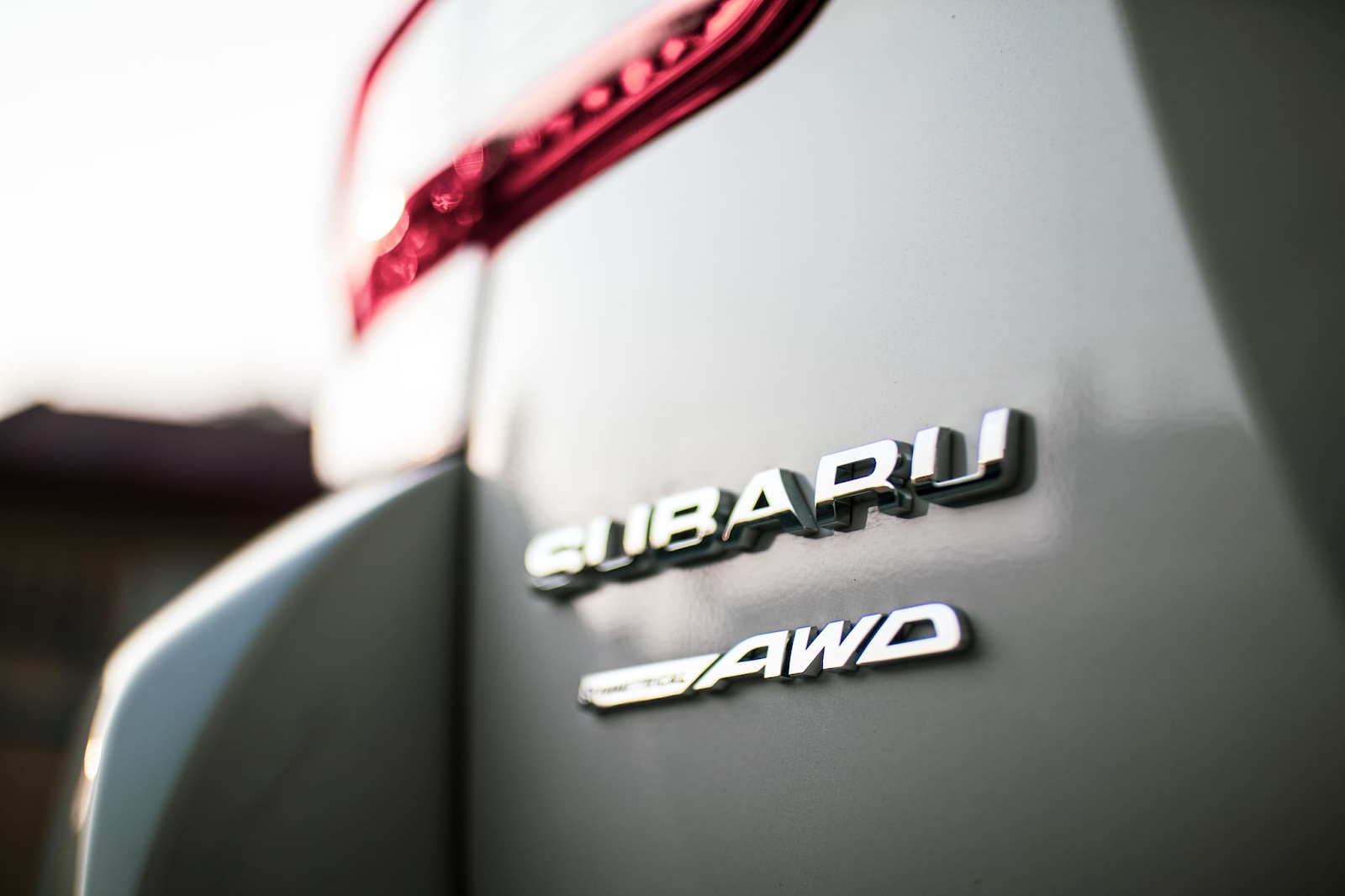
To be sure, Subaru products will feature its signature technology, namely the Boxer engine and the Symmetrical All-Wheel Drive (AWD) drive system. There are three engine options, namely 1.8 liter turbo (CB18), 2.0 liter (FB20), and 2.5 liter (FB25). They are all petrol engines and are mated to a Lineartronic CVT automatic transmission.

The latest Forester has also carried a series of standard safety technologies that are packaged as Eyesight Driver Assist Technology. Some of the safety features include the Subaru DriverFocus Distraction Mitigation System. Can detect when the driver lost focus or sleepy on the way. This system can even recognize five different driver profiles, to be able to adjust the seat position, mirrors, and AC settings.

What variant or specifications of the Subaru Forester will be launched in Indonesia next month, we will know exactly at launch later.


Honda Brio RS Urbanite Review, Factory Default Racer Modification Style

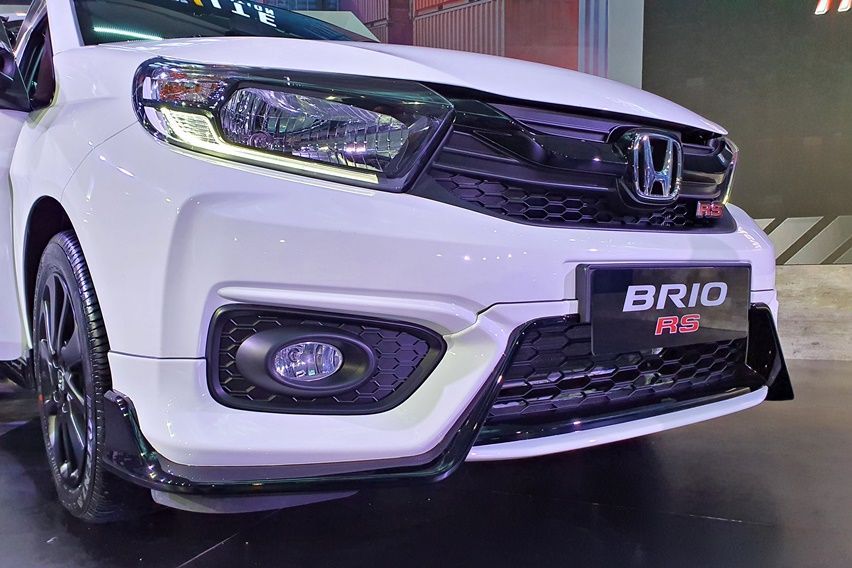
 PT Honda Prospect Motor (HPM) has just presented the latest Brio RS Urbanite, Wednesday (20/4/2022). In this update, the compact citycar gets a sportier makeover as an answer to the target market of young people who want a vehicle that looks different for their daily lives.

Honda revealed that the latest Brio RS Urbanite is the embodiment of the Small RS Concept that was shown at the 2018 IIMS exhibition. The car that was just a dream has now become a reality and can be owned by Brio RS consumers.

Honda Brio RS Urbanite Review, Factory Default Racer Modification Style

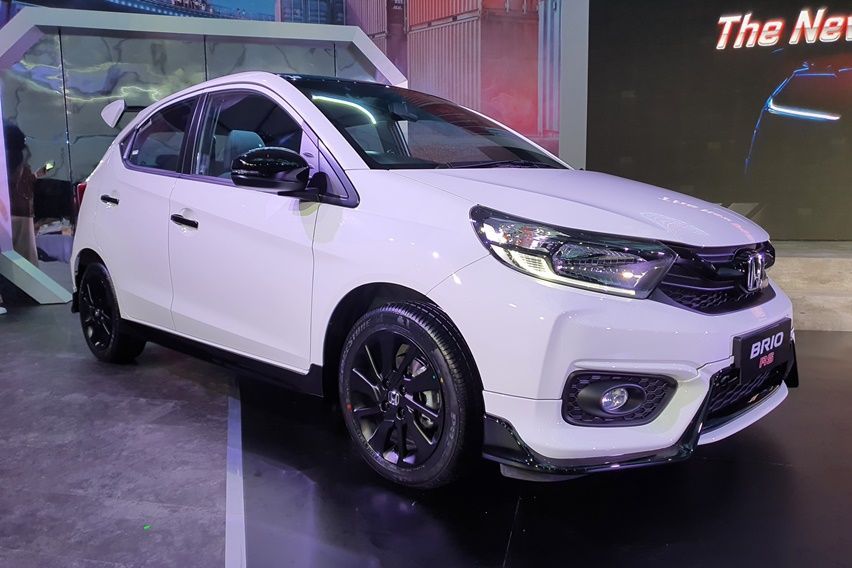
we got a chance to take a closer look at the changes to this new product. The appearance of the latest Brio RS Urbanite at first glance does become more sporty. Comes with a new color taffeta white duo tone white and a black roof, this sporty impression is even more thick with new black 15-inch wheels with 185/55 R15 tires, door handles and also black mirror housings. The front grille also, like other RS models, uses black coloring and the RS logo is added so that the sporty impression is indeed more pronounced. Not to forget, there is still a front under spoiler which is an interesting detail on the front of this latest Brio Urbanite.

Moving to the back, the main attention immediately looks at the spoiler or the large rear wing. The installation is placed on a high mounted stop lamp above the back door. The shape of the spoiler is quite sporty with sharp wing tips on the left and right

The installation of this spoiler does make the Brio RS Urbanite look different. If you compare it with the shape that is present in the Small RS Concept, Honda doesn't seem to make major changes. The only difference is the loss of the air grille ornaments on the side of the vehicle. On the positive side, now Brio RS Urbanite owners can get racer modifications directly from the manufacturer. An interesting offer for fans of modifications.

Honda Brio RS Urbanite Review, Factory Default Racer Modification Style

The back of the latest Brio RS Urbanite now also features an Urbanite emblem to distinguish it from other variants. In addition, a rear under spoiler with a diffuser plus a side under spoiler, which uses black, is also still given for a sporty impression that is getting thicker.

On paper, the new variant of the Brio RS does not change the dimensions. Honda offers the Brio RS Urbanite with a length of 3,815 mm, a width of 1,680 mm and a height of 1,485 mm and a wheelbase of 2,405 mm. In addition, several technologies are still embedded in this city car such as LED lighting for the headlamp, stop lamp and turn signal, as well as rearview mirrors with motor folding.

Entering the interior, there are no striking differences compared to the Urbanite model that was present in 2021. Orange accents are present on the dashboard, especially on the passenger side, as well as the AC grilles on the left, right and center. This orange touch is also present on the fabric seat stitching in the first and second rows as well as the meter cluster on the speed indicator.

Sitting in the first row of the Brio RS Urbanite there is no change in shape and feel compared to the previous model. The steering wheel is still comfortable to grip with the presence of an audio steering switch. Plastic material still dominates this dashboard area, but a modern touch can be felt from the digital AC instructions at the touch of a button. Plus the presence of a 6.2-inch head unit screen with the ability to play various music formats as well as a hands free telephone plus a tweeter speaker for a better entertainment experience. Convenience comes from the ability to tilt the steering wheel as well as the adjustable headrest.

Sitting in the second row, Brio RS Urbanite still provides flexibility for passengers with a height of 170 cm. The backrest angle is comfortable with the presence of a back pocket for storage, speakers in the second row, cup holders on the door and an adjustable headrest.

Regarding safety features, the latest Brio RS Urbanite features Dual Front i-SRS Airbags, G-CON + ACE frame structure, and ABS + EBD braking system, as well as alarm and immobilizer safety features. The performance side is still the same, namely the 4-cylinder 1.2L i-VTEC engine that produces 90 PS at 6,000 rpm and 110 Nm of torque at 4,800 rpm. In addition to manual transmission, Brio also gets a CVT transmission option with Earth Dream Technology.

The New Honda Brio RS Urbanite Edition is offered in two options, namely a manual transmission which is sold at a price of Rp. 225.9 million and a CVT transmission at a price of Rp. 235.9 million. Compared to the previous price, this new model is Rp 12 million more expensive for the manual transmission and Rp 5 million for the CVT transmission.

Brio was first present in 2012 and since then has managed to record sales of more than 435,000 units in Indonesia and become the model with the highest sales in 2020. Brio has local content as much as 90 percent and this model has been exported overseas as many as 21,000 units. Especially for the Urbanite model, since it was introduced last year, 1,537 units have been sold.

NMax Electric, Yamaha E01 will be rented out to Indonesian people

 Yamaha E01, the latest motorcycle from the manufacturer bearing a tuning fork similar to the NMax but powered by electricity, is said to be distributed to Indonesia. As previously known, at the Indonesian International Motor Show (IIMS) 2022, this motorbike has been displayed in public. Now, Yamaha Motor Corporation claims that Indonesia is one of the countries that will be the target of the E01 distribution.

NMax Electric, Yamaha E01 will be rented out to Indonesian people

For the initial phase, the Yamaha E01 will not be sold to the public, but will be loaned to individuals with a rental business scheme. This was chosen because the E01 is still in the process of concept testing, and has not yet entered the mass production line.

"To find the best technology based on the real needs of the community, we will start conducting a Proof of Concept (PoC) testing phase, namely by distributing motorbikes to learn more about the driving habits of six countries or regions with different uses in different climates." explained Yasushi Nomura, Innovation Group, Global Branding Section, Motorcycle Business Unit of Yamaha Motor Corporation in a product introduction session held online with media from around the world, today (21/4).

Yamaha E01

The countries targeted for PoC Yamaha E01 are Japan, Europe, Taiwan, Thailand, Malaysia and including Indonesia. It was stated that the main targets of PoC were private users, rental, B2B business units as well as goods delivery systems, and others. And the distribution method is rental.

In Nomura's presentation, it was explained that the E01 was indeed developed by adhering to several principles from Yamaha NMax. For example, from the proportions, the format of the medium scooter and even the wheelbase are made similar with the aim of providing a comfortable driving experience and in accordance with the technical needs of a large battery. The formula was applied through the Motoroid design, which is indeed the ultimate concept motorcycle from the electric vehicle segment.

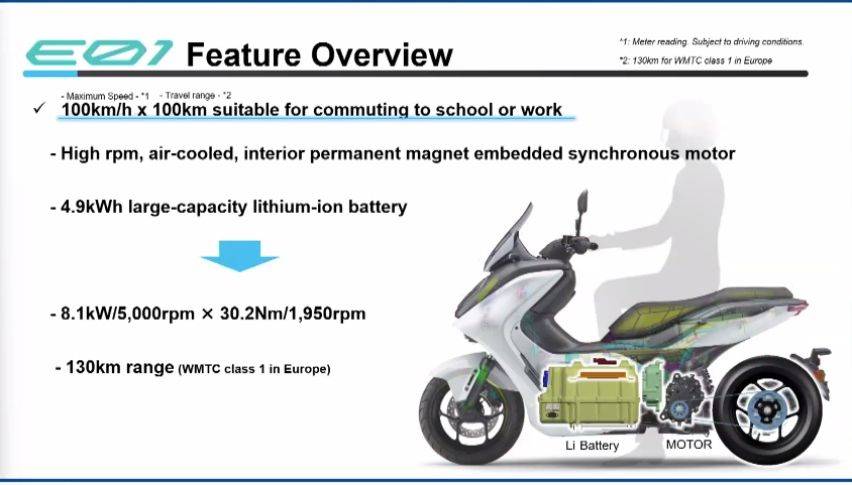
Some of the specifications described are lithium ion batteries with a capacity of 4.9 kWh. This battery is a source of power for the synchronous motor unit with a power of 8.1 kW or 11 PS with a torque of 30.2 Nm. Torque of that size, can be obtained in a rotation of only 1,950 rpm. The distance that can be achieved is 130 km (European Class 1 WMTC te method). The highest speed that can be achieved by this motorbike is said to reach 100 km / h.

All these performance specifications are arranged in a body design with a wheelbase of 1,930 mm, which is considered equivalent to the NMax at the level of 1,935 mm. The seat height is also relatively the same, where NMax is 740 mm, E01 is 755 mm. In his presentation it was also mentioned that the proportion of riding position was made similar to that of NMax (attached image).

One thing to note, the Yamaha E01 uses an embedded (fix) battery method that cannot be removed easily (swapable). Principals argue this method allows them to embed larger batteries in the hope of longer mileage or usage. So, the only way to charge it is to connect the E01 to a charging power source.

"If it does enter the mass production phase, we will still use the fixed battery model. The problem we are currently facing is that these large batteries have to be secured under a lot of electronic equipment where there is a shortage in the market, and this is something we have to consider ," added Eiji Koyano, Group Manager of Innovation Group at Yamaha Motor Corporation.


The First Impression of the New Honda City Hatchback RS Using Honda Sensing

 Lapse of a year from its launch, Honda provided an update on the City Hatchback RS, Wednesday (20/4/2022). Now the sporty-style hatchback is getting additional features from the Honda Sensing advanced safety guarantee package.

But in addition to safety features, PT Honda Prospect Motor (HPM) also provides an interesting refresher, especially in terms of comfort. Anything? Check out the experience of Oto.com meeting for the first time with this new variant of the City Hatchback.

The First Impression of the New Honda City Hatchback RS Using Honda Sensing

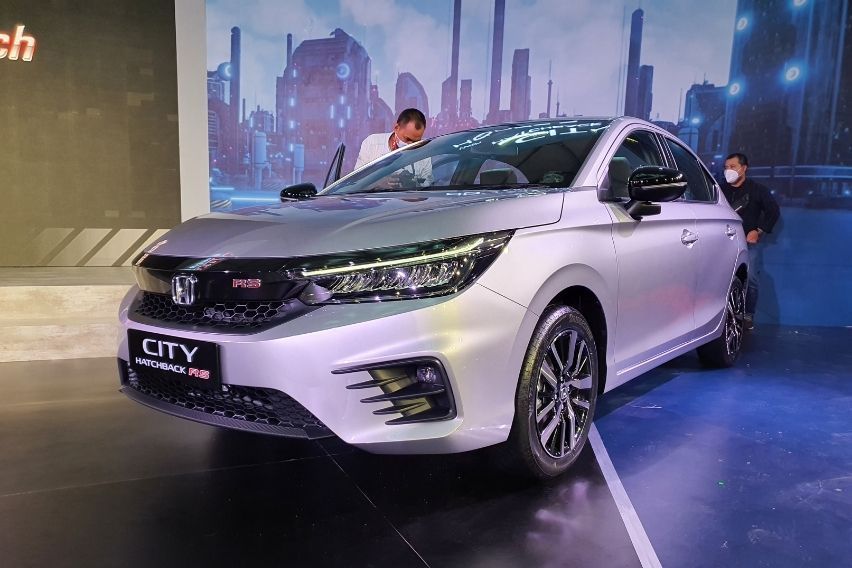
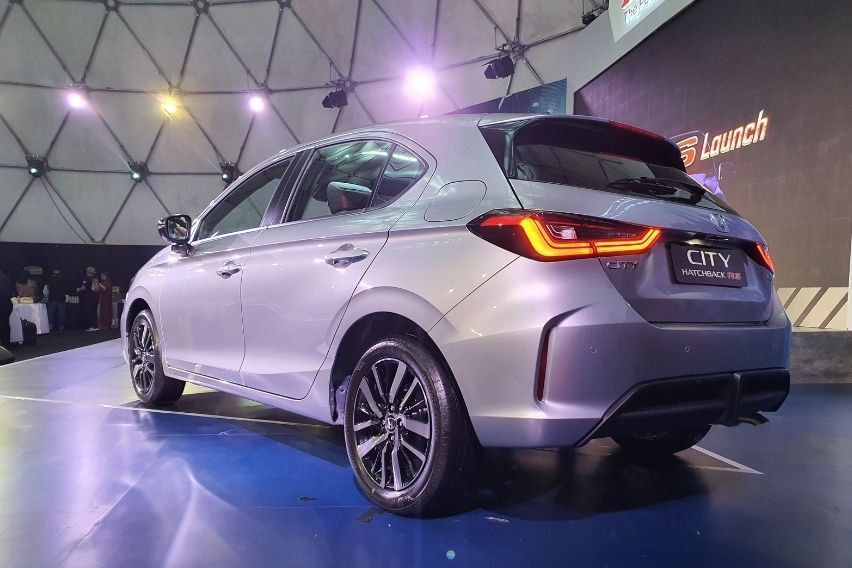
First from the exterior appearance. There are no significant changes from this hatchback at a glance. Honda also does not provide a special emblem for the use of Honda Sensing. However, as a marker, there is now a camera in the left rearview mirror which indicates the use of Lane Watch. Plus from behind the windshield there are cameras and sensors for various Honda Sensing safety features.

From the front, the City Hatcback RS still uses a grille with black accents with the RS logo. There is a honeycomb air grille coupled with LED headlamps with DRL and fog lamps as well as LED technology. The main light now has an auto headlight feature as an added convenience.

The legs still use 16-inch rims with 185/55 R16 tires of the cross model. Prospective consumers have to bite their fingers, because the size of the rim does not increase to 17 inches. The door handle is still body color and the rear view mirror is black. At the back, the City Hatcback RS still uses a combination of LED lights with the iconic U model.

The First Impression of the New Honda City Hatchback RS Using Honda Sensing

On paper, the dimensions have not changed. This hatchback still offers a wheelbase of 2,600 mm which affects the offer of a seating formation mode that adapts to the needs during driving.

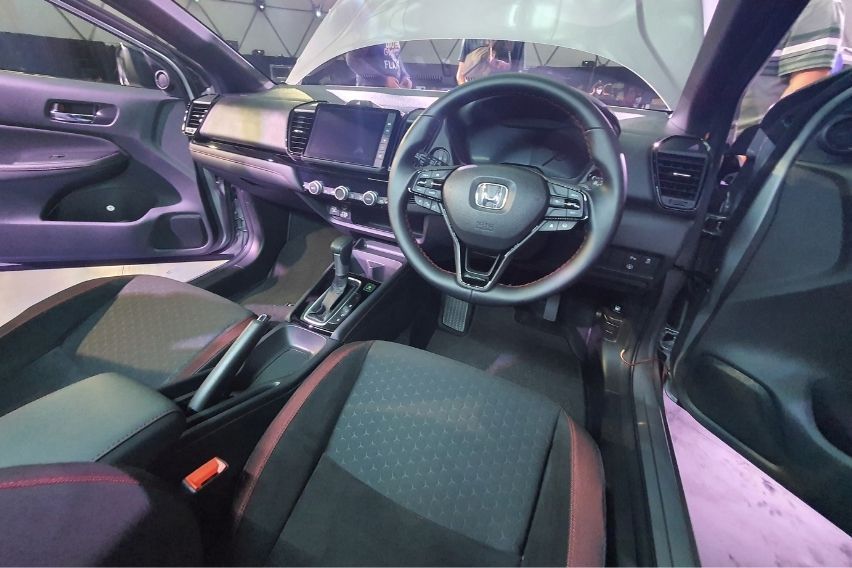
Entering the interior, there is no difference in design with non-Honda Sensing models. However, Honda now embeds a 7-inch TFT screen on the meter cluster for easy reading of information about the vehicle, replacing the monochrome screen on the standard model.

The City Hatchback with Honda Sensing still offers seats with a combination of fabric and suede which get a touch of red accents for a sporty aura.

Other conveniences that are present are digital AC settings, paddle shift and audio steering switches as well as buttons to activate several Honda Sensing features on the steering column, as well as an 8-inch head unit. The entertainment side comes with the ability to play various audio files, Bluetooth connection plus eight speakers throughout the cabin. This head unit screen is also connected to the Lane Watch feature to display the condition on the left of the vehicle as well as a multi-angle rear view camera where the driver can select the viewing angle mode when parking backwards.

City HB RS HS

In the second row, the cabin size is spacious for passengers with a height of 170 cm. The corner of the second row of seats is also comfortable, leg room and head room are spacious. Comfort comes from the cup holder on the door, the seat pocket behind the first row of seats and the power socket on the center console.

Honda Sensing on the City Hatchback RS consists of a Collision Mitigation Brake System (CMBS), Road Departure Mitigation System (RDM), Lane Keeping Assist System (LKAS), and Adaptive Cruise Control (ACC). Another additional feature is the walk away auto lock which complements the security features of the alarm and immobilizer. In addition, there is still the use of the G-CON + ACE frame, six airbags, hill start assist, vehicle stability assist, ABS, EBD + BA, Brake Override System, and an emergency stop signal.

Power is still entrusted to the 1.5L DOHC inline 4 cylinder engine, 16 valve i-VTEC + DBW which makes its performance reach 121PS/6,600 rpm and a maximum torque of 145 Nm/4,300 rpm. Honda provides ECON mode for a more fuel efficient driving character.

Honda City Hatchback RS is available in 6 color options, including Phoenix Orange Pearl, Rallye Red, Crystal Black Pearl, Lunar Silver Metallic, Platinum White Pearl, and Meteoroid Gray Metallic. Prices start at Rp. 333.6 million for the manual transmission variant, Rp. 343, 6 million for the CVT transmission and Rp. 362.6 million for the Honda Sensing variant with CVT.

Regarding this price, the Honda Sensing City Hatchback RS variant is higher than the latest HR-V model, the lowest variant, namely the S CVT which is also Honda Sensing at IDR 358.9 million. This includes the latest BR-V that uses Honda Sensing which is offered at IDR 346.6 million. However, potential consumers of each model certainly have different judgments in choosing according to their needs.