close
close

This is why Kawasaki Indonesia is not too affected by the semiconductor crisis

 Kawasaki Motor Indonesia (KMI) explained that the shortage of semiconductor chips did not greatly affect production and business activities in the domestic market. This is interesting, considering that rivals Honda and Yamaha have confirmed that the shortage of semiconductors has an impact on the fulfillment of consumer motorcycle ownership.

This was conveyed by the Head of Sales & Promotion of PT KMI, Michael C. Tanadhi. According to him, one of the reasons why the scarcity of semiconductor chips does not have much impact on Kawasaki is because most of its products still carry a carburetor atomizer system and minimal electronic devices.

This is why Kawasaki Indonesia is not too affected by the semiconductor crisis

"We are still selling and producing many carburetor motors. The volume maker at KMI is precisely the carburetor model, so we are not affected too much (semiconductor crisis),"

In the domestic market, Kawasaki's sales are dominated by trail products up to 70 percent. While the W175 accounts for 20 percent and the remaining 10 percent are sports products from the Ninja series. Now for the trail model (150 cc) and W175 both still carry injection atomizers and you could say the features and technology are not too complex.

Another thing for sports products that already carry injection atomizers and are equipped with many modern features, according to Michael, the scarcity of chips slightly interferes with production activities. For example, for the case of purchasing the Kawasaki Ninja ZX-25R, consumers must be willing to pivot for about 2 months.

"For all models with carburetor I can say they are ready (available). For injection, it takes time to pivot, but we try our best so that delivery can be fast to consumers," he added.

The problem of semiconductor chips is indeed very influential on several industries, including automotive. Since early 2021, rare semiconductor chips have had a major effect on the world's auto industry.

Please note that semiconductors have an important role in a vehicle, especially in the electronics and electricity sectors. This microchip is not only used for 1 feature, but there are several other features that also have these components.

So electronic parts such as digital instrument panels, keyless systems, remote components, and smartphone connectivity systems cannot function without the semiconductor chip.

The cause of the crisis in the supply of semiconductor chips is due to the increasing demand for electronic equipment such as smartphones or game consoles, but factory utilities are falling due to COVID-19. The fire case of one of the largest automotive chip factories in the world Renesas Electronic Corp. in March 2021 also further exacerbated the crisis situation, so that motorcycle and car manufacturers competed with each other to acquire chips.

United States Car Loan Debt Touches IDR 1.1 Trillion

 Shocking news came from the Adi Daya State, United States (US). The car loan loan debt from Uncle Sam's country reached Rp 1.1 trillion US dollars (Rp 14,571 trillion).

United States Car Loan Debt Touches IDR 1.1 Trillion

According to a report by a financial institution from the US auto market, Experience State, auto loans increased due to an increase in loans to prime buyers. Meanwhile, subprime or vehicle ownership credit packages continued to decline.

Automotive News, Monday (9/18/2018), reported that many Americans prefer to minimize monthly payments. Therefore, they choose to adopt longer term loans than necessary. Heading into the third quarter, the US new vehicle loan average was 68.8 months and the US used vehicle loan average increased one week from a year ago to 63.98 months.

This can be seen from the higher number of loans for new vehicles with maturities of between 85-96 months, while for used car buyers who choose loans with maturities of 73-84 months, around 17.7 percent.

As loan terms improved, average monthly payments continued to rise and hit a second-quarter high of $504 this year, $5 more than the previous year.

Car Loans Boost Consumer Loans in America

 The consumer loan rate in the United States crept up in July 2020, one of which was driven by car loans.

The Federal Reserve (The Fed) reported the size of loans in July reached 12.2 billion dollars, up 3.6 percent compared to June.

Car Loans Boost Consumer Loans in America

Earlier, in June, the lending rate also rose 3.3 percent, in contrast to sharp declines in March, April and May.

As quoted by Bisnis.com from Bloomberg, Wednesday, September 9, 2020, loan growth in July came from an increase in car loans and student loans of 12.5 billion dollars.

Meanwhile, the category that includes credit cards fell 293 million dollars, down for the fifth straight month in America.

The improvement in consumer loans or car loans is in line with the recent increase in retail sales, especially the purchase of motor vehicles.

Despite the increase in auto loans, consumer sentiment in America remains weak.

The expiration of $600 in unemployment benefits is expected to impact spending and borrowing on American consumers in the coming months.

Consumer loans are a signal and illustrate the willingness of consumers to take on more debt for their expenses.

Consumer spending accounts for at least 70 percent of American economic activity.

The Covid-19 pandemic has also brought most businesses in America to a halt and caused millions of people to lose their jobs. Consumer spending fell 34.1 percent in the second quarter.

Meanwhile, the impact of the Covid-19 pandemic caused American automotive sales to weaken to 13 million units, down 4 million units from last year's sales realization which touched 17 million units.

Regional Director of State Government Relations General Motors (GM) Brian O'Connell said his company had experienced poor conditions after closing factories at the start of the pandemic.

Until now, GM car sales slumped 20 percent. This was also accompanied by a reduction of 20,000 jobs.

Automotive Brands in the United States Offer Soft Credit Schemes Due to Covid-19

 The situation of countries in the world affected by Covid-19 has expanded to 183 countries, involving 1.275 million confirmed cases. Big countries such as the United States, Spain, Italy, Germany and France became the five countries with the largest cases as of April 6, 2020. Seeing the increasing spread of COVID-19 cases directly hit the automotive industry, especially in the production and sales sectors.

Automotive Brands in the United States Offer Soft Credit Schemes Due to Covid-19

Apart from that, several dealers from car brands have issued policies so that the automotive market does not stop with some gimmicks, such as a buy from home service, with a payment suspension of up to 90 days. The service is to accommodate those who stay at home, and implement social distancing. Manufacturers like General Motor offer zero percent interest plans for up to 84 months, with a deferral of payments of up to 120 days.

What if consumers want to buy a car? A TrueCar buying and selling website, offering the Buy from Home feature. TrueCar offers remote document processing, home delivery of the car, and verified sanitation services. BlackPals can access it via https://ir.true.com or via Motor1.com, offers are made starting from March 26, 2020, until BlackPals can check the offer themselves through the nearest dealer. 

Alfa Romeo, BMW, Buick, Cadillac, Chevrolet, Dodge, FIAT, Ford, GMC, Hyundai, Infitiny, Jeep, Kia, Lexus, Lincoln, Mercedes Benz, Nissan, Ram, Toyota, and Volkswagen. Dealers with related brands have modified payment packages with 0% installments for 84 months and a suspension of up to 90 days. Unfortunately, this policy is more applied to the United States region which is leading the Covid-19 case with 337,638 positive cases.

Meanwhile, APM in Indonesia has not yet issued this policy. So far, it has only been limited to Home service, booking online, it has not had an impact on financing relief.

US Citizens Set Record Loans to Buy Cars

 Four-wheeled vehicles seem to have become a priority for people in the United States. CNN reports that in recent years, Uncle Sam's citizens have been recorded to carry out large transaction activities, both for cars and trucks.

However, they prefer to apply for a loan to have the vehicle of their dreams. A record was set with 107 million Americans in debt to buy a car, according to data released by the Federal Reserve Bank of New York.

US Citizens Set Record Loans to Buy Cars

With this number, if the percentage is 43 percent of the total adult population in the United States.

The loan is considered to have grown rapidly. In early 2012, only 80 million Americans had car loans. In fact, more Americans had home mortgages than car loans that year. But all that has changed.

In fact, currently the number of loans is more for cars than houses. Car sales continued to grow into 2016, although recently the buying frenzy has slowly come to an end. However, it helps manufacturers with their track record of vehicle sales.

The number of borrowers seems to be inversely proportional to their actual ability. It is estimated that only six million borrowers are able to pay off their vehicle loans in America. Of course, it is clearly dangerous to place them in the possession of a car or truck.

Beth Yeager has seen the downside of this auto loan boom. He helps run the Pathway of Hope program for the poor at the Salvation Army in Louisville, Kentucky.

According to him, many single mothers with children end up in the office in bondage. They can't pay off their car loans, but if they lose their car, they often can't work.

"This happens to poor people over and over again. Frustration is evident in his voice. He hates lots of cars with big banners that say things like 'Buy here. Pay here. Easy credit," Yeager told CNNMoney.

To him, a lot of people in America are low-income and don't understand and have never had credit. However, they were happy after being eligible for the car so they signed the paperwork. Though the interest rate is not yet known. Yeager routinely sees interest rates in excess of 20%.

"On someone's credit report, it impacts not only their ability to get another car, but also to get affordable housing," he said.

After the financial crisis, housing became hard to come by, but a loan to buy a car was easy. A "sub-prime" auto loan that is routinely extended to borrowers, without a good credit score. Low-grade lending jumped to pre-crisis levels in 2015 and 2016, according to Fed data.

"There's a human side to all these loans going bad," Yeager said.

She told me that a young mother of three children came to her for help earlier this year. Her youngest child was born with complications and required heart surgery. She lost her job while taking care of her child.

Yeager said the mother was faced with a decision whether to "continue to pay for the children's meals" or "pay for the car." The lady stopped paying for her car and it was repossessed.

Yeager tried everything, even Goodwill's "cars to work" program, but the black marks on his credit kept him from getting help. He walked to work for months before buying a "ugly" $1,000 car that broke down frequently. Yeager is still trying to figure out what else to do.

US Consumer Loans Boost Car Loans

 The consumer loan rate in the United States crept up in July 2020. This increase was driven by car loans. The Federal Reserve (The Fed) reported the size of loans in July reached US $ 12.2 billion, up 3.6 percent compared to June.

Earlier in June, lending rates also rose 3.3 percent, in contrast to sharp declines in March, April and May. As reported by Bloomberg, loan growth in July came from an increase in car loans and student loans of US$12.5 billion. Meanwhile, the category that includes credit cards fell $293 million, down for the fifth month in a row. The improvement in consumer loans is in line with the recent increase in retail sales, particularly the purchase of motor vehicles.

US Consumer Loans Boost Car Loans

However, consumer sentiment remains weak. The end of unemployment benefits of US $ 600 is predicted to affect US consumer spending and borrowing in the coming months.

Consumer loans are a signal and illustrate the willingness of consumers to take on more debt for their expenses. Consumer spending accounts for at least 70 percent of US economic activity.

The Covid-19 pandemic has also brought most businesses in the US to a halt and caused millions of people to lose their jobs. Consumer spending fell 34.1 percent in the second quarter.

Meanwhile, the impact of the Covid-19 pandemic caused US automotive sales to weaken to 13 million units, down 4 million units from last year's sales realization which touched 17 million units.

  Regional Director of State Government Relations General Motors (GM) Brian O'Connell said his company had experienced poor conditions after closing factories at the start of the pandemic. Until now, GM sales slumped 20 percent. This was also accompanied by a reduction of 20,000 jobs.

Honda Releases Official Teaser All New CR-V Hybrid, Enters Indonesia?

 Honda has confirmed that it will soon launch the 6th generation CR-V in the near future. This Japanese car manufacturer has tried to tempt consumers by releasing a teaser image of the SUV (Sport Utility Vehicle) through Honda's official United States (US) Instagram account.

"Tough and ready for adventure. The All-New Honda CR-V 2023 features an advanced hybrid system for a versatile driving experience," wrote Honda AS in the caption column.

Honda Releases Official Teaser All New CR-V Hybrid, Enters Indonesia?

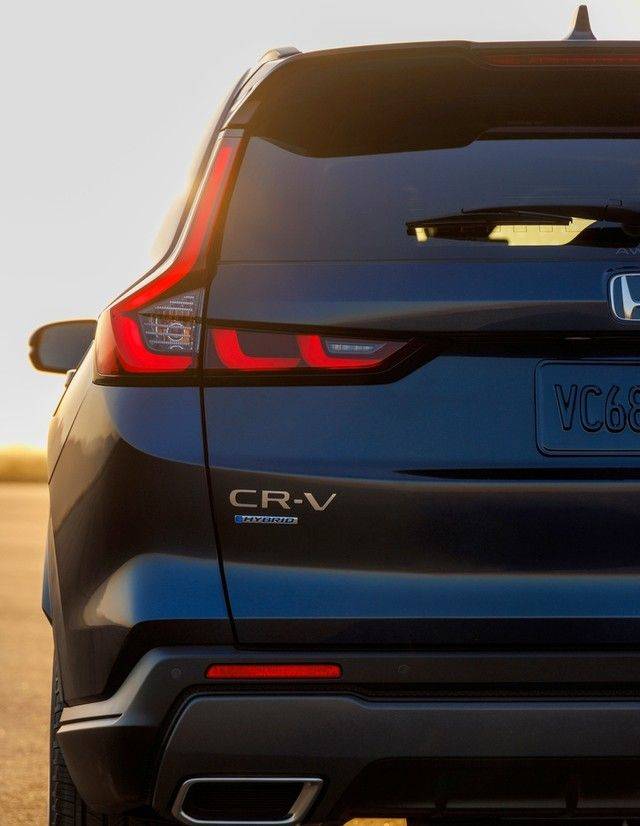
Visual images displayed, the latest generation of CR-V has a fresher and more elegant design. The shape of the front sector looks similar to the Honda HR-V and also the BR-V, but this car looks more luxurious.

The headlamp design is a bit narrow when compared to the 5th generation. Even for the appearance of the grill which now carries a new design. However, from the image shown, there is no foglamp component.

Moving to the back, a significant difference is also present in the all new Honda CR-V. The vertical LED lights on the C-pillar are retained, but there is a new touch to the lamp design whose ends are again similar to the HR-V or BR-V.

The rear bumper is also preening which looks sweeter with the diffuser component. Overall the unique DNA of the CR-V is trying to be maintained, but a new touch on the car makes it look more attractive.

More Sophisticated Hybrid Engine?


Indeed, this is not a new technology from the Honda CR-V, previously in the 5th generation a hybrid system has also been implanted and sold in several countries including the US market. There, the CR-V Hybrid is currently crammed with a 2.0-liter hybrid i-MMD engine with a generator and electric motor.

Now, because the hybrid theme is quite highlighted in the all new CR-V teaser, it is very likely that there will be a more sophisticated technological update. However, until now Honda AS is still closing the information meeting regarding the specifications. 

Opportunity to Enter Indonesia


PT Honda Prospect Motor (HPM) as the APM for Honda cars in Indonesia has said that for now, a car with a hybrid system is the most suitable for consumers.

This was conveyed by PT HPM's Business Innovation and Marketing & Sales Director, Yusak Billy. According to him, hybrid cars are a bridge before actually entering the era of pure electric cars.

"We need bridging (bridges) to consumers so that they are not immediately surprised by the BEV (Battery Electric Vehicle). So for us, hybrids are the most suitable for current conditions in terms of price, infrastructure, and of course the regulations," said Billy, some time ago.