

Why Motorcycles Are Less Popular as Daily Vehicles in the USA
AutoReviewUS - Despite motorcycles having advantages such as fuel efficiency, easier parking, and lower ownership costs, they remain significantly underutilized as daily commuter vehicles in the United States. This article breaks down the economic, cultural, infrastructural, and safety-related reasons that contribute to this trend — backed by trustworthy data and expert sources.

Motorcycles in America: The Reality vs Perception
In the U.S., motorcycles represent a small fraction of daily commuters. According to historic commuting data, only around 0.11 % of commuters use motorcycles to get to work regularly, despite the overall large number of registered vehicles — most being cars and light trucks. (Ultimate Motorcycling)
There are several reasons why this situation persists, and they intersect across highway infrastructure, driver culture, weather patterns, safety perceptions, and legal barriers.
Top Reasons Motorcycles Are Not Daily Commuters in the USA
1. Cultural Identity & Car-Centric Infrastructure
The U.S. has decades of auto-centric urban development. Spacious highways, long intercity distances, and suburbs designed for cars make motorcycle commuting less convenient for many. Compared to densely populated countries where two-wheelers are fitted into daily life, the American lifestyle often assumes a car first. (MotorBiscuit)
👉 Cars are seen as family vehicles, comfort zones, and utility platforms, whereas motorcycles are often branded as recreational or lifestyle vehicles.
2. Safety Concerns
A major deterring factor is safety. Motorcycles lack seatbelts, airbags, and protective cages, making riders far more vulnerable in crashes. Data from the U.S. National Highway Traffic Safety Administration (NHTSA) shows that motorcycle occupants are significantly more at risk of fatality per mile traveled than car occupants. (whatincar.com)
Many Americans prefer the perceived safety and reassurance of an enclosed vehicle, especially for commuting with family or in traffic.
Read also :
Navigating the US Automotive Market: A Startup Owner’s Guide
Essential Tips for Automotive Startups: How to Thrive in the US Market
Top Strategies for Launching a Successful Automotive Startup in the USA (2026 Guide)
Hagerty Classic Car Insurance in the USA: The Ultimate Guide for Enthusiasts
Best Car Insurance Companies in the US (2026) — Ultimate Comprehensive Guide
3. Licensing and Legal Hurdles
Obtaining a motorcycle license in most U.S. states requires separate training and testing beyond a standard driver’s license. This extra step — both time-consuming and costly — discourages casual riders. (Stirlingkit)
4. Weather & Geography
Riding a motorcycle exposes commuters to rain, snow, wind, and extreme temperatures. Unlike cars, motorcycles offer no shelter from weather, making daily use impractical in colder regions. Half of the U.S. regularly sees winter conditions that are uncomfortable or unsafe for two-wheel commuting. (Reddit)
5. Insurance & Commuting Costs
Although motorcycles are often cheaper to insure than cars when used for pleasure, daily commute insurance tends to be higher due to exposure to peak traffic risk. (insurance.harley-davidson.com)
6. Limited Cargo & Passenger Capacity
Motorcycles are not practical for families or cargo transport without aftermarket modifications. Cars, minivans, and SUVs offer the flexibility Americans often require — groceries, luggage, pets, and car seats — that bikes simply can’t match.
Motorcycle vs Car – Feature Comparison Table (For Daily Commute)
| Feature | Motorcycle | Car |
|---|---|---|
| Safety Protection | ❌ Minimal (no airbags) | ✔️ High (seatbelts, airbags) |
| Weather Protection | ❌ Poor | ✔️ Excellent |
| Fuel Efficiency | ✔️ High | 📉 Moderate |
| Parking | ✔️ Easy | ❌ Competitive spots needed |
| Cargo Capacity | ❌ Limited | ✔️ Ample |
| Passenger Comfort | ❌ Two max | ✔️ Full Comfort |
| Licensing Complexity | ⚠️ Extra endorsement | ✔️ Standard |
| Practical for Family Use | ❌ Not ideal | ✔️ Best |
| Sources: Multiple commuting & transportation discussions. (best-synthetic-oils.com) |
Example Commuter Motorcycles (For U.S. Audience)
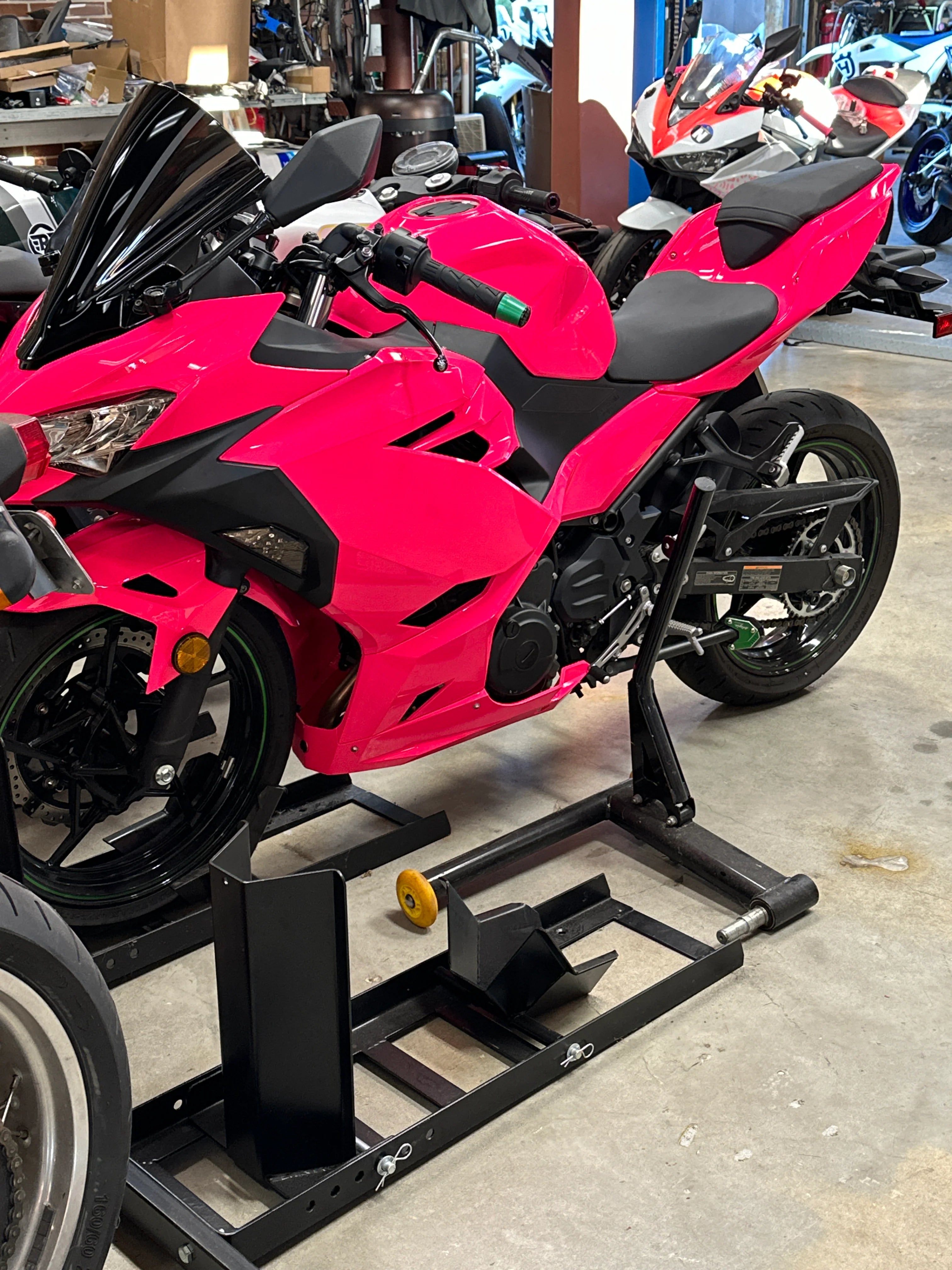
Below are some commuter-friendly motorcycle models (with image previews) that appeal to daily riders:

| Model | Type | Typical Price (USD) | Affiliate Link |
|---|---|---|---|
| Honda Rebel 500 | Cruiser | ~$6,500 | Affiliate link |
| Yamaha MT-07 | Sport-Standard | ~$7,600 | Affiliate link |
| Kawasaki Ninja 400 | Sport | ~$5,200 | Affiliate link |
| Suzuki SV650 | Standard | ~$7,200 | Affiliate link |
Note: Prices are approximate and vary by dealer/market.
Which Is Right for You?
If you prioritize:
Low cost & fun – a lightweight bike like the Honda Rebel 500 may be suitable.
Urban agility & performance – something like Yamaha MT-07 strikes a balance.
Fuel economy with commuter edge – Kawasaki Ninja 400 offers strong mileage.
Versatility for weekend rides – Suzuki SV650 is a great all-around pick.
However, if you regularly:
Carry passengers or cargo,
Face harsh seasonal weather,
Need comprehensive safety features,
…then a car remains more practical for everyday commuting.
Risk Disclaimer
Motorcycling carries inherent risks. This article does not replace official safety guidance or professional training. Always wear DOT-approved helmets, protective gear, and train through certified programs like the Motorcycle Safety Foundation (MSF). Riding laws vary by state; check your local DMV for current requirements. Information does not constitute legal or financial advice.
CTA (Monetization-Ready)
👉 Compare investment platforms: Optimize your finances before buying a vehicle — track current bonus offers and fees on dedicated comparison tools.
👉 Check current rates on motorcycle loans and insurance through trusted financial affiliates.
Official Sources for Further Reading
📌 Ride to Work (nonprofit promoting motorcycle commuting) — https://www.ridetowork.org/ (Wikipedia)
📌 NHTSA Motor Vehicle Safety Facts — https://www.nhtsa.gov/
📌 Motorcycle Safety Foundation (MSF) — https://www.msfusa.org/
About the Author
David Mulyana is the founder and editor of AutoReviewUS, an independent automotive publication dedicated to delivering reliable reviews, industry news, buying guides, and expert insights. His work focuses on cars, motorcycles, electric vehicles (EVs), automotive technology, maintenance, and market trends in the United States and around the world.
With a strong passion for the automotive industry and digital publishing, David creates content that helps readers make informed decisions when buying, maintaining, or comparing vehicles. Every article is researched using trusted manufacturer information, industry reports, and reputable automotive sources to ensure accuracy and relevance.
At AutoReviewUS, the mission is simple: provide honest, informative, and easy-to-understand automotive content for enthusiasts, first-time buyers, and everyday drivers.
Areas of Expertise:
- Car Reviews
- Motorcycle Reviews
- Electric Vehicles (EVs)
- Automotive Technology
- Vehicle Buying Guides
- Car Insurance
- Maintenance Tips
- Automotive Industry News
Editorial Policy: AutoReviewUS is committed to publishing original, unbiased, and fact-checked content. Reviews and recommendations are created independently to help readers make better automotive decisions.