close
close

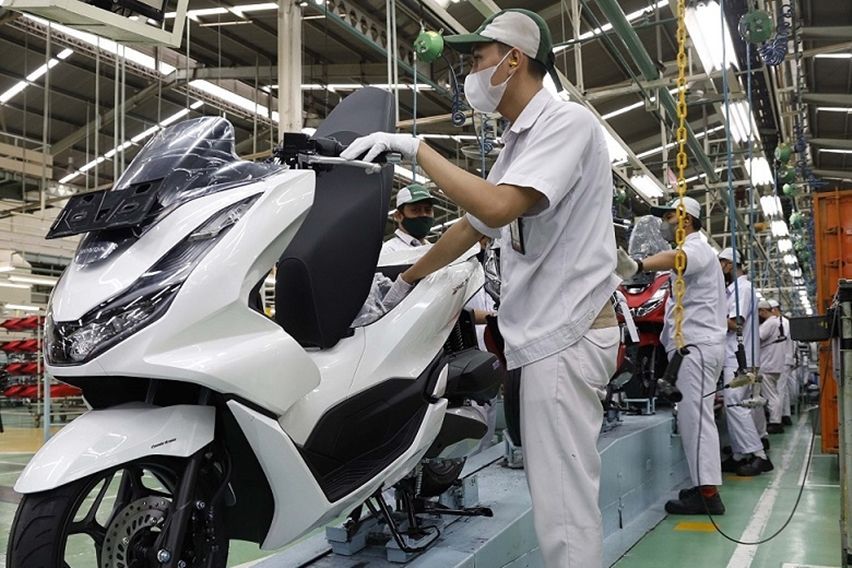
Honda: Scarcity of Semiconductors Inhibits Motorcycle Production, The Effect Is Indent

 PT Astra Honda Motor (AHM) officially announced that the semiconductor chip crisis had an impact on the production process and the fulfillment of Honda motorcycle ownership in Indonesia. This information was published by the company through the official AHM website on Monday, May 30, 2022.

Honda explained that they were experiencing delays in the distribution of their motorcycles due to a shortage in the supply of semiconductor chips. Semiconductor itself is one of the important components for a number of industries, including automotive. Without these components, motorcycles cannot be produced perfectly.
Honda: Scarcity of Semiconductors Inhibits Motorcycle Production, The Effect Is Indent

"Thank you to consumers who have chosen Honda motorcycles as their driving partners and have been patiently waiting for the arrival of their dream motorcycles. We apologize for making you wait longer. We are currently trying to solve this problem to fulfill the wishes of loyal Honda motorcycle consumers. as well as possible," explained AHM, in an official statement.

Previously, based on the narrative of Marketing Director of PT AHM, Thomas Wijaya, the delayed motorcycle delivery process is planned to take place in June or July 2022. The company, according to him, continues to do various things to be able to recover the problem.

"We thank all consumers for their trust despite experiencing shortages. We also apologize to consumers who may need time to own a Honda motorbike. Hopefully in June or July we have completed the various activities that we do so that we can fulfill ownership Honda motorcycles from consumers who have been waiting for 1 or 2 months," concluded Thomas some time ago.

Most Selling Segment Affected


The model affected by the scarcity of semiconductor chips is the automatic motor type. In fact, this segment contributed the most to AHM sales, including nationally. 

"What is affected by semiconductor chips is the automatic type, there are more or less several types, maybe plus minus consumers need to wait for approximately 1 month. I'm not into the model or variant, but I will explain if the entry-level to mid-level segments are affected. For the segment high-end to premium are not affected," he added.

Meanwhile, the Executive Vice President Director of PT AHM, Johannes Loman hopes that this global problem can be resolved soon. It is targeted that recovery can be carried out in a gradual and structured manner. "Our hope is that we will soon be able to meet consumer demand, there is a solution. After Lebaran (2022) we will return to recovery," he said.
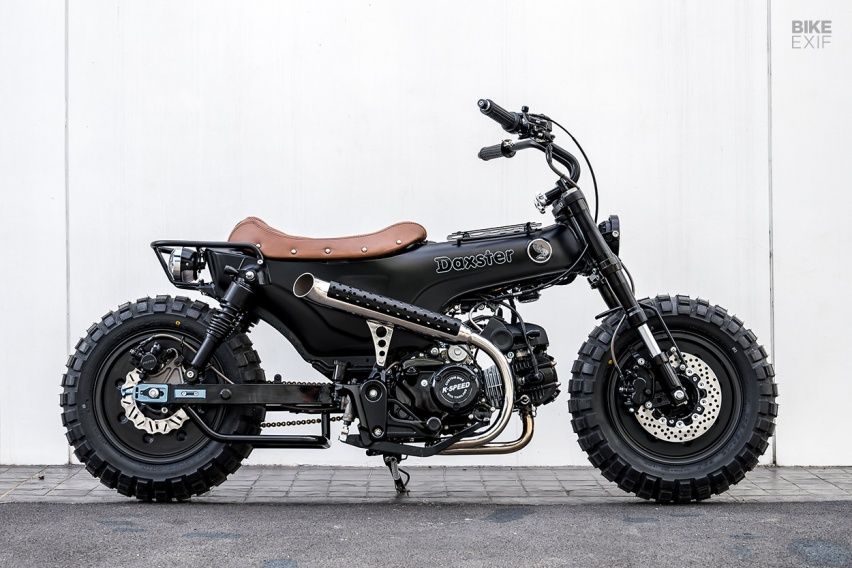
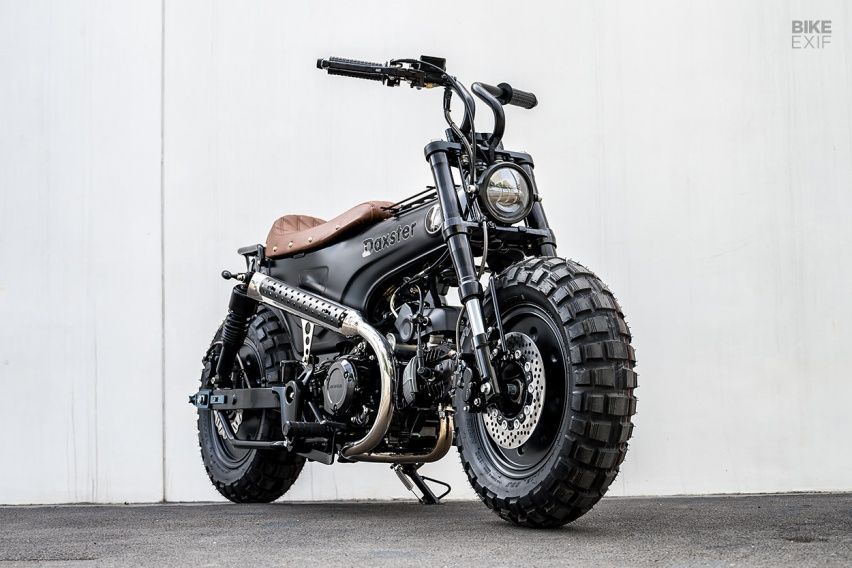
Introducing Daxster, Honda ST125 Dax in Mini Scrambler

 Whenever Honda releases a modern iteration of one of their iconic motorcycles, K-Speed always finds a way to surprise. This Thai workshop and parts manufacturer is very fond of mini iron horses. It routinely amazes the world's builders. After working on the anti-mainstream Super Cub and Monkey, now it's the ST125 Dax's turn.

Introducing Daxster, Honda ST125 Dax in Mini Scrambler

Yes, the Honda ST125Dax is back. The iconic iron horse has made its way to Thailand. This model takes the base engine from the MSX 125 Grom and CT125. Carrying an injection engine (PGM-FI) with a total capacity of 124.89 cc with Euro 5 standards. It is capable of producing a maximum power of 9.6 hp at 7,000 rpm and a torque of 11 Nm at 5,250 rpm. Overall output is channeled through a four-speed manual transmission. These supplies are actually similar to the Honda Monkey ingredients, including the use of the air conditioning system.

The founder of K-Speed, Eak is very fond of Dax. He actually had a 50 cc version when he was thirteen. Driven by nostalgia, he started buying the latest Dax and customizing it to suit K-Speed's signature style. You could say this is the world's first custom 2022 Dax model.

K-Speed's Dax is dubbed 'Daxster'. Mini-scrambler style iron horse. Apart from turning them into something different, Eak is also prototyping new parts, for K-Speed's 'Diablo' brand.

Daxster

Dax's hallmark remains, namely the pressed steel type frame. Only they changed it to matte black. So it looks more dense. One of the most prominent plug and play components is seen in the use of a large-dimensional upside down suspension in front. To make it look charming, the top and bottom triangles are custom made.

Handle handlebars, K-Speed custom made. But if you look closely, the steering wheel is actually two separate parts. It is held by a handlebar clamp that has been rotated 90 degrees. This innovation has just been implemented, and the claim remains solid and strong. This setting also allows the user to rotate the blades individually, to set them narrower or wider.

The rest of the cockpit displays the hallmark of K-Speed. The Dax's single brake lever is accompanied by a Diablo grip, vintage-style micro-switch and LED turn signals at the ends of the handlebars. The main lighting relies on LED lights with a round cover wrap.

Upstairs there is a new seat. And right in front of it is a luggage rack. Sitting beside the frame is an OEM Honda speedometer, mounted with a new bracket.

OEM Dax fenders and rear grip are removed. Replaced by a luggage rack made specifically to wrap the Diablo taillights. Tim is also good at tidying up around the tail. Passenger pegs removed. Sitting to the left is a neat number plate holder, bolted to the lower shock mount.

To match its form as a mini scrambler, K-Speed paired ultra-chunky tires. Wear 12-inch rims wrapped in 'Tractor-Grip' tires from IRC, measuring 130/80-12 on both wheels. The diablo wheel covers are made of ABS plastic, adding to the muscular aesthetic. They also installed a pair of Diablo shock absorbers that were lowered at the rear, then extended and strengthened the rocker arm.

For the exhaust system, the builder added a custom hand made K-Speed exhaust. The curves are still similar to the original Dax parts, but the shape is a little rough. However, the outer side of the pipe has been given a heat shield.

To harmonize the theme, the Honda 'flap wing' logo which was previously red was replaced with black. The 'Daxster' graphic attached to the front frame is also custom made, but the font is still identical to the original Dax type. While the brown upholstery adds some contrast

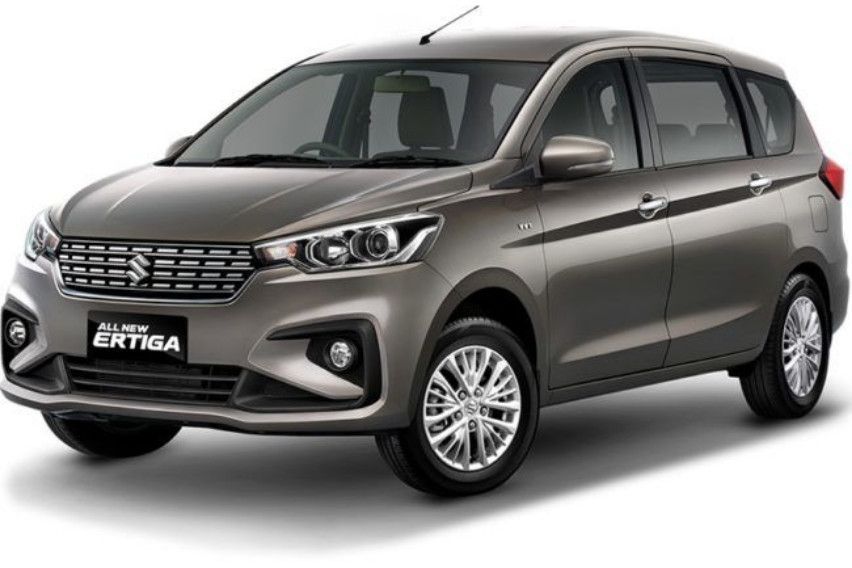
There will be a hybrid version, the Suzuki Ertiga in the used car market is no less interesting

 The plan for the presence of a new Suzuki Ertiga model with hybrid technology has spread to various media. Currently, the flood of information on the model can be obtained easily, including the price.

Waiting for this Suzuki product is indeed curious. However, currently on the market there are still older Ertiga products. This is one of the conveniences that potential consumers can glance at considering that older models still offer a variety of interesting features.

There will be a hybrid version, the Suzuki Ertiga in the used car market is no less interesting

several attractive units are offered on the Ertiga model. Making use of the provided filters, the search is limited to models from five years back. This is around 2018 to 2021.

Judging from the 2018 model, there is a choice of the GL variant with a manual transmission. The model with an odometer of 59 thousand kilometers is priced at IDR 169 million. The GX MT variant in the same year with an odometer of 25 thousand kilometers was offered at a price of Rp. 165 million.

Moving on to the 2019 production model, there is the Ertiga GL variant with a manual transmission which is offered at IDR 160 million. The odometer of the model is at 8 thousand kilometers. Another GL variant with an odometer of 42 thousand kilometers is also offered at the same figure.

The model with the 2020 production year, the GX variant with a double blower, is offered starting at IDR 198 million. There are still many units with an odometer of around 26 thousand kilometers on offer for potential customers.

Enter a vehicle with a product year of 2021. Ertiga GX AT is available with an odometer of about 11,000 kilometers. The opening price is IDR 240 million.

For those who are looking for a rarer model, you can look at the Ertiga diesel hybrid. This MPV was first present in 2017 and is a low MPV with hybrid technology in its class.

The New Ertiga Diesel Hybrid uses a Diesel engine coded D13A with an engine capacity of 1,300 cc DOHC and is added with DDiS (Diesel Direct Injection System) technology. This diesel engine is capable of producing up to 89 PS of power at 4,000 rpm and 200 Nm of torque at 1,750 rpm. Not to forget the latest Hybrid system is also pinned to increase the level of efficiency in fuel use.

When driving normally, the engine will work while charging the battery assisted by Integrated Starter Generator (ISG) technology. This technology has two distinct functions. First as a generator to capture and store energy into the battery when the vehicle is in the deceleration phase and second as a motor that will provide additional power to the engine during acceleration.

In the used car market, it is very difficult to find this Ertiga on offer. The initial model with the 2017 production of the manual transmission GX variant, is offered starting at IDR 140 million with an odometer of about 100 thousand kilometers. The production of a younger year, 2018 with an odometer of 90 thousand, is offered at Rp. 150 million.

How about you, interested in the old Ertiga model? However, if you are still waiting for the Ertiga update, please be patient. Oto.com shows the price offer for the latest Suzuki model. The following is the price of the latest Ertiga which will be available some time in the future.

     All new Suzuki Ertiga GA MT: IDR 225.1 million
     All new Suzuki Ertiga GL MT: IDR 248.5 million
     All new Suzuki Ertiga GL AT: IDR 259.5 million
     All new Suzuki Ertiga GX (Smart Hybrid) MT: IDR 270.3 million
     All new Suzuki Ertiga GX (Smart Hybrid) AT: IDR 281.3 million
     All new Suzuki Ertiga SS (Smart Hybrid) MT: IDR 281.3 million
     All new Suzuki Ertiga SS (Smart Hybrid) AT: IDR 292.3 million.

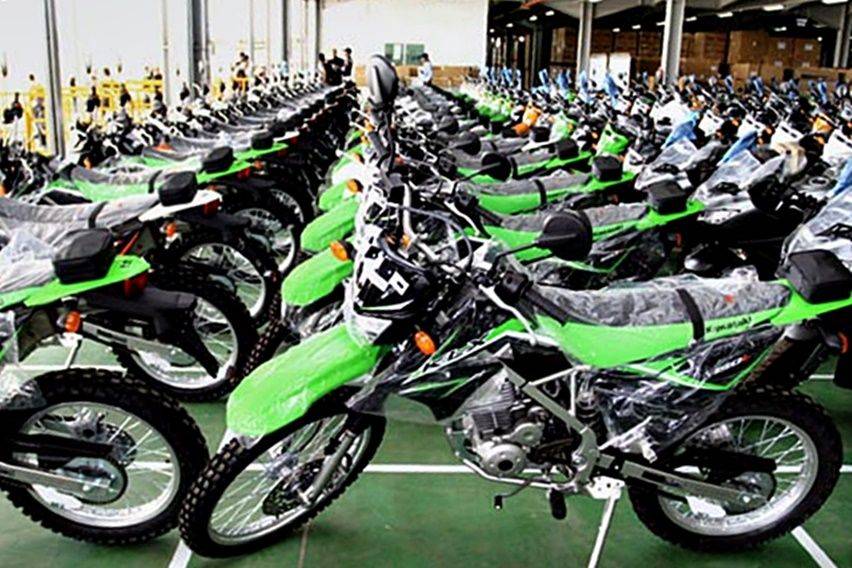
This is why Kawasaki Indonesia is not too affected by the semiconductor crisis

 Kawasaki Motor Indonesia (KMI) explained that the shortage of semiconductor chips did not greatly affect production and business activities in the domestic market. This is interesting, considering that rivals Honda and Yamaha have confirmed that the shortage of semiconductors has an impact on the fulfillment of consumer motorcycle ownership.

This was conveyed by the Head of Sales & Promotion of PT KMI, Michael C. Tanadhi. According to him, one of the reasons why the scarcity of semiconductor chips does not have much impact on Kawasaki is because most of its products still carry a carburetor atomizer system and minimal electronic devices.

This is why Kawasaki Indonesia is not too affected by the semiconductor crisis

"We are still selling and producing many carburetor motors. The volume maker at KMI is precisely the carburetor model, so we are not affected too much (semiconductor crisis),"

In the domestic market, Kawasaki's sales are dominated by trail products up to 70 percent. While the W175 accounts for 20 percent and the remaining 10 percent are sports products from the Ninja series. Now for the trail model (150 cc) and W175 both still carry injection atomizers and you could say the features and technology are not too complex.

Another thing for sports products that already carry injection atomizers and are equipped with many modern features, according to Michael, the scarcity of chips slightly interferes with production activities. For example, for the case of purchasing the Kawasaki Ninja ZX-25R, consumers must be willing to pivot for about 2 months.

"For all models with carburetor I can say they are ready (available). For injection, it takes time to pivot, but we try our best so that delivery can be fast to consumers," he added.

The problem of semiconductor chips is indeed very influential on several industries, including automotive. Since early 2021, rare semiconductor chips have had a major effect on the world's auto industry.

Please note that semiconductors have an important role in a vehicle, especially in the electronics and electricity sectors. This microchip is not only used for 1 feature, but there are several other features that also have these components.

So electronic parts such as digital instrument panels, keyless systems, remote components, and smartphone connectivity systems cannot function without the semiconductor chip.

The cause of the crisis in the supply of semiconductor chips is due to the increasing demand for electronic equipment such as smartphones or game consoles, but factory utilities are falling due to COVID-19. The fire case of one of the largest automotive chip factories in the world Renesas Electronic Corp. in March 2021 also further exacerbated the crisis situation, so that motorcycle and car manufacturers competed with each other to acquire chips.

United States Car Loan Debt Touches IDR 1.1 Trillion

 Shocking news came from the Adi Daya State, United States (US). The car loan loan debt from Uncle Sam's country reached Rp 1.1 trillion US dollars (Rp 14,571 trillion).

United States Car Loan Debt Touches IDR 1.1 Trillion

According to a report by a financial institution from the US auto market, Experience State, auto loans increased due to an increase in loans to prime buyers. Meanwhile, subprime or vehicle ownership credit packages continued to decline.

Automotive News, Monday (9/18/2018), reported that many Americans prefer to minimize monthly payments. Therefore, they choose to adopt longer term loans than necessary. Heading into the third quarter, the US new vehicle loan average was 68.8 months and the US used vehicle loan average increased one week from a year ago to 63.98 months.

This can be seen from the higher number of loans for new vehicles with maturities of between 85-96 months, while for used car buyers who choose loans with maturities of 73-84 months, around 17.7 percent.

As loan terms improved, average monthly payments continued to rise and hit a second-quarter high of $504 this year, $5 more than the previous year.

Car Loans Boost Consumer Loans in America

 The consumer loan rate in the United States crept up in July 2020, one of which was driven by car loans.

The Federal Reserve (The Fed) reported the size of loans in July reached 12.2 billion dollars, up 3.6 percent compared to June.

Car Loans Boost Consumer Loans in America

Earlier, in June, the lending rate also rose 3.3 percent, in contrast to sharp declines in March, April and May.

As quoted by Bisnis.com from Bloomberg, Wednesday, September 9, 2020, loan growth in July came from an increase in car loans and student loans of 12.5 billion dollars.

Meanwhile, the category that includes credit cards fell 293 million dollars, down for the fifth straight month in America.

The improvement in consumer loans or car loans is in line with the recent increase in retail sales, especially the purchase of motor vehicles.

Despite the increase in auto loans, consumer sentiment in America remains weak.

The expiration of $600 in unemployment benefits is expected to impact spending and borrowing on American consumers in the coming months.

Consumer loans are a signal and illustrate the willingness of consumers to take on more debt for their expenses.

Consumer spending accounts for at least 70 percent of American economic activity.

The Covid-19 pandemic has also brought most businesses in America to a halt and caused millions of people to lose their jobs. Consumer spending fell 34.1 percent in the second quarter.

Meanwhile, the impact of the Covid-19 pandemic caused American automotive sales to weaken to 13 million units, down 4 million units from last year's sales realization which touched 17 million units.

Regional Director of State Government Relations General Motors (GM) Brian O'Connell said his company had experienced poor conditions after closing factories at the start of the pandemic.

Until now, GM car sales slumped 20 percent. This was also accompanied by a reduction of 20,000 jobs.

Automotive Brands in the United States Offer Soft Credit Schemes Due to Covid-19

 The situation of countries in the world affected by Covid-19 has expanded to 183 countries, involving 1.275 million confirmed cases. Big countries such as the United States, Spain, Italy, Germany and France became the five countries with the largest cases as of April 6, 2020. Seeing the increasing spread of COVID-19 cases directly hit the automotive industry, especially in the production and sales sectors.

Automotive Brands in the United States Offer Soft Credit Schemes Due to Covid-19

Apart from that, several dealers from car brands have issued policies so that the automotive market does not stop with some gimmicks, such as a buy from home service, with a payment suspension of up to 90 days. The service is to accommodate those who stay at home, and implement social distancing. Manufacturers like General Motor offer zero percent interest plans for up to 84 months, with a deferral of payments of up to 120 days.

What if consumers want to buy a car? A TrueCar buying and selling website, offering the Buy from Home feature. TrueCar offers remote document processing, home delivery of the car, and verified sanitation services. BlackPals can access it via https://ir.true.com or via Motor1.com, offers are made starting from March 26, 2020, until BlackPals can check the offer themselves through the nearest dealer. 

Alfa Romeo, BMW, Buick, Cadillac, Chevrolet, Dodge, FIAT, Ford, GMC, Hyundai, Infitiny, Jeep, Kia, Lexus, Lincoln, Mercedes Benz, Nissan, Ram, Toyota, and Volkswagen. Dealers with related brands have modified payment packages with 0% installments for 84 months and a suspension of up to 90 days. Unfortunately, this policy is more applied to the United States region which is leading the Covid-19 case with 337,638 positive cases.

Meanwhile, APM in Indonesia has not yet issued this policy. So far, it has only been limited to Home service, booking online, it has not had an impact on financing relief.