How Much Does a Tesla Model Y Cost With Tax Credit? (2026 USA Guide)

Updated for 2026 | Federal Credit Eligibility & Price Breakdown Explained
AutoReviewUS - When prospective EV buyers in the United States look at the Tesla Model Y, one of the most important questions is: “What will I actually pay?”
With evolving federal tax incentives, incentives from states, and Tesla’s own pricing strategies, the real cost of a Model Y can differ substantially from its Manufacturer’s Suggested Retail Price (MSRP). This guide walks you through:
Model Y base prices in the U.S.
Federal EV tax credit eligibility
How the tax credit can reduce your cost
Comparison with other EVs
Which configuration might be right for you
Key risks and disclaimers

Understanding the U.S. Federal Electric Vehicle Tax Credit
The most impactful tax benefit for new electric vehicles (EVs) purchased in the United States is the Federal Clean Vehicle Tax Credit (IRC §30D), which provides up to $7,500 on qualifying new EV purchases at point of sale — meaning you can potentially receive the credit immediately as a price reduction rather than waiting to file your tax return. (Investopedia)
The credit exists to promote U.S. EV ownership and is subject to:
Vehicle price limits ($55,000 MSRP for cars; $80,000 MSRP for SUVs/Trucks, including the Model Y). (IRS)
Buyer income limits (e.g., $150,000 modified AGI for single filers). (Investopedia)
Battery sourcing & critical mineral requirements. (LegalClarity)
Important: Eligibility can change with legislation and IRS guidance — always check the current list of qualifying vehicles at the Internal Revenue Service (IRS) official site:
🔗 See detailed IRS eligible vehicles list: https://www.irs.gov/pub/irs‑sbse/clean‑vehicle‑credit‑30d‑2024.pdf (IRS)
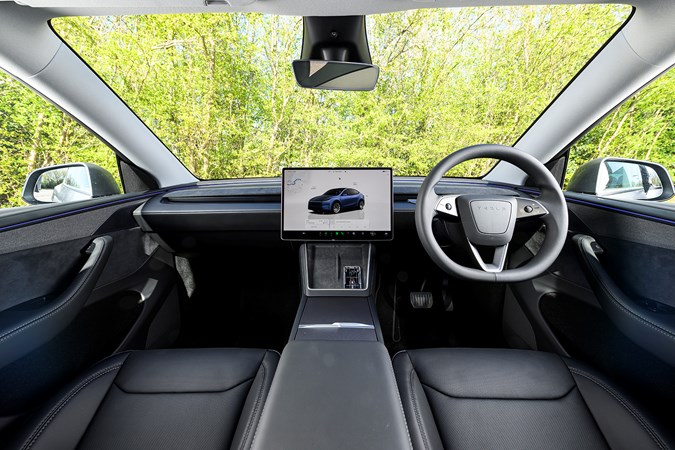
Tesla Model Y — Official Pricing Before Tax Incentives
Here are typical starting prices for the 2025/2026 U.S. Model Y lineup (approximate MSRP before any tax or dealer discounts):
| Variant | MSRP (Before Incentive) | Range (~EPA est.) |
|---|---|---|
| Model Y Rear‑Wheel Drive | ~$44,990 | ~320 mi |
| Model Y Long Range AWD | ~$49,990 | ~327 mi |
| Model Y Performance | ~$54,990 | ~303 mi |
Note: Real transaction prices can vary from MSRP due to Tesla’s dynamic pricing, inventory discounts, and optional packages. (tesla-model-y.online)
How the Federal EV Tax Credit Impacts Cost
If your purchase meets all federal eligibility criteria, the Model Y can effectively cost $7,500 less at the time of purchase. That means:
| Variant | Price After Federal Credit ($7,500) |
|---|---|
| Model Y Rear‑Wheel Drive | ~$37,490 |
| Model Y Long Range AWD | ~$42,490 |
| Model Y Performance | ~$47,490 |
Key Point: The credit is applied to the vehicle price before taxes and state registration fees and may be claimed only if your tax situation allows the full credit. (Investopedia)
Tesla vs Other EVs — Price Comparison
Here’s how the Model Y’s price with federal incentive stacks up against some mainstream EV competitors:
| Model | MSRP After $7,500 Fed Credit | Type |
|---|---|---|
| Tesla Model Y RWD | ~$37,490 | SUV |
| Ford Mustang Mach‑E | ~$36,000‑$43,000* | SUV |
| Chevrolet Bolt EUV | ~$25,000‑$30,000* | Subcompact SUV |
| Rivian R1S | ~$68,000+ | SUV |
| *Prices vary; check manufacturer specs |
Compared to other EVs, the Model Y offers competitive range, performance, and resale value — a major reason it has been one of the top‑selling EVs in the U.S.
Which Model Y Version Is Right for You?
Choosing the right configuration depends heavily on your priorities:
🧠 Budget ‑ Conscious Buyers
Best Choice → Model Y Rear‑Wheel Drive
✔ Lowest MSRP and best post‑credit price
✔ Strong range for daily commuting
🚗 Balanced Performance & Range
Best Choice → Model Y Long Range AWD
✔ Better traction in all seasons
✔ Longest EPA‑estimated range
⚡ Performance Fans
Best Choice → Model Y Performance
✔ Best acceleration and sport‑oriented driving
✔ Slightly lower range but higher thrills
💡 Pro tip: If you plan to finance the vehicle, compare quarterly incentives and financing offers — sometimes a zero‑interest deal + a residual tax credit can beat outright purchase savings.
Other Financial Considerations
State & Local Incentives
Beyond the federal credit, many states offer additional rebates or tax credits (e.g., California, New York). These can further reduce your effective purchase price.
Used EV Tax Credit
A separate Used Clean Vehicle Credit offers up to $4,000 for qualifying pre‑owned EVs. (Investopedia)
Charging & Operating Costs
Remember to factor in:
Home charging setup costs
Electricity vs gas savings
Potential state utility rebates
IRS & Government Resources (Official Links)
For accurate eligibility, pricing, and tax form guidance, use the following authoritative sources:
IRS Federal Tax Credit Overview:
➡ https://www.irs.gov/credits‑deductions/individuals/clean‑vehicle‑credits
IRS Eligible Vehicle List (PDF):
➡ https://www.irs.gov/pub/irs‑sbse/clean‑vehicle‑credit‑30d‑2024.pdf (IRS)
U.S. Department of Energy EV Data:
➡ https://afdc.energy.gov/vehicles/electric_battery.html
Tesla Official Model Y Pricing:
➡ https://www.tesla.com/modely
Risk Disclaimer
This article is for informational purposes only and is not tax or financial advice. Tax incentives change frequently based on legislation and IRS policy. Always consult a licensed tax professional or financial advisor before making purchasing or investment decisions. Eligibility for federal tax credits can vary based on income, delivery date, vehicle configuration, and IRS rulings.
Call to Action (CTA)
📊 Compare Investment Platforms – evaluate financing offers that might help you secure better terms when buying an EV.
📈 Check Current Auto Loan Rates – interest rates shift often; comparing can save you thousands over the life of a loan.
About the Author
David Mulyana is the founder and editor of AutoReviewUS, an independent automotive publication dedicated to delivering reliable reviews, industry news, buying guides, and expert insights. His work focuses on cars, motorcycles, electric vehicles (EVs), automotive technology, maintenance, and market trends in the United States and around the world.
With a strong passion for the automotive industry and digital publishing, David creates content that helps readers make informed decisions when buying, maintaining, or comparing vehicles. Every article is researched using trusted manufacturer information, industry reports, and reputable automotive sources to ensure accuracy and relevance.
At AutoReviewUS, the mission is simple: provide honest, informative, and easy-to-understand automotive content for enthusiasts, first-time buyers, and everyday drivers.
Areas of Expertise:
- Car Reviews
- Motorcycle Reviews
- Electric Vehicles (EVs)
- Automotive Technology
- Vehicle Buying Guides
- Car Insurance
- Maintenance Tips
- Automotive Industry News
Editorial Policy: AutoReviewUS is committed to publishing original, unbiased, and fact-checked content. Reviews and recommendations are created independently to help readers make better automotive decisions.
Comments
Post a Comment