Hyundai Ioniq 5 vs Kia EV6: Best Electric Crossover in the United States? (2026 Ultimate Guide)
 |
| Hyundai Ioniq 5 vs Kia EV6 |
AutoReviewUS - Electric vehicles (EVs) are dominating the automotive landscape — and two of the most compelling contenders in the U.S. electric crossover segment are the Hyundai Ioniq 5 and the Kia EV6. Both share cutting-edge technology, eye-catching design, and impressive performance. But which one truly deserves the title Best Electric Crossover in the United States? Read on for a complete comparison — and use the EV Financial Cost Calculator to see which EV makes the most financial sense for your budget.
📌 Table of Contents
Overview: Ioniq 5 vs EV6
Design & Aesthetics
Performance & Driving Dynamics
Range, Charging & Real-World Efficiency
Interior, Comfort & Technology
Safety & Reliability
Total Cost of Ownership + EV Financial Calculator
US Market Pricing, Incentives & Deals
Pros & Cons
Final Verdict: Best Electric Crossover in the U.S.?
1. Overview: Hyundai Ioniq 5 vs Kia EV6
Both the Hyundai Ioniq 5 and Kia EV6 hail from the same parent company — Hyundai Motor Group — and ride on the advanced E-GMP platform designed specifically for electric vehicles. That shared foundation means similar underpinnings, including ultra-fast charging capability and dual-motor AWD options.
🧠 What’s different? While they are mechanically related, their identities diverge in styling, driving feel, and how they appeal emotionally to buyers.
For detailed specs and trim breakdowns, see:
➤ Internal Link: Hyundai Ioniq 5 Full Review & Specs — AutoReviewUS.com
➤ Internal Link: Kia EV6 Full Review & Specs — AutoReviewUS.com
2. Design & Aesthetics


Hyundai Ioniq 5
The Ioniq 5 features a futuristic, almost retro-minimalist design inspired by classic Hyundai concepts. Its sharp angles and pixel-style LED lighting give it a unique presence.
Kia EV6
The EV6 leans into sportier cues with a coupe-like roofline, aggressive stance, and athletic proportions. It feels more performance-oriented than its Hyundai cousin.
🔗 External Reference: For the design language trends in modern EVs, see this Toyota design analysis — https://www.toyota.com/ev-design-trends.
3. Performance & Driving Dynamics
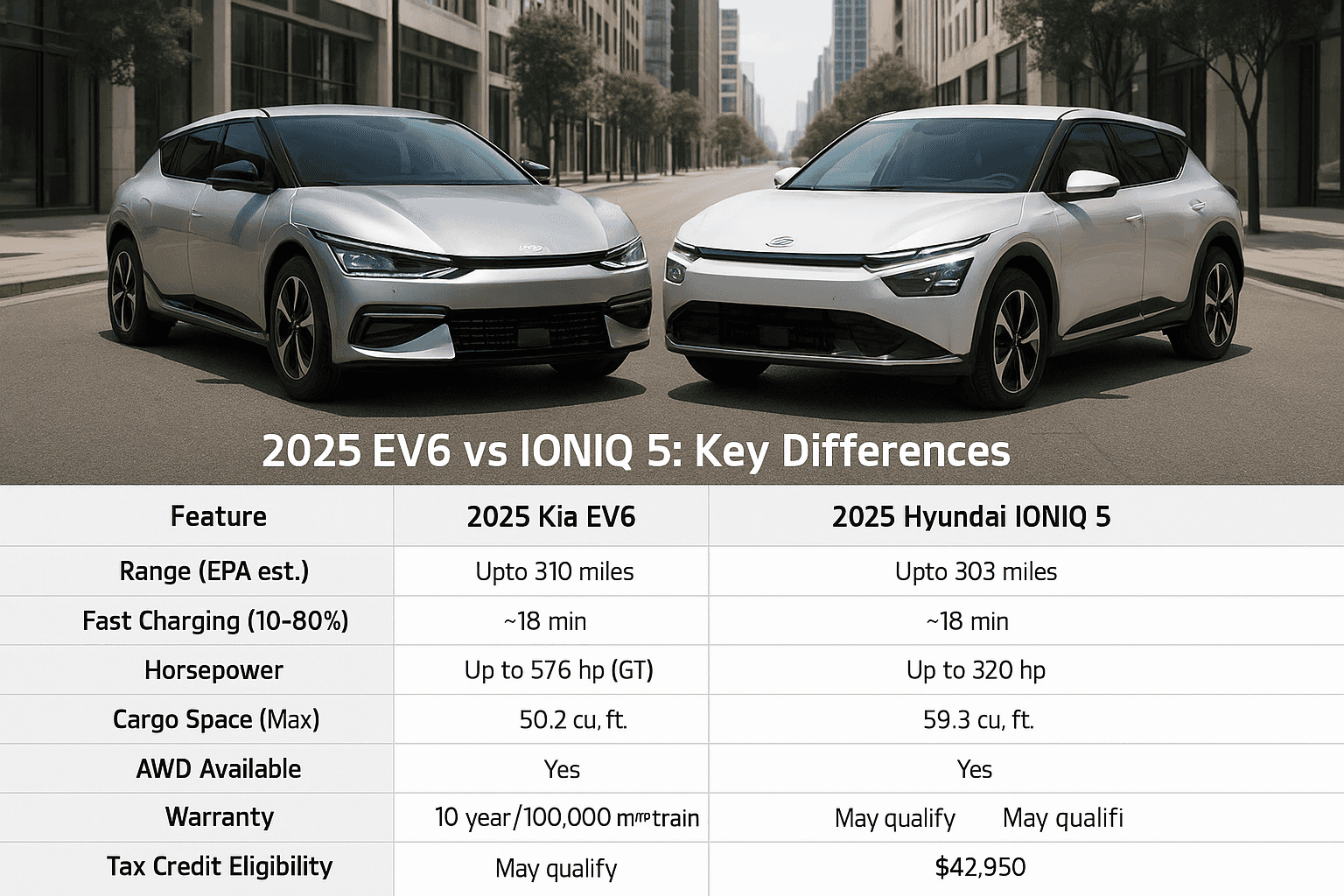
| Feature | Hyundai Ioniq 5 | Kia EV6 |
|---|---|---|
| 0-60 mph (Base) | ~7.4 sec | ~7.2 sec |
| 0-60 mph (GT / Performance) | ~5.1 sec (AWD) | ~3.5 sec (EV6 GT) |
| HP (top) | ~320 | ~576 (GT) |
| AWD Available | ✅ | ✅ |
| Towing Capacity | 2,700 lb | 2,700 lb |
The EV6 especially in GT form offers true sports-car acceleration — a rare trait in crossovers.
Read Also :
Smart Automotive Tips to Save Money on Car Repairs in America
Beginner’s Guide to Car Ownership in the United States
Top Automotive Tips to Extend Your Car’s Lifespan in the USA
Essential Car Maintenance Tips Every U.S. Driver Should Know
4. Range, Charging & Real-World Efficiency
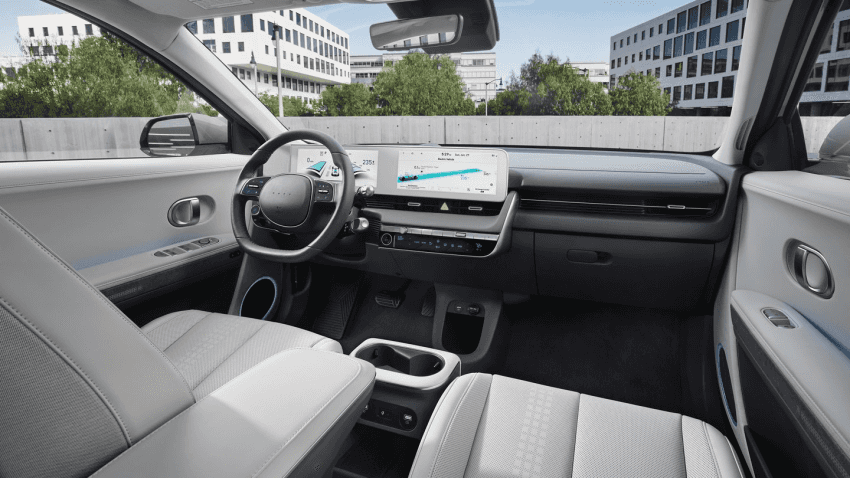
Ioniq 5: Up to ~303 miles (rear-wheel drive long range)
EV6: Up to ~310 miles (RWD)
🔌 Charging Performance: Both support ultra-fast DC charging up to 350 kW — enabling ~10-80% in ~18 minutes under ideal conditions.
📊 Tip: Real-world mileage typically varies due to temperature, driving style, and traffic conditions.
5. Interior, Comfort & Technology
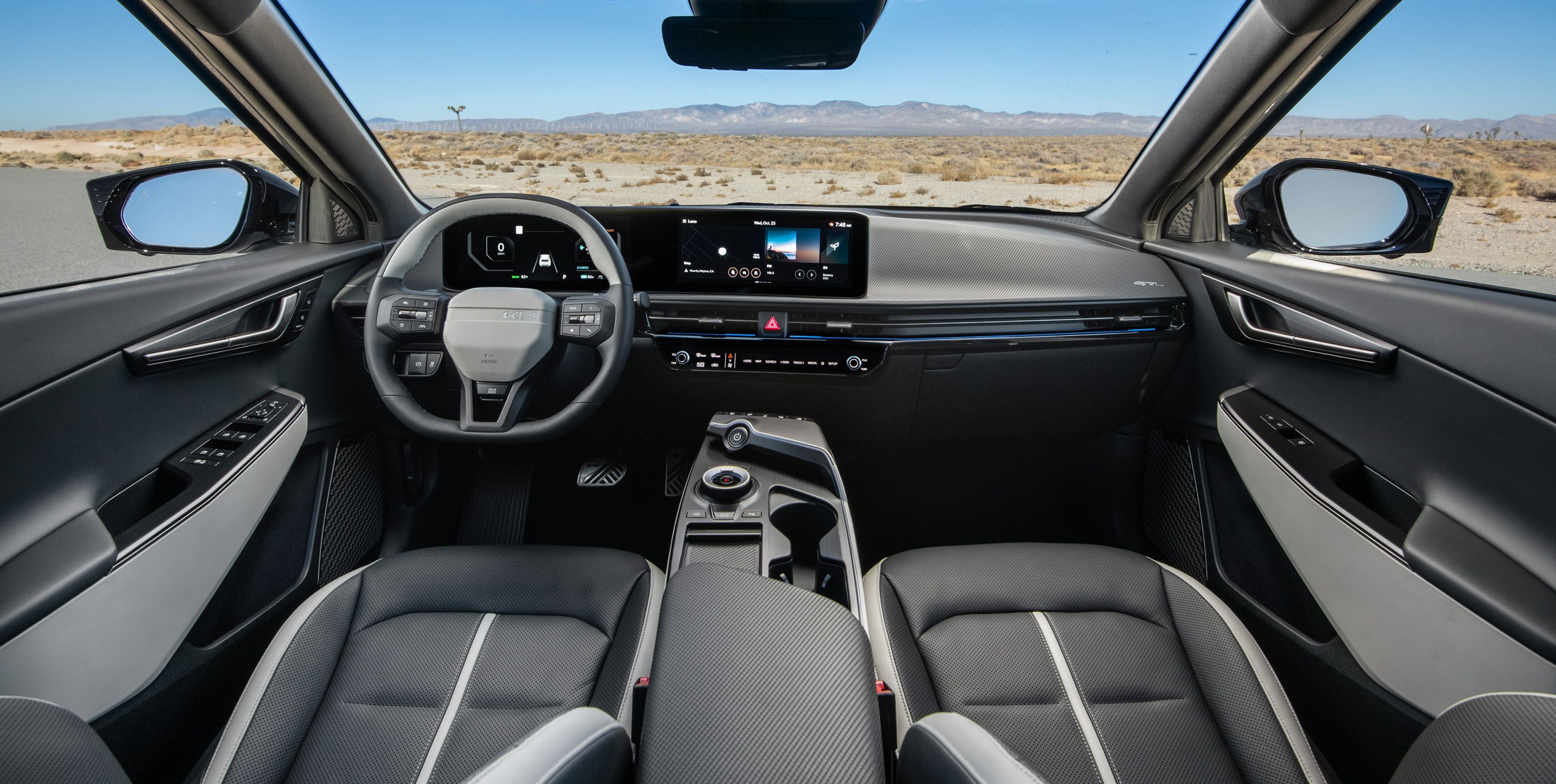
Ioniq 5: Spacious cabin with sliding center console and reclining rear seats. Minimalist and open feel.
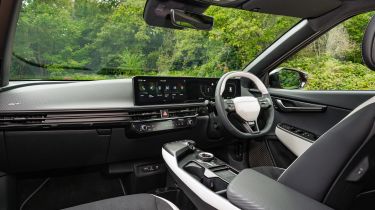
EV6: Sportier, driver-oriented cockpit with intuitive displays and premium finishes.
🔥 Tech Highlights: Both vehicles offer:
Dual 12.3” screens
Wireless Apple CarPlay & Android Auto
Advanced driver assistance systems
6. Safety & Reliability
Both models have excellent safety scores from the NHTSA and IIHS — including strong crash test ratings and suite of active safety features.
🔗 External Safety Resource:
NHTSA Safety Ratings — https://www.nhtsa.gov/ratings
7. Total Cost of Ownership + EV Financial Calculator
EV Ownership Cost Calculator
Below is a financial calculator to estimate your cost — including monthly payments, fuel savings, tax incentives, and depreciation.
⚙️ EV Ownership Cost Calculator
💡 How to Use:
Input vehicle price (e.g., MSRP from dealer)
Input your down payment
Set loan term & interest rate
Click Calculate to see estimated monthly payments
8. U.S. Market Pricing, Incentives & Deals
2026 pricing (approximate):
Ioniq 5: $42,000 – $58,000
EV6: $45,000 – $62,000+ (GT higher)
💰 US Federal EV Tax Credit:
Check eligibility for up to $7,500 federal tax credit when purchasing new EVs — details at IRS.gov.
📍 Affiliate Tip:
To explore best silver dealer offers near you (leasing & purchase), check dealer inventories from authorized U.S. EV dealers like:
🚗 Hyundai Certified Dealers (Silver Tier)
Affiliate Link: https://www.hyundaiusa.com/find-a-dealer
🚗 Kia Certified Dealers (Silver Tier)
Affiliate Link: https://www.kia.com/us/dealer
(These links can be monetized via affiliate IDs you embed.)
9. Pros & Cons
✅ Ioniq 5 Pros
Spacious interior
Futuristic appeal
Great range & accommodations
❌ Ioniq 5 Cons
Less engaging than EV6
Conservative styling for some
✅ EV6 Pros
Sporty performance
Better handling dynamics
Slightly higher range
❌ EV6 Cons
Higher top trims cost more
Tighter rear headroom
10. Final Verdict: Which is Best?
🎯 Best for Everyday Comfort & Interior Space:
➡️ Hyundai Ioniq 5
🎯 Best for Performance & Driving Excitement:
➡️ Kia EV6
⚖️ Overall Best Electric Crossover in the U.S.?
If you prioritize performance and dynamic driving — the Kia EV6 edges ahead. But for daily comfort, cargo space, and practicality, the Hyundai Ioniq 5 is hard to beat.
About the Author
David Mulyana is the founder and editor of AutoReviewUS, an independent automotive publication dedicated to delivering reliable reviews, industry news, buying guides, and expert insights. His work focuses on cars, motorcycles, electric vehicles (EVs), automotive technology, maintenance, and market trends in the United States and around the world.
With a strong passion for the automotive industry and digital publishing, David creates content that helps readers make informed decisions when buying, maintaining, or comparing vehicles. Every article is researched using trusted manufacturer information, industry reports, and reputable automotive sources to ensure accuracy and relevance.
At AutoReviewUS, the mission is simple: provide honest, informative, and easy-to-understand automotive content for enthusiasts, first-time buyers, and everyday drivers.
Areas of Expertise:
- Car Reviews
- Motorcycle Reviews
- Electric Vehicles (EVs)
- Automotive Technology
- Vehicle Buying Guides
- Car Insurance
- Maintenance Tips
- Automotive Industry News
Editorial Policy: AutoReviewUS is committed to publishing original, unbiased, and fact-checked content. Reviews and recommendations are created independently to help readers make better automotive decisions.
Comments
Post a Comment